More than a million cases of coronavirus have been registered globally, according to the latest figures from Johns Hopkins University - another grim milestone as the world grapples with the spreading pandemic.
Nearly 53,000 people have died and more than 210,000 have recovered, according to the US university's figures.
The US has the most cases, and more than 1,000 died there in the past day.
The disease, Covid-19, first emerged in central China three months ago.
Though the tally kept by Johns Hopkins records one million confirmed cases, the actual number is thought to be much higher.
It took a month and a half for the first 100,000 cases to be registered. A million was reached after a doubling in cases over the past week.
Nearly a quarter of cases have been registered in the United States, while Europe accounts for around half.
What's the latest?
On Thursday, Spain said 950 people had died in the previous 24 hours - thought to be the highest number of deaths of any country in one day.
The number of confirmed Spanish cases rose from 102,136 on Wednesday to 110,238 - an 8% rise that is similar to the rate recorded in previous days. Authorities believe the virus is now peaking and say they expect to see a drop in figures in the days ahead.
"We continue with an increase of around 8%. This points, as we have already seen, to a stabilisation in the data that we're registering," María José Sierra, from the Spanish health ministry's emergency co-ordination unit, said at a news conference.
Spain, the second-worst hit nation in terms of deaths, has also lost nearly 900,000 jobs.
The US on Thursday said it saw a record 6.6 million new unemployment benefit claims.
How did we get here?
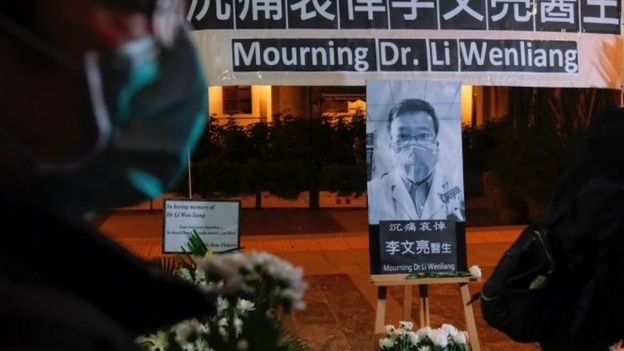
In China at the end of December, a 34-year-old ophthalmologist named Dr Li Wenliang tried to send a message to other medics warning them about a new virus in the city of Wuhan in Hubei Province.
On 3 January, the BBC wrote its first news report about a "mystery virus" in Wuhan. At the time, 44 cases had been confirmed, 11 of which were considered severe.
Many feared there would be a repeat of the 2003 Sars outbreak that killed 774 people. By 18 January the confirmed number of cases had risen to around 60 - but experts estimated the real figure was closer to 1,700.
Just two days later, as millions of people prepared to travel for the lunar new year, the number of cases more than tripled to more than 200 and the virus was detected in Beijing, Shanghai and Shenzhen.
On 23 January, Wuhan went into lockdown. At that point, 18 people had died and 570 others had been infected, including in Taiwan, Japan, Thailand, South Korea and the United States.
Ten days later, a 44-year-old man in the Philippines died of the virus - the first death reported outside of China.
A week later, an 80-year-old tourist died in France - Europe's first coronavirus death. The virus appeared in Iran five days later - two people died within hours of their diagnosis being announced. Iran would later become a hotspot for the virus.
Italy saw a major surge in cases on 23 February, and 10 towns in Lombardy went into lockdown, later extended to the whole of Italy.
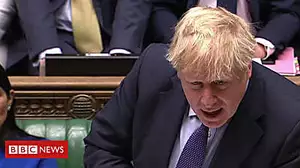
On 23 March, British Prime Minister Boris Johnson announced a three-week lockdown in the UK.
Three days later, on 26 March, the US officially overtook China as the country hardest-hit by the coronavirus outbreak, with more than 86,000 confirmed cases. By 2 April, this had risen to more than 217,000 - almost double the number of cases in Italy.
On the same day the US hit another grim milestone. Johns Hopkins University recorded 1,169 deaths, the highest yet of any country in a single 24-hour period.
The Zaandam cruise ship, with dozens of ill passengers on board, docked in Florida after several South American countries refused to accept it
Russia's President Putin has extended the period for Russians to stay away from work to the end of April
Belgium's death toll has passed 1,000
In Iran more than 3,100 deaths have been officially confirmed
UK Health Secretary Matt Hancock said the aim was 100,000 tests a day in England by the end of April
Philippines' President Rodrigo Duterte warned people they could be shot dead if they caused trouble over restrictions, saying the police and the military had the authority to shoot if their lives were in danger
Dharavi, a huge slum in India's financial capital, Mumbai, has reported its first death linked to the coronavirus. More than a million people live in extremely overcrowded conditions in Dharavi, believed to be the biggest slum in Asia
Editor’s note: The Economist is making some of its most important coverage of the covid-19 pandemic freely available to readers of The Economist Today, our daily newsletter. To receive it, register here. For more coverage, see our coronavirus hub
“WE HAVE NO
choice,” said President Donald Trump on March 30th, after announcing
that federal guidelines on social distancing would remain in force until
the end of April. “Modelling…shows the peak in fatalities will not
arrive for another two weeks. The same modelling also shows that, by
very vigorously following these guidelines, we could save more than 1
million American lives.”
Epidemiological
models are not the only reason why many countries around the world, and
many states in America, are now in some form of lockdown. That China,
where the outbreak started, pursued such a policy with an abandon never
seen before, and subsequently reported spectacular falls in the rate of
new infections, is doubtless another reason. So are the grim scenes from
countries where the spread of the virus was not interrupted early
enough. By April 1st Italy had seen almost four times as many deaths as
China.
The power of the models has been
that they capture what has just been seen in these countries and
provide a quantitative picture of what may be seen tomorrow—or in
alternative tomorrows. They have both made clear how bad things could
get and offered some sense of the respite which different interventions
can offer. Faced with experts saying, quietly but with good evidence,
that a lockdown will save umpty-hundred-thousand lives, it is hard for a
politician to answer “At what cost?”
What
is more, when the epidemiologists reply “Not our department”, the
economists to whom the buck then passes are not necessarily much more
help. Estimates of the costs of the interventions now in place are all
large, but they vary widely (see article).
A proper assessment requires knowing how well the measures will work,
how long they will last and how they will be ended—thus returning the
question to the realm of public-health policy.
But
as time goes on, “at what cost” will become easier to voice, and harder
to duck. “We have no choice” will no longer be enough; as the
disruptive effects of social-distancing measures and lockdowns mount
there will be hard choices to make, and they will need to be justified
economically as well as in terms of public health. How is that to be
done?
Epidemiological
models come in two types. The first seeks to capture the basic
mechanisms by which diseases spread in a set of interlinked equations.
In the classic version of this approach each person is considered either
susceptible, exposed, infectious or recovered from the disease. The
number in each group evolves with the numbers in one or more of the
other groups according to strict mathematical rules (see chart 1). In
simple versions of such models the population is uniform; in more
elaborate versions, such as the one from Imperial College London, which
has influenced policy in Britain and elsewhere, the population is
subdivided by age, gender, occupation and so on.
The
second type of model makes no claim to capture the underlying dynamics.
They are instead based on what is essentially a sophisticated form of
moving average, predicting things about next week (such as how many new
infections there will be) based mostly on what happened this week, a
little bit on what happened last week, and a smidgen on what happened
before that. This approach is used to forecast the course of epidemics
such as the seasonal flu, using patterns seen in epidemics that have
already run their course to predict what will come next. Over the short
term they can work pretty well, providing more actionable insights than
mechanistic models. Over the long term they remain, at best, a work in
progress.
All the models are beset by
insufficient data when faced with covid-19. There is still a lot of
uncertainty about how much transmission occurs in different age groups
and how infectious people can be before they have symptoms; that makes
the links between the different equations in the mechanistic models hard
to define properly. Statistical models lack the data from previous
epidemics that make them reliable when staying a few steps ahead of the
flu.
Obedient to controlling hands
This
causes problems. The Dutch started expanding their intensive-care
capacity on the basis of a model which, until March 19th, expected
intensive-care stays to last ten days. Having seen what was happening in
hospitals, the modellers lengthened that to 23 days, and the
authorities worry about running out of beds by April 6th. Unsettling
news; but better known in advance than discovered the day before.
If
more data improve models, so does allowing people to look under their
bonnets. The Dutch have published the details of the model they are
using; so has New Zealand. As well as allowing for expert critique, it
is a valuable way of building up public trust.
As
models become more important and more scrutinised, discrepancies
between their purported results will become apparent. One way to deal
with divergence is to bring together the results of various different
but comparable models. In Britain, the government convened a committee
of modelling experts who weighed the collective wisdom from various
models of the covid-19 epidemic. America’s task force for the epidemic
recently held a meeting of modelling experts to assess the range of
their results.
Another way to try to
get at the combined expertise of the field is simply to ask the
practitioners. Nicholas Reich of the University of Massachusetts,
Amherst, and his colleague Thomas McAndrew have used a questionnaire to
ask a panel of experts on epidemics, including many who make models, how
they expect the pandemic to evolve. This sounds crude compared with
differential equations and statistical regressions, but in some ways it
is more sophisticated. Asked what they were basing their responses on,
the experts said it was about one-third the results of specific models
and about two-thirds experience and intuition. This offers a way to take
the models seriously, but not literally, by systematically tapping the
tacit knowledge of those who work with them.
In
studies run over the course of two flu seasons, such a panel of experts
was consistently better at predicting what was coming over the next few
weeks than the best computational models. Unfortunately, like their
models, the experts have not seen a covid outbreak before, which calls
the value of their experience into at least a little doubt. But it is
interesting, given Mr Trump’s commitment to just another month of social
distancing, that they do not expect a peak in the American epidemic
until May (see chart 2).
Though the
models differ in various respects, the sort of action taken on their
advice has so far been pretty similar around the world. This does not
mean the resultant policies have been wise; the way that India
implemented its lockdown seems all but certain to have exacerbated the
already devastating threat that covid-19 poses there. And there are some
outliers, such as the Netherlands and, particularly, Sweden, where
policies are notably less strict than in neighbouring countries.
Attempts
to argue that the costs of such action could be far greater than the
cost of letting the disease run its course have, on the other hand,
failed to gain much traction. When looking for intellectual support,
their proponents have turned not to epidemiologists but to analyses by
scholars in other fields, such as Richard Epstein, a lawyer at the
Hoover Institute at Stanford, and Philip Thomas, a professor of risk
management at the University of Bristol. These did not convince many
experts.
April is the cruellest month
Even
if they had, it might have been in vain. The argument for zeal in the
struggle against covid-19 goes beyond economic logic. It depends on a
more primal politics of survival; hence the frequent comparison with
total war. Even as he talked of saving a million lives, Mr Trump had to
warn America of 100,000 to 200,000 deaths—estimates that easily outstrip
the number of American troops lost in Vietnam. To have continued along a
far worse trajectory would have been all but impossible.
What
is more, a government trying to privilege the health of its economy
over the health of its citizenry would in all likelihood end up with
neither. In the absence of mandated mitigation policies, many people
would nonetheless reduce the time they spend out of the home working and
consuming in order to limit their exposure to the virus. (Cinemas in
South Korea, where the epidemic seems more or less under control, have
not been closed by the government—but they are still short of
customers.) There would be effects on production, too, with many firms
hard put to continue business as usual as some workers fell ill (as is
happening in health care today) and others stayed away (as isn’t).
This
is one reason that, in the acute phase of the epidemic, a comparison of
costs and benefits comes down clearly on the side of action along the
lines being taken in many countries. The economy takes a big hit—but it
would take a hit from the disease too. What is more, saving lives is not
just good for the people concerned, their friends and family, their
employers and their compatriots’ sense of national worth. It has
substantial economic benefits.
Michael
Greenstone and Vishan Nigam, both of the University of Chicago, have
studied a model of America’s covid-19 epidemic in which, if the
government took no action, over 3m would die. If fairly minimal social
distancing is put in place, that total drops by 1.7m. Leaving the death
toll at 1.5m makes that a tragically underpowered response. But it still
brings huge economic benefits. Age-adjusted estimates of the value of
the lives saved, such as those used when assessing the benefits of
environmental regulations, make those 1.7m people worth about $8trn:
nearly 40% of GDP.
Those sceptical of the costs of current policies argue that they, too, want to save lives. The models used to forecast GDP
on the basis of leading indicators such as surveys of sentiment,
unemployment claims and construction starts are no better prepared for
covid-19 than epidemiological models are, and their conclusions should
be appropriately salinated. But even if predictions of annualised GDP
losses of 30% over the first half of the year in some hard-hit
economies prove wide of the mark, the abrupt slowdown will be
unprecedented.
Lost business activity
will mean lost incomes and bankrupt firms and households. That will
entail not just widespread misery, but ill health and death. Some
sceptics of mitigation efforts, like George Loewenstein, an economist at
Carnegie Mellon University, in Pittsburgh, draw an analogy to the
“deaths of despair”—from suicide and alcohol and drug abuse—in regions
and demographic groups which have suffered from declining economic
fortunes in recent decades.
The general belief that increases in GDP
are good for people’s health—which is true up to a point, though not
straightforwardly so in rich countries—definitely suggests that an
economic contraction will increase the burden of disease. And there is
good reason to worry both about the mental-health effects of lockdown
(see article)
and the likelihood that it will lead to higher levels of domestic
abuse. But detailed research on the health effects of downturns suggests
that they are not nearly so negative as you might think, especially
when it comes to death. Counterintuitive as it may be, the economic
evidence indicates that mortality is procyclical: it rises in periods of
economic growth and declines during downturns.
And the profit and loss
A
study of economic activity and mortality in Europe between 1970 and
2007 found that a 1% increase in unemployment was associated with a
0.79% rise in suicides among people under the age of 65 and a comparable
rise in deaths from homicide, but a decline in traffic deaths of 1.39%
and effectively no change in mortality from all causes (see chart 3). A
study published in 2000 by Christopher Ruhm, now at the University of
Virginia, found that in America a 1% rise in unemployment was associated
with a 1.3% increase in suicides, but a decline in cardiovascular
deaths of 0.5%, in road deaths of 3.0%, and in deaths from all causes of
0.5%. In the Great Depression, the biggest downturn in both output and
employment America has ever witnessed, overall mortality fell.
Some
research suggests that the procyclical link between strong economic
growth and higher mortality has weakened in recent decades. But that is a
long way from finding that it has reversed. What is more, the effects
of downturns on health seem contingent on policy. Work published by the OECD,
a group of mostly rich countries, found that some worsening health
outcomes seen in the aftermath of the financial crisis were due not to
the downturn, but to the reductions in health-care provision that came
about as a result of the government austerity which went with it.
Increased spending on programmes that help people get jobs, on the other
hand, seems to reduce the effect of unemployment on suicides. The fact
that some of the people now arguing that the exorbitant costs of
decisive action against covid-19 will lead to poorer public health in
the future were, after the financial crisis, supporters of an austerity
which had the same effect is not without its irony.
But
if the argument that the cure might be worse than the disease has not
held up so far, the story still has a long way to go. The huge costs of
shutting down a significant fraction of the economy will increase with
time. And as the death rates plateau and then fall back, the
trade-offs—in terms of economics, public health, social solidarity and
stability and more—that come with lockdowns, the closure of bars, pubs
and restaurants, shuttered football clubs and cabin fever will become
harder to calculate.
It is then that
both politicians and the public are likely to begin to see things
differently. David Ropeik, a risk-perception consultant, says that
people’s willingness to abide by restrictions depends both on their
sense of self-preservation and on a sense of altruism. As their
perception of the risks the disease poses both to themselves and others
begins to fall, seclusion will irk them more.
It
is also at this point that one can expect calls to restart the economy
to become clamorous. In Germany, where the curve of the disease has
started to flatten, Armin Laschet, the premier of North
Rhine-Westphalia, Germany’s largest and second-most-covid-afflicted
state, has said it should no longer be out of bounds to talk about an
exit strategy. Angela Merkel, the chancellor—a role Mr Laschet is keen
to inherit—said on March 26th there should be no discussion of such
things until the doubling time for the number of cases in the country
had stretched beyond ten days. When she was speaking, it was four days.
Now it is close to eight.
When
the restrictions are lessened it will not be a simple matter of
“declaring victory and going home”, the strategy for getting out of the
Vietnam war advocated by Senator Richard Russell. One of the fundamental
predictions of the mechanistic models is that to put an epidemic firmly
behind you, you have to get rid of the susceptible part of the
population. Vaccination can bring that about. Making it harder for the
disease to spread, as social distancing does, leaves the susceptible
population just as vulnerable to getting exposed and infected as it was
before when restrictions are lifted.
This
does not mean that countries have to continue in lockdown until there
is a vaccine. It means that when they relax constraints, they must have a
plan. The rudiments of such a plan would be to ease the pressure step
by step, not all at once, and to put in place a programme for picking up
new cases and people who have been in contact with them as quickly as
possible. How countries trace cases will depend, in part, on how low
they were able to get the level of the virus in the population and how
able, or inclined, they are to erode their citizens’ privacy. How they
relax constraints will depend to some extent on modelling.
Cécile
Viboud of America’s National Institutes of Health argues that if you
can make mechanistic models sufficiently fine-grained they will help you
understand the effectiveness of different social-distancing measures.
That sounds like the sort of knowledge that governments considering
which restrictions to loosen, or tighten back up, might find valuable.
The ability to compare the outcomes in countries following different
strategies could also help. David Spiegelhalter, a statistician at the
University of Cambridge, says the differences between Norway, which is
conforming to the lockdowns seen in most of the rest of Europe, and
Sweden, which is not, provide a “fantastic experiment” with which to
probe the various models.
But
the fact that it is possible to build things like how much time
particular types of people spend in the pub into models does not
necessarily mean that the models will represent the world better as a
result. For what they say on such subjects to be trustworthy the new
parameters on pubs and such like must be calibrated against the real
world; and the more parameters are in play, the harder that is. People
can change so many behaviours in response to restrictions imposed and
removed that the uncertainties will “balloon” over time, says Mr Reich.
The human engine waits
Some
will see this as a reason to push ahead with calibration and other
improvements. Others may see it as a reason to put off the risks
associated with letting the virus out of the bag for as long as
possible. Longer restrictions would give governments more time to put in
place measures for testing people and tracking contacts. If they force
many companies into bankruptcy, they will give others time to find
workarounds and new types of automation that make the restrictions less
onerous as time goes by.
Advocates of
keeping things in check for as long as possible can point to a new paper
by Sergio Correia, of the Federal Reserve Board, Stephan Luck, of the
Federal Reserve Bank of New York, and Emil Verner, of MIT,
which takes a city-by-city look at the effects of the flu pandemic of
1918-19 on the American economy. They find that the longer and more
zealously a city worked to stem the flu’s spread, the better its
subsequent economic performance. A new analysis by economists at the
University of Wyoming suggests much the same should be true today.
The
flu, though, mostly killed workers in their prime, and the service
industries which dominate the modern economy may not respond as the
manufacturing industries of a century ago. What is more, in some places
the pressure to get the economy moving again may be irresistible.
According to Goldman Sachs, a bank, Italy’s debts could reach 160% of GDP
by the end of the year—the sort of number that precedes panics in bond
markets. The euro zone could forestall such a crisis by turning Italian
debt into liabilities shared all its members—something the European
Central Bank is already doing, to a limited extent, by buying Italian
bonds. But resistance from Germany and the Netherlands is limiting
further movement in that direction. There could come a time when Italy
felt forced to relax its restrictions to someone else’s schedule rather
than leave the euro.
There
is also a worry that, the longer the economy is suppressed, the more
long-lasting structural damage is done to it. Workers suffering long
bouts of unemployment may find that their skills erode and their
connections to the workforce weaken, and that they are less likely to
re-enter the labour force and find good work after the downturn has
ended. Older workers may be less inclined to move or retrain, and more
ready to enter early retirement. Such “scarring” would make the losses
from the restrictions on economic life more than just a one-off: they
would become a lasting blight. That said, the potential for such
scarring can be reduced by programmes designed to get more people back
into the labour force.
In the end, just
as lockdowns, for all that their virtues were underlined by the
modellers’ grim visions, spread around the world largely by emulation,
they may be lifted in a similar manner. If one country eases
restrictions, sees its economy roar back to life and manages to keep the
rate at which its still-susceptible population gets infected low, you
can be sure that others will follow suit. ■
Dig deeper: For our latest coverage of the covid-19 pandemic, register for The Economist Today, our daily newsletter, or visit our coronavirus hub
This article appeared in the Briefing section of the print edition under the headline "Hard choices"
Editor’s note: The Economist is making some of its most important coverage of the covid-19 pandemic freely available to readers of The Economist Today, our daily newsletter. To receive it, register here. For more coverage, see our coronavirus hub
IN
AUGUST 2005 the unemployment rate in Louisiana was 5.4%, close to its
all-time low. Then Hurricane Katrina hit. The storm destroyed some
firms, while others were forced to close permanently. Within a month,
Louisiana’s unemployment rate had more than doubled.
Now
America as a whole faces a similar shock. From a five-decade low,
unemployment is soaring upwards, as the onrushing coronavirus pandemic
forces the economy to shut down. Millions of Americans are filing for
financial assistance. The jobs report for March, to be published on
April 3rd, is a flavour of what is to come—though because the survey
focused on early to mid-March, before the lockdowns really got going, it
is likely to give a misleadingly rosy view of the true situation. How
bad could the labour market get?
GDP
growth and the unemployment rate tend to move in opposite directions.
Unemployment hit an all-time high in 1933, during the Great Depression
(see chart). The coronavirus-induced shutdowns are expected to lead to a
year-on-year GDP decline of about 10% in the second quarter of this
year. Such a steep fall in economic output implies an unemployment rate
of about 9% in that quarter, based on past relationships, which would be
roughly in line with the peak reached during the financial crisis of
2007-09.
But the coronavirus epidemic
is not like past recessions. For one thing, hiring could be even lower
than is typical. Delivery firms notwithstanding, surveys suggest that
firms’ hiring intentions are as low or lower than they were in 2008. And
applying for a job is especially difficult with cities in lockdown.
Even without a single virus-induced layoff, hiring freezes would lead to
sharply rising unemployment. For instance, young people entering the
labour market for the first time would struggle to find work.
The
decline in GDP associated with the lockdowns is also particularly
concentrated in labour-intensive industries such as leisure and
hospitality. Mark Zandi of Moody’s Analytics, a research firm,
calculates that more than 30m American jobs are highly vulnerable to
closures associated with covid-19. Were they all to disappear,
unemployment would probably rise above 20%. Research published by the
Federal Reserve Bank of St Louis is even gloomier. It suggests that
close to 50m Americans could lose their jobs in the second quarter of
this year—enough to push the unemployment rate above 30%.
The
numbers will probably not get that bad. In part that is a matter of
statistical definitions. To be officially classified as unemployed,
jobless folk need to be “actively seeking work”—which is rather
difficult in the current circumstances. Some people could end up being
counted as “economically inactive” rather than unemployed, which would
hold down the official unemployment rate (a similar phenomenon occurred
in Louisiana after Katrina).
America’s
economic-stimulus bill will be a more genuine check on rising
joblessness. The $350bn (1.6% of GDP) set aside for small firms’ costs
is enough to cover the compensation of all at-risk workers for perhaps
seven weeks, according to our calculations, making it less likely that
bosses will let them go. Other measures in the package should support
consumption, and thus demand for labour. In a report published on March
31st Goldman Sachs, a bank, argued that unemployment will peak in the
third quarter of this year at nearly 15%—an estimate that is roughly in
line with those of other forecasters.
A
big jump in unemployment is less of a problem if it quickly falls once
the lockdown ends. Louisiana offers an encouraging precedent. After a
few bad months in late 2005, the state’s unemployment rate dropped
almost as sharply as it had risen, falling in line with the rest of the
country. Whether the economy will prove so elastic this time is another
matter. Travellers and restaurant-goers will be cautious until some sort
of vaccine or treatment is widely available; social-distancing rules,
even if relaxed, will continue for some time. Goldman Sachs’s
researchers reckon that it will take until 2023 for unemployment to fall
back below 4%. The lockdowns should be temporary, but the economic
consequences will feel much more permanent.■
Dig deeper:
For our latest coverage of the covid-19 pandemic, register for The Economist Today, our daily newsletter, or visit our coronavirus hub

 GETTY IMAGES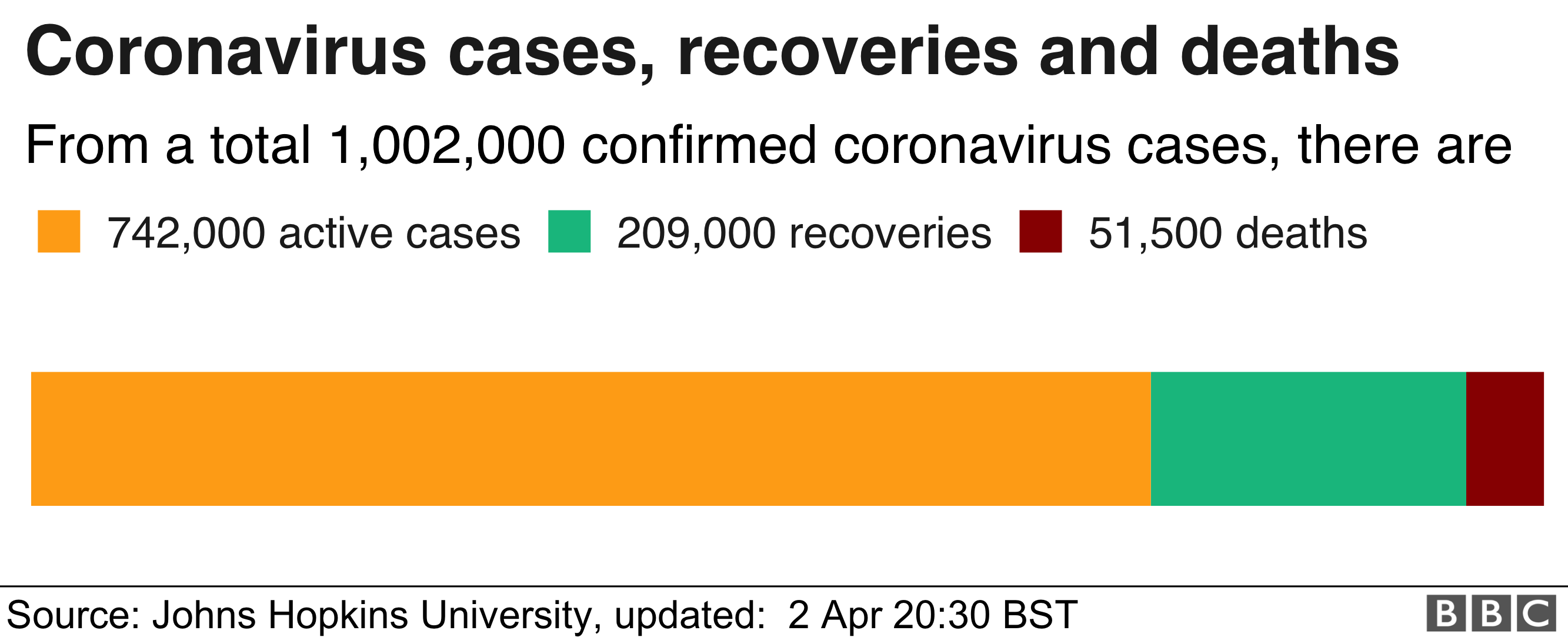
 REUTERS












![[Gallery] Prince Harry And Meghan Markle's New Home Is Not What You'd Expect](https://images.outbrainimg.com/transform/v3/eyJpdSI6IjVkZmI5MzFiZDgxMGM5NzRhN2VjYjE2YWEyZTRiMzMyZDVjZjM1YWQwZGU2ZTEzMTU5MjQ4MWYwMDFlMjY2OTgiLCJ3IjoxNjAsImgiOjkwLCJkIjoxLjUsImNzIjowLCJmIjo0fQ.webp "[Gallery] Prince Harry And Meghan Markle's New Home Is Not What You'd Expect")
![[Photos] How Cowboys Really Kept Clean In The Wild West](https://www.pastfactory.com/history/wild-west-hygiene-habits/?utm_campaign=nlz-d-us-r-eb-lacb-200320-pa-ob-a4-a1&utm_term=e2c1873c85f088522bbd3af059b27e73-43241.jpg&utm_source=ob&utm_medium=$section_id$-ob&utm_content=00a0145ab02596b6e9d5028d96977c5a1d&utm_cpc=$cpc$&obOrigUrl=true "[Photos] How Cowboys Really Kept Clean In The Wild West")