Biodun Iginla, BBC News

Showing posts with label #biodun iginla. Show all posts
Showing posts with label #biodun iginla. Show all posts
Saturday, June 15, 2019

Friday, June 14, 2019
Tuesday, May 7, 2019
Academic disciplines
The Romans invented disciplines as the legitimate storage of knowledge. That means only members of each discipline can talk/write with authority. Disciplines are colonies, and they are cleared through the same etymon: colonus. Which is also culture. Then Germans modeled disciplines that were inherited by US and Western academia. The production and construction of knowlege are transdisciplinary....That's why transdisciplinary knowledge is "natural". And in fact, with technology, disciplines are being eroded.We can no longer consider them as the legitimage storages of knowledge. The other curious thing is that literature and art history and classical music are divided into centuries. But that's another topic for another day. Enjoy spring wherever you are.
(As an example of the breakdown: My Tamara plays the piano and other instruments. She's also a theorist and a poet. She's the sound engineer at Pancake Studio in Brooklyn NYC. And her MFA thesis analyzes sound/music in film)
To all places and events that one must go to observe aspirations of the moment.
Wednesday, April 24, 2019
E=MC2---A Primer
In physics, mass–energy equivalence (E=MC2) states that anything having mass has an equivalent amount of energy and vice versa, with these fundamental quantities directly relating to one another by Albert Einstein's famous formula:[1]

This formula states that the equivalent energy (E) can be calculated as the mass (m) multiplied by the speed of light (c = ~3×10⁸ m/s) squared. Similarly, anything having energy exhibits a corresponding mass m given by its energy E divided by the speed of light squared c2. Because the speed of light is a very large number in everyday units, the formula implies that even an everyday object at rest with a modest amount of mass has a very large amount of energy intrinsically. Chemical, nucle
Mass–energy equivalence arose originally from special relativity as a paradox described by Henri Poincaré.[2] Einstein proposed it on 21 November 1905, in the paper Does the inertia of a body depend upon its energy-content?, one of his Annus Mirabilis (Miraculous Year) papers.[3] Einstein was the first to propose that the equivalence of mass and energy is a general principle and a consequence of the symmetries of space and time.
A consequence of the mass–energy equivalence is that if a body is stationary, it still has some internal or intrinsic energy, called its rest energy, corresponding to its rest mass. When the body is in motion, its total energy is greater than its rest energy, and equivalently its total mass (also called relativistic mass in this context) is greater than its rest mass. This rest mass is also called the intrinsic or invariant mass because it remains the same regardless of this motion, even for the extreme speeds or gravity considered in special and general relativity.
The mass–energy formula also serves to convert units of mass to units of energy (and vice versa), no matter what system of measurement units is used.
Monday, April 1, 2019
Yahoo News Compiled for the BBC's Biodun Iginla--April 1, 2019
 PoliticsUSA TODAY
Beto O'Rourke rallies in Texas kick off in El Paso, blocks from US-Mexico border
EL PASO, Texas – Beto O'Rourke stood on a platform Saturday morning in the multicultural heart of downtown El Paso's shopping district – only blocks from the U.S.-Mexico border – challenging President Donald Trump's immigration policies. "With Cuidad Juarez, we form the largest bi-national community in this hemisphere and, for 20 years running, we have been one of the safest cities in America," O'Rourke said, adding that the safety comes not in spite of immigrants and asylum seekers but because of them. "We have learned not to fear our differences but to respect and embrace them," O'Rourke said.
Get fast, reliable Business Internet.
Choose any Internet speed then add Phone & TV for just $34.90 more per month.- NewsThe Independent
Samantha Josephson murder: US student killed after getting into car she thought was her Uber
A university student has been found dead after getting into a stranger's car thinking it was her Uber ride. Samantha Josephson left The Bird Dog bar Columbia, South Carolina alone in the early hours of Friday after being separated from her roommates during a night out. The University of South Carolina senior called an Uber around 2am and CCTV footage shows her getting into a black Chevrolet Impala outside the Five Points bar.  PoliticsAFP
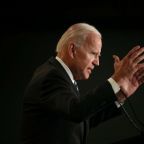
Biden bids to quell storm over campaign trail kiss
Former vice president Joe Biden insisted Sunday he had never acted inappropriately towards women as a growing row about a kiss on the campaign trail cast a shadow over his expected run for the White House. The 76-year-old Biden is the clear favorite to win the Democrat nomination to take on Donald Trump in the 2020 presidential election even though he has yet to declare his candidacy. But several of his rivals have now weighed in on the allegations from a former state lawmaker who has recalled being "mortified" when Biden had planted a "big, slow kiss" on the back of her head on the sidelines of a rally in Nevada five years ago.- WorldThe Telegraph
Pope Francis urges Moroccan Christians against converting others
Pope Francis on Sunday warned Catholics in Morocco against trying to convert others to boost their small numbers, during a rare visit by a pontiff to the North African country. Speaking in Rabat's cathedral on his second day in the Moroccan capital, Francis insisted trying to convert people to one's own belief "always leads to an impasse". Christians are a tiny minority in Morocco where 99 percent of the population is Muslim, with sub-Saharan Africans making up a large part of the country's 30,000-strong Catholic community. 
9 lucrative cards for Americans with good credit
Pay attention America! If you have good credit, these cards are surprisingly lucrative. 5% back, $0 fees, the list goes on!- WorldReuters
UK PM May would have to look closely at customs union if parliament votes for it -minister
British Prime Minister Theresa May would have to look closely at pursuing a customs union with the European Union if parliament votes for it, justice minister David Gauke said on Sunday. Parliament is due to hold a second round of votes on alternative Brexit options on Monday. In a first round, the idea of seeking a customs union with the European Union was one of the most popular options, although it fell just short of a majority.  NewsUSA TODAY Opinion
Why 'Florida Man' is a thing: Weirdness in other states goes unnoticed
Florida has one of the most robust public records laws in the nation. Documents, photos, even videos created by a public agency are readily available — with some notable exceptions (and here I'm thinking of the video of New England Patriots' owner Robert Kraft in that massage parlor). Police agencies routinely make all this available to the news media.- WorldBloomberg
Singapore Isn't Waiting for Facebook to Crack Down on Fake News
"There are a lot of falsehoods being propagated," Singapore Law Minister K Shanmugam told reporters on Monday. The government's move comes just days after Facebook founder Mark Zuckerberg called for new global regulations for everything from hate speech online to privacy and data protection. While Facebook asked for regulators around the world to agree on standards for online content, governments like Singapore see the issue as serious enough that they need to take more immediate action. 
Markdowns in Minnesota On Unsold Cars
Some car companies offer unsold inventory for up to 70% off the listed prices. These deals are only allowed through authorized partners. Search now.- BusinessThe National Interest
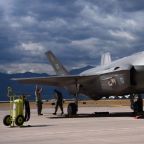
A Stealthy F-15X: A Good Idea or a Waste of Time for the Air Force?
A recent article concerning Boeing's pitch to the U.S. Air Force of a cheap, modestly upgraded F-15X fighter elicited lamentations from some commenters that the Air Force was not enticed by a more ambitious proposal for the F-15SE Silent Eagle—an F-15 with a reduced radar cross-section. By comparison, the U.S. military's newest fourth-generation fighter, the FA-18E/F Super Hornet, might as well be called the Silent Hornet with an RCS ranging between .1 and 1 m2. - BusinessReuters
GLOBAL MARKETS-Shares surge on China factory rebound, trade hopes
Global stocks surged higher on Monday, extending gains from their best quarter in nearly 10 years, as strong Chinese factory activity data and signs of progress in U.S.-China trade negotiations gave investors reason to cheer. European stocks posted their best daily gains since mid-February, with the pan-European STOXX 600 index up 0.8 percent in early deals. "Investors' sentiment seems to be tilting to the side of optimism at the beginning of the second quarter, following a robust manufacturing report from China," said Konstantinos Anthis, head of research at ADSS. - 3.1 magnitude earthquake shakes San Fernando ValleyWorldKABC – Los Angeles
3.1 magnitude earthquake shakes San Fernando Valley
A 3.1-magnitude earthquake occurred in the Northridge area at 3:52 a.m. according to USGS. 
Delta Burke Is 62 & Surely Not As We Remembered
From Beverly Johnson to Raquel Welch, these 1970s women remain influential today. See their stories below.- PoliticsThe Guardian
'AOC TMZ': why Republicans obsess over Alexandria Ocasio-Cortez
“It's weird,” Alexandria Ocasio-Cortez mused on NBC's Late Night with Seth Meyers earlier this month. Obsessed would seem to be the right word for conservatives regarding the progressive, provocative Democratic congresswoman from New York who is known as AOC. Barely a speech went by at the recent Conservative Political Action Conference near Washington without a jaundiced reference to Ocasio-Cortez.  WorldAFP
Two killed in fight at ballot box in east Turkey: official
An election observer and another man were killed in a fight at a school-based polling station in eastern Turkey Sunday as voting got underway in Turkey's local elections, the local governor's office said. "Two of our citizens lost their lives as a result of a dispute... at the ballot box around 10.00 am (0700 GMT)" in the Puturge district of Malatya, it said on its website. Security forces arrested four suspects in connection with the deaths, the governor's office added.- HealthUSA TODAY
Trump administration awards $1.7 million family planning grant to anti-abortion group
The non-profit Obria Group, which considers itself an anti-abortion version of Planned Parenthood, says the $1.7 million award it is receiving from the Trump administration will help fund a chain of crisis pregnancy centers that oppose abortion and do not offer contraceptives. At the same time, the Department of Health and Human Services, which announced the grant on Friday, is cutting funds to some Planned Parenthood affiliates. Many women want the opportunity to visit a professional, comprehensive health care facility — not an abortion clinic — for their health care needs; this grant will give them that choice,” Kathleen Eaton Bravo, founder and CEO of The Obria Group, said in a statement. 
Recalculate Your House Payment With Quicken Loans
If you owe less than $679,650, try this radically simple refi experience from Quicken Loans to see if you can lock a low rate that will never climb. WorldAssociated Press
Venezuela's rival factions rally as power struggle persists
Venezuelan opposition leader Juan Guaido took his campaign for change to one of the country's most populous states on Saturday, while supporters of the man he is trying to oust, President Nicolas Maduro, held a rival demonstration in the capital after another nationwide blackout. Guaido, the U.S.-backed leader of the opposition-controlled National Assembly, made several stops in Miranda state near Caracas, delivering trademark denunciations of Maduro's government and promises of a better life for Venezuela's struggling population. Speaking from podiums in the street with his shirt sleeves rolled up, the 35-year-old politician drew applause when he said even bigger protests will be held on April 6 as the opposition intensifies its push to topple Maduro.- LifestyleThe Independent
Woman, 61, gives birth to own granddaughter
A woman from Nebraska has given birth to her own granddaughter, after acting as a surrogate mother for her son gay son and his husband. When Matthew Eledge and Elliot Dougherty said they wanted to have a child to expand their family, Mr Eledge's 61-year-old mother offered to be involved in a very special way, “There was no moment of hesitation. It was natural instinct.  WorldAFP
Ukraine police seize $60mn of heroin, say 'never seen so much'
Ukraine police seized heroin worth about $60 million -- over half a tonne of the powder -- in raids in the country's centre and west, officials said Sunday, describing it as the biggest haul they had ever seen. Chief of the national police Sergiy Knyazev announced on Facebook two raids in Kiev region yielding "600 kilogrammes (1,322 pounds) of heroin worth $50 million." About 500 kg were found on Sunday afternoon, and more than 100 kg overnight "in a professionally-equipped cubby hole in a premium-class car" outside Kiev.
Minneapolis: No Tickets In 3 Years? Go Here Today
Minnesota drivers are surprised that they never knew this. If you have no tickets in 3 years, you better read this...- BusinessCar and Driver
View Photos of the 2019 BMW 330i xDrive
An improved driving machine is not the same as an ultimate one. From Car and Driver  WorldReuters
Don't discriminate against our firms, China's Xi tells New Zealand
Meeting in Beijing's Great Hall of the People, Xi told Ardern that China has always regarded New Zealand as "a sincere friend and partner". Both countries must deepen mutual trust and understanding, seek common ground while putting aside differences, and respect each other's major concerns, Xi said, according to a statement from China's Foreign Ministry. quot;China is willing to continue to support strong companies to invest in New Zealand, and New Zealand should provide a fair, just, non-discriminatory operating environment for Chinese companies," it paraphrased Xi as saying.- BusinessThe National Interest
The F-111 Aardvark: The Strike Aircraft That Was Dumped for the F-15 Eagle
The F-111 Aardvark was the U.S. Air Force's premier strike aircraft for the majority of the Cold War. It served in practically every conflict from Vietnam forwards, until it was replaced by the F-15E Strike Eagle. It also served Strategic Air Command in a limited role as a strategic bomber. 
Mom Unclogged The Drain Full Of Turkey Grease
55-year-old mom accidentally discovered a new easy method to unclog her kitchen sink easily without using any tools or toxic chemicals.- PoliticsThe Guardian
Ocasio-Cortez says Green New Deal critics are making 'fools of themselves'
Alexandria Ocasio-Cortez has rounded on her Republican opponents, accusing them of making “total fools of themselves” in criticising her Green New Deal proposals. The Democratic congresswoman from New York has come under increasing attack from conservatives over her resolution that calls for a 10-year “national mobilization” to eliminate greenhouse gases and avert the worst impacts of climate change. At a rally this week, Donald Trump called the proposal an “extreme $100tn government takeover” which would mean “no more airplanes, no more cows, one car per family”.  WorldReuters
Palestinians mass at Gaza border to mark protest anniversary
Tens of thousands of Palestinians rallied at the Israel-Gaza border on Saturday, facing off against Israeli tanks and troops on the first anniversary of the 'Great March of Return' demonstrations. Israeli forces had massed the other side of the fortified frontier, with tensions already high after a rocket attack from Gaza and Israeli air strikes earlier in the week. Four Palestinians were killed on Saturday, Gaza medical officials said.- NewsUSA TODAY
California lawmakers propose sweeping reforms to counter college admissions scandal
In response to the nation's largest-ever college admissions bribery scheme, California lawmakers on Thursday proposed a package of six bills aimed at preventing a repeat of wealthy families cheating the system. The package includes measures seeking to audit public universities' admissions practices and ban preferential admissions for students related to a college's donors or alumni. Not only did the scam's ringleader William "Rick" Singer reside in California, said Assemblyman Kevin McCarty of Sacramento, but 25 of the 33 families and 10 of the 17 coaches and university officials named in the indictment live in the Golden State. 
- NewsThe Independent
Armed police raid home after parents refuse to take unvaccinated boy with high fever to hospital
With guns drawn, the police officers broke down the door of the suburban Phoenix home in the early hours of a February morning. Video from the officers' body cameras that was released on Thursday shows that moments later, the child's father emerges, walking out backward with his hands over his head. The boy was whisked away to a hospital, and since that raid on 25 February, he and the couple's two other children, aged 4 and 6, have been in the state's custody. - WorldBloomberg
U.K. Conservatives Not Planning for Snap Election: Brexit Update
Theresa May's Conservative Party isn't actively preparing for a general election, its deputy chairman said, even as Parliament looks set to push her to adopt a proposal for a softer Brexit on Monday, three days after resoundingly rejecting her plan for a third time. Key Developments: Labour's Watson: People's Vote is Solution (10:45 a.m. Deputy Labour Party Leader Tom Watson said that whatever comes out of Parliament's attempts to find a new way forward on Brexit should be put to a second referendum.  WorldAFP
Japan to unveil new era name ahead of abdication
Although the Gregorian calendar is widely used in the world's third-largest economy, Japan is the only country still using Chinese-style imperial calendars for private and public documents as well as computer records. The new era name therefore has a huge impact on daily life and anticipation is at fever pitch to see what will replace the era that marked Akihito's reign -- "Heisei" or "peace prevails everywhere." Highly secretive talks have been ongoing for months to pick a name for the new era, which should have a "positive meaning and be ideal for the Japanese people," according to government sources cited in local media.
60 Photographs That Were Withheld From The Public
...dozens of pictures of celebrities and remarkable people of yesteryear in all their beautiful, vintage glory.- Judge Jeanine: The biggest voter suppression effort ever took place at the highest level of our governmentPoliticsFOX News Videos
Judge Jeanine: The biggest voter suppression effort ever took place at the highest level of our government
Judge Jeanine weighs in on the release of Attorney General Bill Barr's summary of the Mueller report.  WorldReuters
No Ethiopia plane crash report on Monday, maybe this week: source
"Not today, maybe this week," the source said, when asked about the report into a crash that killed 157 people and led to the worldwide grounding of U.S. planemaker Boeing's top-selling 737 MAX jet. The report will be closely examined for clues to any similarities between the March 10 accident and a Lion Air crash in October, also involving a 737 MAX, that killed 189 people. Liability claims related to the Ethiopian crash and 737 MAX grounding could be the largest aviation reinsurance claim outside of war on record, broker Willis Re said on Monday.. Separately, Norwegian Air said its chief executive Bjoern Kjos would travel to meet Boeing in Seattle on Monday.- WorldThe National Interest
Study This Submarine (It Destroyed a U.S. Navy Aircraft Carrier in a War Game)
The slow, sustainable underwater speed of AIP-powered diesel submarines make them less than ideal for stalking prey over vast expanses of water. In 2005, USS Ronald Reagan, a newly constructed $6.2 billion dollar aircraft carrier, sank after being hit by multiple torpedoes. Fortunately, this did not occur in actual combat, but was simulated as part of a war game pitting a carrier task force including numerous antisubmarine escorts against HSMS Gotland, a small Swedish diesel-powered submarine displacing 1,600 tons. 
Here's How You Can Crush Your House Debt ASAP
You might be shocked when you learn about the mortgage tip that can help you save and eliminate up to 15 years of payments. WorldAssociated Press
Netanyahu embraces Brazil's far-right Bolsonaro in Israel
The Israeli prime minister warmly received far-right Brazilian President Jair Bolsonaro on Sunday, touting newfound amity between the two countries. Benjamin Netanyahu's red-carpet welcome for Bolsonaro comes days ahead of a tough re-election bid for the long-time Israeli premier on April 9. During his first state visit to Israel, the Brazilian leader is also expected to decide whether to follow President Donald Trump's lead and move the Brazilian Embassy from Tel Aviv to Jerusalem, a move that he has repeatedly promised.- WorldReuters
Border row pitches Mexican president into deep water with Trump
MEXICO CITY -- President Trump's threat to shut the U.S. border if Mexico does not halt all illegal immigration has exposed the limitations of the new Mexican government's strategy of trying to appease the U.S. president as he gears up for re-election. Amid a surge in migrant detentions at the southwest U.S. border, Trump on Friday said he would close the 2,000-mile (3,200-km) frontier, or sections of it, during the coming week if Mexico did not halt the flow of people. Casting the government under leftist President Andres Manuel Lopez Obrador as the villain in his struggle to curb illegal immigration to the United States, Trump returned to a signature theme of his 2015-2016 presidential election bid. - BusinessUSA TODAY
GM removes made-in-Mexico Chevy Blazer from Comerica Park display after controversy
DETROIT – In a discreet move Saturday, General Motors quietly lowered its new 2019 red Chevrolet Blazer SUV down from its perch above centerfield at Comerica Park and replaced it with an American-made Chevrolet Traverse SUV in white. Some UAW workers had considered the Blazer an affront to them given that GM builds the SUV in Mexico. The Traverse is built in GM's Lansing Delta Township plant in Lansing. 
Classic Photos That Shine A New Light On History
There’s no better way to discover something new about the past than to explore history through our pictures. HealthAssociated Press
Immune system therapy shows wider promise against cancer
A treatment that helps the immune system fight deadly blood cancers is showing early signs of promise against some solid tumors, giving hope that this approach might be extended to more common cancers in the future. The treatment, called CAR-T therapy, involves genetically modifying some of a patient's own cells to help them recognize and attack cancer. Richard Carlstrand of Long Key, Florida, had it more than a year ago for mesothelioma, an aggressive cancer of the lining of the lungs. WorldBloomberg
Comic, Billionaire, Comeback Queen Vie in Ukraine Election
Anti-establishment fervor has made Volodymyr Zelenskiy, a 41-year-old TV comic with no political experience, the front-runner. Who leads Ukraine is of global significance since the country of 42 million people, locked between Russia and the European Union, became a geopolitical battleground. While a return to Russia's sphere of influence is only a distant possibility, failure to lock up crooked officials is alienating donors and voters alike.- BusinessBGR News
Happy 15th birthday to Gmail, which is about to get a great feature we've been waiting for
It's hard to believe that Gmail celebrates its 15th birthday today, debuting as it did on April 1 way back in 2004 — back when, given the date, many people thought Google was pulling our leg by announcing a free email service on this day of all days. “Google Gets the Message, Launches Gmail,” the press release from the time declared. “Search is Number Two Online Activity — Email is Number One; 'Heck, Yeah,' Say Google Founders”. 
People Don't Know This Song Was Written About Her
Remember Her? She is the Inspiration Behind the Most Beautiful Song Ever Written- CelebrityUSA TODAY
Kelly Ripa wishes happy birthday to 'finest' husband Mark Consuelos in a sweet tribute
Kelly Ripa is wishing a happy birthday to the "finest man" she knows: Mark Consuelos. The "Live With Kelly and Ryan" co-host, 48, took to Instagram Saturday to celebrate her husband's 48th birthday with a sweet video collage set to the tune of Jake Shears' "Mississippi Delta (I'm Your Man)." "Happy birthday to the finest man! - WorldReuters
WRAPUP 2-No Ethiopia plane crash report on Monday, maybe this week - source
Ethiopia will not release a preliminary report into the causes of last month's Ethiopian Airlines crash on Monday, as previously expected, but may publish it this week, a source familiar with the transport ministry told Reuters. "Not today, maybe this week," the source said, when asked about the report into a crash that killed 157 people and led to the worldwide grounding of U.S. planemaker Boeing's top-selling 737 MAX jet. The report will be closely examined for clues to any similarities between the March 10 accident and a Lion Air crash in October, also involving a 737 MAX, that killed 189 people.  WorldReuters Videos
Vietnamese accused of murdering the half-brother of North Korean leader arrives in court
A Vietnamese woman accused of murdering Kim Jong Nam, the half-brother of North Korean leader Kim Jong Un, arrives in court. Rough cut - no reporter narration.
30 Vacation Photos You Can't Unsee
We`ve rounded up some of the most hilarious vacation photos on the internet that we could find, just so we can give you a nice laugh. WorldAFP
Four killed as thousands protest at border, but Gaza-Israel truce holds
Five rockets were launched from the Gaza Strip into Israel, prompting Israeli tanks to respond by firing on Hamas military posts Sunday, hours after a massive Palestinian protest along the border between Israel and Gaza. The rocket attack and Israeli response did not cause any casualties, according to the Israeli army and witnesses in Gaza. The Israeli tanks fired at Hamas posts in the central Gaza Strip and east of Gaza City, witnesses said. NewsYahoo News
Fox News apologizes after graphic says Trump cuts aid to '3 Mexican countries'
Fox News apologized Sunday for a live “Fox & Friends” segment graphic that read, “Trump Cuts Aid to 3 Mexican Countries. We want to clarify and correct something that happened earlier in the show,” the apology read. We had an inaccurate graphic on screen … we just want to be clear the funding is being cut off to three Central American countries.- WorldReuters
EU's Mogherini says ignoring U.N. resolutions on the Golan 'not a solution'
European Union foreign policy chief Federica Mogherini said on Sunday that ignoring United Nations Security Council resolutions on the Golan Heights was "not a solution". Mogherini also said a two state solution for Israel and Palestine was "the only viable and realistic solution ... we have a responsibility to prevent the two state solution from being irreversibly dismantled," she told an Arab League summit in Tunis.














































































Subscribe to:
Posts (Atom)