by Emily Straton and Biodun Iginla, The Economist Intelligence Unit News Analysts
Breathless in Brussels
Boris Johnson will struggle to sell his last-gasp
It looks even costlier to Britons than Theresa May’s
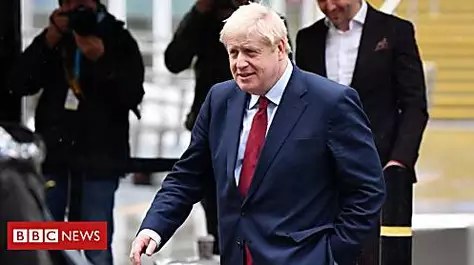
BORIS JOHNSON was in ebullient mood when he spoke to the press in Brussels on the evening of October 17th, even talking eagerly of his dinner plans. But his main goal was to persuade those watching, especially in Westminster, that he had secured what he called “a great deal for our country and for the EU”. He has less than 48 hours to win over MPs, who are due to vote on the agreement on October 19th, in a rare Saturday sitting.
The prime minister’s achievement is noteworthy, since many critics said he was bound to fail. He forced the European Union to reopen the withdrawal agreement it made with his predecessor, Theresa May. He struck a deal with Leo Varadkar, the Irish taoiseach, by talking to him in person. And he successfully ignored advice that the European Council would never endorse a last-minute deal by getting his fellow EU leaders to back an agreement reached only hours before their meeting. He even persuaded them to express hopes that the deal would be ratified in time for Brexit to happen on October 31st, a target he has repeatedly promised to hit, “do or die”.
Yet Mr Johnson got to this point chiefly by making concessions. He started out determined to scrap the notorious Irish backstop. This would have averted a hard border between Northern Ireland and the Irish republic by keeping the United Kingdom as a whole in a customs union with the EU. Mr Johnson’s alternative plan had envisioned keeping Northern Ireland within parts of the EU’s regulatory regime, eg, for agri-food and manufactured goods, but within a separate British customs zone. That was rejected by the EU on the grounds that it would have required some form of customs controls between north and south, despite Mr Johnson’s claim that these could be conducted unobtrusively away from the border.
So Mr Johnson has now accepted the alternative notion of customs and regulatory controls between Northern Ireland and Great Britain, ie, in the Irish Sea. Although he insists that Northern Ireland will still legally be part of UK customs territory, the effect of this concession is to turn what was a backstop for the whole country into a form of frontstop for Northern Ireland alone.
Mr Johnson also gave up his attempt to give his political allies, the Northern Irish Democratic Unionist Party (DUP), the right to decide every four years whether to stick to this agreement. The EU has conceded that keeping Northern Ireland permanently aligned on regulations and customs requires some form of political consent. But by giving this role to the Northern Ireland assembly as a whole, and not to unionists and nationalists voting separately, it has denied the DUP a veto power.
Beyond the provisions for Northern Ireland, Mr Johnson’s withdrawal agreement is essentially the same as Mrs May’s. But his ambitions for the future relationship, enshrined in a new political declaration, are different. Mrs May’s deal pointed to a comprehensive free-trade deal based on close alignment with the EU’s single-market rules. Mr Johnson’s aims instead at a more basic free-trade deal similar to Canada’s. By erecting bigger trade and regulatory barriers with Britain’s biggest export market, this will increase the cost of Brexit. According to estimates this week from the UK in a Changing Europe, an academic think-tank, over ten years Mr Johnson’s deal will reduce British income per person by 6.4% compared with what it would otherwise be, whereas Mrs May’s would reduce it by 4.9%—a difference of £500 per head.
The biggest question over Mr Johnson’s deal is whether he can get it ratified at home. He insisted in Brussels that he was “very confident” that MPs would vote for it. He is a better salesman than Mrs May, whose own Brexit deal was rejected by Parliament three times earlier this year. Yet the arithmetic is against Mr Johnson as well.
It starts with the ten MPs from the DUP, who have come out against the deal because they object to a border in the Irish Sea and also to the EU’s consent mechanism. Their opposition may be echoed by some Tory hardliners from the European Research Group, who have taken their cue from the DUP in the past. Some of the 21 MPs who lost the Conservative whip after defying Mr Johnson by backing the Benn act, designed to prevent the no-deal Brexit that he had threatened to allow, may also vote against him. Even if both the hardliners and the whipless back Mr Johnson after all, he will still need the support of a dozen or so Labour MPs to win the day.
It is possible he may get this, not least because many Labour MPs represent pro-Brexit constituencies. But Sir Keir Starmer, the shadow Brexit secretary, insists that Mr Johnson’s deal is worse than Mrs May’s because it could herald a weakening of labour, environmental and other standards. The party will whip its MPs to oppose Mr Johnson’s deal. Defying the whip to rescue a Tory prime minister when an election is looming is a challenge even for those Labour MPs keenest to get Brexit done.
Downing Street will try to push MPs to vote for the deal by arguing that the only alternative is a no-deal Brexit. In Brussels there was some talk of getting the EU to refuse to extend the October 31st deadline. But in practice the Benn act is clear: if the deal is voted down in Parliament, Mr Johnson must ask the EU to agree to extend the Brexit deadline to January 31st. And EU leaders will not refuse such a request. So far in his short premiership Mr Johnson has lost all but one of the votes held in the House of Commons. Barring a miracle, he looks like losing again this weekend.