US space agency NASA is investigating what may be the first crime committed in outer space, The New York Times reported Saturday.
Astronaut Anne McClain is accused of identity theft and improperly accessing her estranged wife's private financial records while on a sixth-month mission aboard the International Space Station (ISS), the Times said.
The astronaut's spouse Summer Worden filed a complaint earlier this year with the Federal Trade Commission after learning McClain had accessed her bank account without permission, while Worden's family filed another with NASA's Office of Inspector General, according to the newspaper.
McClain's lawyer said the astronaut had done nothing wrong and accessed the bank records while aboard the ISS in order to monitor the couple's combined finances -- something she had done over the course of their relationship, the Times reported.
NASA investigators have contacted both women, according to the newspaper.
McClain, who returned to Earth in June, gained fame for being one of two women picked for a historic all-female spacewalk, but NASA scrapped the planned walk in March due to a lack of well-fitting spacesuits, sparking accusations of sexism.
Worden said the FTC has not responded to the identity theft report, but that an investigator specializing in criminal cases with NASA's Office of Inspector General has been looking into the accusation, according to the Times.
A coalition of activist groups on Monday announced a campaign to break up Facebook, arguing that the huge social network "has too much power over our lives and democracy."
The groups created a website, and a Facebook page, to garner support for a petition to the US Federal Trade Commission to require the social media firm to spin off Instagram, WhatsApp and Messenger into competing networks, and to "impose strong privacy rules."
The effort was launched by a handful of groups focusing on digital rights, privacy and other social causes.
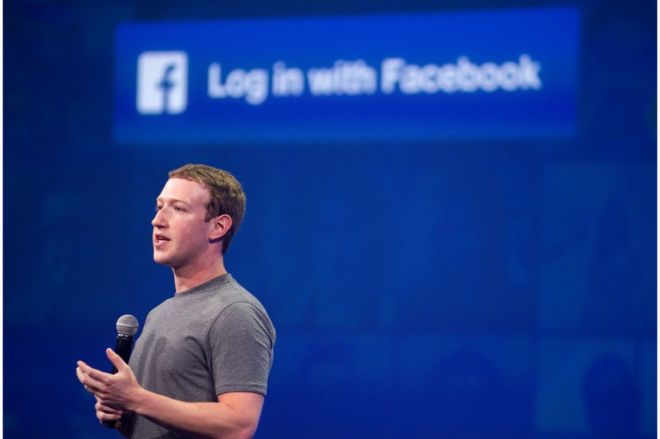
"Facebook and Mark Zuckerberg have amassed a scary amount of power," the groups said on their website.
"Facebook unilaterally decides the news that billions of people around the world see every day. It buys up or bankrupts potential competitors to protect its monopoly, killing innovation and choice. It tracks us almost everywhere we go on the web and, through our smartphones, even where we go in the real world."
The effort comes with Facebook under fire in the US and elsewhere over the hijacking of private user data on some 87 million users, adding to concerns on how internet platforms were manipulated to spread misinformation during the 2016 US election.
Responding to the campaign, a company spokesman said Facebook "is in a competitive environment where people use our apps at the same time they use free services offered by many others."
The spokesman said in an emailed statement that "the average person uses eight different apps to communicate and stay connected."
Chief executive and founder Mark Zuckerberg told a US congressional panel last month that it "doesn't feel like" Facebook is a monopoly.
Facebook has an estimated two billion users worldwide, and its Messenger and Whatsapp messaging services each have more than one billion.
Any breakup would require a lengthy investigation by US authorities and a potentially long court battle as well.
The latest campaign was launched by the activist organizations Demand Progress, MoveOn, and SumOfUs, along with the groups Citizens Against Monopoly, Jewish Voice for Peace and Muslim Grassroots Movement.
It comes as Zuckerberg prepared to appear before European Parliament members to answer questions on the data scandal involving Cambridge Analytica, which obtained Facebook user data while working on the 2016 Donald Trump campaign.
The US Federal Trade Commission is reported to be investigating Facebook after allegations that 50 million users' private information was misused by a political consultancy firm.
Cambridge Analytica (CA), hired by the Trump campaign in the 2016 US election, has been accused of taking the personal data unknown to users.
Under the 2011 decree, Facebook must notify users and obtain their permission before data about them is shared beyond the privacy settings they have established, the Washington Post says. Facebook was also subjected to 20 years of privacy checkups to ensure compliance.
Facebook confirmed on Tuesday that it was expecting to receive a letter from the FTC with questions about the data acquired by CA. However, it also said it had had no indication of a formal investigation, Reuters news agency reports.
"We remain strongly committed to protecting people's information," Facebook deputy chief privacy officer Rob Sherman said. "We appreciate the opportunity to answer questions the FTC may have."
Facebook has already denied breaching the consent decree, telling the Washington Post: "We reject any suggestion of violation of the consent decree. We respected the privacy settings that people had in place. Privacy and data protections are fundamental to every decision we make."
In its statement on Tuesday, it said: "The entire company is outraged we were deceived. We are committed to vigorously enforcing our policies to protect people's information and will take whatever steps are required to see that this happens."
Mr Zuckerberg and chief operating officer Sheryl Sandberg and their teams were, it added, "working around the clock to get all the facts and take the appropriate action moving forward, because they understand the seriousness of this issue".
Christopher Wylie, who worked with the consultancy firm, alleges that it amassed large amounts of data through a personality quiz on Facebook called This is Your Digital Life.
Media captionAlexander Nix, CEO of Cambridge Analytica, was filmed by undercover reporters for Channel 4 News
He says that 270,000 people took the quiz but the data of some 50 million users, mainly in the US, was harvested without their explicit consent via their friend networks.
Mr Wylie says that data was sold to CA, which then used it to psychologically profile people and deliver pro-Trump material to them, with a view to influencing the outcome of the 2016 election.
CA insists it followed the correct procedures in obtaining and using data - but it was suspended from Facebook last week.
Did CA break US electoral law?
Channel 4 News, which conducted an undercover investigation into the consultancy firm, reports that it may have broken US electoral law, which prohibits co-ordination between an official election campaign and outside groups, or "Super PACs".
Image copyrightEPAImage captionAlexander Nix could be seen leaving his London offices through the back door on Tuesday
Boasting about CA's work for the Trump campaign, Mr Nix told the undercover team: "We did all the research, all the data, all the analytics, all the targeting. We ran all the digital campaign, the television campaign and our data informed all the strategy."
At the same time, CA managing director Mark Turnbull appeared to confirm for the undercover team that CA had created the Defeat Crooked Hillary brand of attack ads, funded by a super-PAC called Make America Number 1.
The firm has denied wrongdoing, saying they operated according to a strict firewall and that they were transparent about their activities.
How can you protect your data on Facebook?
There are a few things to be aware of if you want to restrict who has access to your data:
Keep an eye on apps, especially those which require you to log in using your Facebook account - they often have a very wide range of permissions and many are specifically designed to pick up your data
Use an ad blocker to limit advertising
Look at your Facebook security settings and make sure you are aware of what is enabled. Check the individual app settings to see whether you have given them permission to view your friends as well as yourself.
You can download a copy of the data Facebook holds on you, although it is not comprehensive. There is a download button at the bottom of the General Account Settings tab. However bear in mind that your data may be less secure sitting on your laptop than it is on Facebook's servers, if your device is hacked.
You can of course, simply leave Facebook, but the campaign group Privacy International warns that privacy concerns extend beyond the social network.
"The current focus is on protecting your data being exploited by third parties, but your data is being exploited all the time," said a spokeswoman.
"Many apps on your phone will have permission to access location data, your entire phone book and so on. It is just the tip of the iceberg."