Biodun Iginla, BBC News

Biodun Iginla, BBC News
Showing posts with label national security. Show all posts

Thursday, May 9, 2019

ANALYSIS AND BREAKING: US blocks China Mobile, citing national security


Washington authorities blocked an effort by China Mobile to enter the US telecom market due to national security concerns
Washington authorities blocked an effort by China Mobile to enter the US telecom market due to national security concerns AFP/File
ADVERTISING
Washington 
US regulators on Thursday denied a request by China Mobile to operate in the US market and provide international telecommunications services, saying links to the Chinese government pose a national security risk.
The Federal Communications Commission said that because of China Mobile USA's ownership and control by the Chinese government, allowing it into the US market "would raise substantial and serious national security and law enforcement risks."
ADVERTISING
The decision brings the Chinese telecoms giant's eight-year effort to crack the US market to an end, but was not really a surprise since FCC Chairman Ajit Pai had publicly opposed the company's application last month.
China Mobile -- the world's largest mobile operator with nearly 930 million customers as of February -- first filed an application for permission to operate in the United States in 2011.
The five-member FCC said in a statement that the decision was made after "extensive review" and "close consultation" with national security and law enforcement agencies.
It also marks the first instance in which executive branch agencies have recommended that the FCC deny an application due to national security and law enforcement concerns, the statement said.
The move comes as Chinese tech firms -- such as Huawei and ZTE -- have faced stiff resistance from US government agencies, which have described them as security threats.
- Wider trade battle -
ZTE came close to collapse last year after American companies were banned from selling it vital components over its continued dealings with Iran and North Korea.
Federal authorities unveiled sweeping charges against Huawei in January for allegedly stealing technology and violating US sanctions on Iran.
The company has also been under fire as it faces a global US campaign to blacklist Huawei over espionage fears.
Washington has barred the Chinese networking equipment company Huawei from developing the new ultra-fast 5G mobile network in the United States and has blocked US government purchases of its services.
Defense of intellectual property in China and getting fair access to that country's markets have long been points of concern for US tech companies. They are also considered hard-to-fix problems when it come to trade between the US and China.
Meanwhile, technology has become increasingly vital to national security and economies.
Denial of the China Mobile request came as US President Donald Trump held out hopes of salvaging a trade deal with China, just hours before Beijing's negotiators were due to return to the bargaining table amid a sudden flare-up in hostilities.
Since last year, the two sides have exchanged tariffs on more than $360 billion in two-way trade, gutting US agricultural exports to China and weighing on both countries' manufacturing sectors.
The International Monetary Fund also repeated its warning on Thursday that the trade battle between the world's top economies was a "threat" to global growth.
burs-dg/gc/rl

Sunday, May 20, 2018

UK turns blind eye to dirty Russian money, say MPs


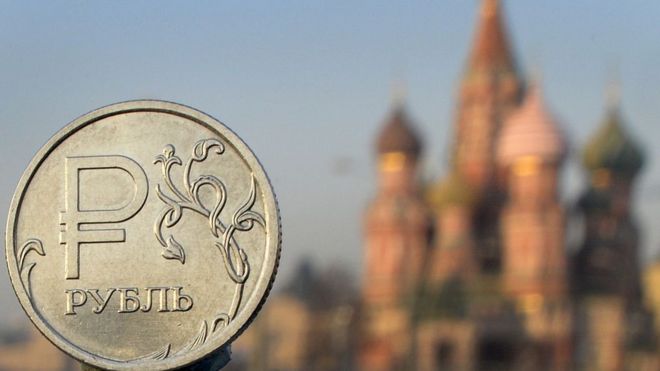
Russian ruble coinImage copyrightGETTY IMAGES
Image captionThe City of London is being used to hide the "corrupt Russian assets," the report says
by Emily Straton and Biodun Iginla, BBC News, London
The UK has been accused of turning a "blind eye" to Russia's "dirty money", putting national security at risk.
The Commons foreign affairs committee said London was being used to hide the "corrupt assets" of President Vladimir Putin and his allies.
It said it was "business as usual" for the UK despite the poisoning of Russian ex-spy Sergei Skripal and his daughter.
This undermined the UK's efforts to confront the full spectrum of President Putin's offensive measures, it said.
The UK's "lethargic response is being taken as proof that we don't dare stop them... London's markets are enabling the Kremlin's efforts," committee chairman and Conservative MP Tom Tugendhat wrote in the Sunday Times, ahead of the the publication of the report.
Security and economic crime minister Ben Wallace said he had not been called to give evidence to the committee: "I fear such an omission weakens the foundation of the report," he said.
Mr Wallace said the UK was "determined to drive dirty money and the money launderers out".
"[We] will use all the powers we have, including the new powers in the Criminal Finance Act, to clamp down on those that threaten our security," he added.
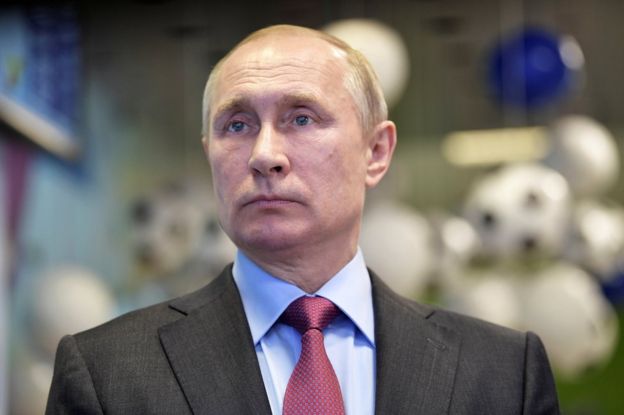
Vladimir Putin in Sochi, 3 May 2018Image copyrightREUTERS
Image captionThe UK's efforts to confront President Putin's offensive measures are being undermined, MPs say
Mr Tungendhat said ministers should investigate "gaps" in the sanctions regime which allows the Russian government and individuals linked to President Putin to continue to raise funds in the City.
The report, named Moscow's Gold: Russian Corruption in the UK, points out that Russian gas giant Gazprom was able to trade bonds in London "days after the attempted murders" of Mr Skripal and his daughter.
That business between the UK and Russia had resumed so swiftly prompted the Russian embassy in London to tweet: "Business as usual?"
"The scale of damage that this 'dirty money' can do to UK foreign policy interests dwarfs the benefit of Russian transactions in the City.
"The UK must be clear that the corruption stemming from the Kremlin is no longer welcome in our markets and we will act," said Mr Tugendhat.
The committee's report urges the government to show "stronger political leadership" on the issue by taking a number of actions, including:
  • further sanctions against "Kremlin-connected individuals"
  • Closing loopholes in the existing sanctions regime
  • Speeding up plans to disclose transparent corporate ownership

Related Topics

More on this story