PARIS - The French government has enough money to be able to pay its civil servants during the coronavirus crisis, Finance Minister Bruno Le Maire said on Friday.
“The state will have enough money to pay its civil servants, there is no reason to have concerns about that. France has a solid government,” Le Maire said on LCI television.
The "yellow vest" protests have been "a catastrophe" for the French economy, the finance minister says.
France has seen four consecutive weekends of demonstrations against fuel tax rises, high living costs, and other issues.
About 125,000 protesters took to the streets on Saturday, with more than 1,700 people arrested.
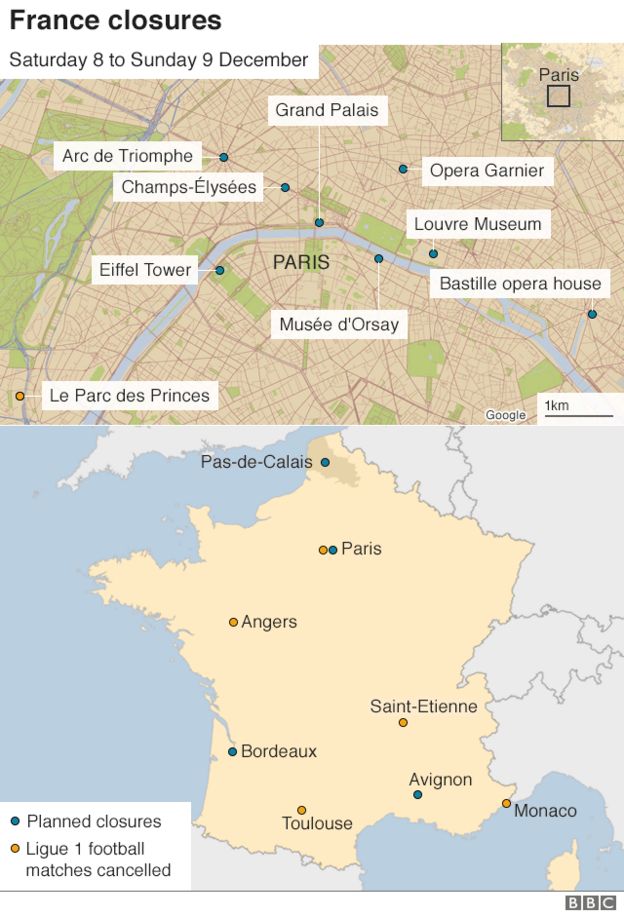
Several tourist sites, including the Eiffel Tower and Louvre Museum, are closed this weekend.
Finance Minister Bruno Le Maire called the situation "a crisis" for both society and democracy.
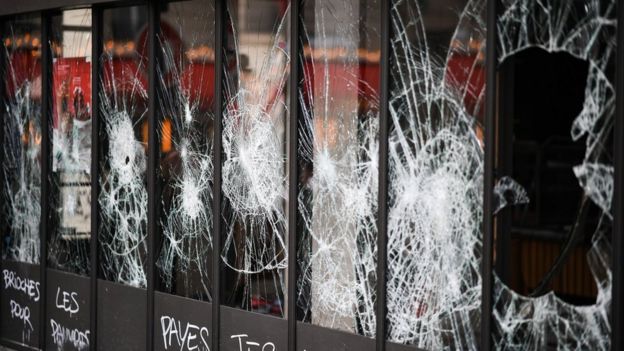
"It's a catastrophe for commerce, it's a catastrophe for our economy," he said during a visit to shops in Paris that had been damaged during the protests.
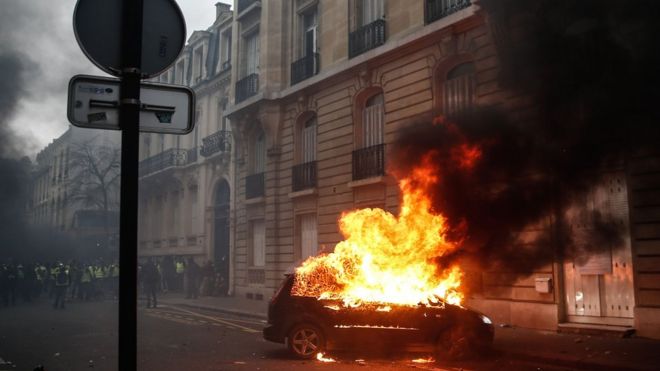
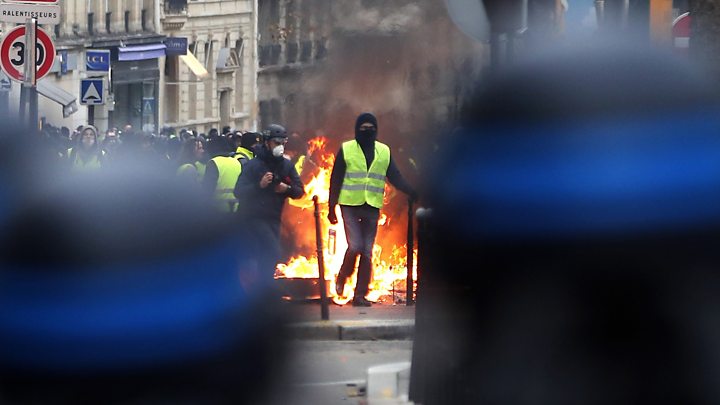
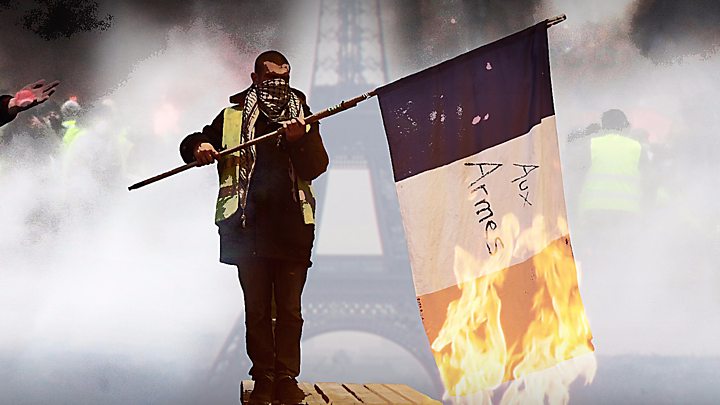
The capital was particularly badly hit, with windows smashed, cars burned, and shops looted, as 10,000 people took part in demonstrations.
"There was much more damage yesterday than a week ago" because Saturday's protests were more dispersed, deputy mayor Emmanuel Gregoire told local radio.
However, he added that there had been fewer injuries compared with last week.
Media captionProtesters have taken to the streets of Paris for another weekend of demonstrations
"I say this to Donald Trump and the French president says it too: leave our nation be," Mr Le Drian said.
President Emmanuel Macron - who many protesters want to stand down - will address the nation in the coming days.
He is expected to meet trade union and business leaders on Monday morning, according to union sources.
Mr Macron has kept a low profile so far during the protests.
How bad is the economic damage?
It is too early to calculate the full economic cost - but it's clear the damage is severe.
Image copyrightGETTY IMAGES
Le Parisien newspaper reported that in the capital about 50 vehicles had been burnt and dozens of businesses vandalised, with some of them looted. The authorities in the city say that riots have caused millions of pounds of damage.
On Friday, the French retail federation told Reuters news agency that retailers had lost about €1bn ($1.1bn; £900m) since the protests first began on 17 November.
The movement began as a protest against a rise in duties on diesel, which is widely used by French motorists and has long been less heavily taxed than other types of fuel.
Diesel prices have risen by about 23% over the past 12 months - and Mr Macron's decision to impose a tax increase of 6.5 cents on diesel and 2.9 cents on petrol from 1 January enraged protesters.
Mr Macron had blamed world oil prices for three-quarters of the price rise, but said higher taxes on fossil fuels were needed to fund renewable energy investments.
The rallies became known as the "yellow vest" or "gilets jaunes" movement because protesters took to the streets wearing the high-visibility yellow jackets that are required to be carried in every vehicle by French law.
The government has since agreed to scrap the fuel tax increase and has frozen electricity and gas prices for 2019.
But protests have also erupted over other issues, including calls for higher wages, lower taxes, better pensions and easier university entry requirements.
The movement's core aim, to highlight the economic frustration and political distrust of poorer working families, still has widespread support.
Media captionGilets Jaunes: Are nationalists infiltrating the "yellow vests"?
An opinion poll on Friday suggested a dip in support for the protests, but it still stood at 66%.
Meanwhile, President Macron's ratings have fallen to 23% amid the crisis, polls suggest.
Protest timeline
17 November: 282,000 protesters - one dead, 409 wounded - 73 in custody