Biodun Iginla, BBC News

Biodun Iginla, BBC News
Showing posts with label Yellow vest protests. Show all posts

Saturday, December 15, 2018

BREAKING AND UPDATE: France prepares for fifth wave of Yellow Vest protests


AFP file picture | Paris is preparing for 'Act V' of Yellow Vest protests.
France will deploy tens of thousands of police nationwide and around 8,000 in Paris on Saturday to handle a fifth weekend of Yellow Vest protests, although the movement appears to be losing steam after concessions by President Emmanuel Macron.
ADVERTISING
The chief of police in Paris said concerns remained about violent groups infiltrating the protests. Anti-riot officers will protect landmarks such as the Arc de Triomphe and prevent people getting close to the presidential palace.
"We need to be prepared for worst-case scenarios," police chief Michel Delpuech told RTL radio.
He expected businesses in the capital to be less affected this weekend after heavy disruption over the past three weeks when major stores shut, hotels suffered cancellations and tourists stayed away during the usually busy run-up to
Christmas.
ADVERTISING
Nicknamed "Acte V" of the protests, the yellow vest demonstrators will take to the streets this weekend as France recovers from an unrelated attack on a Christmas market in the eastern city of Strasbourg on Tuesday, when a gunman shot and
killed three people and wounded several others.
Hundreds of police officers were redeployed to Strasbourg to search for the gunman, who was shot dead in an exchange of fire on Thursday evening.
'Rather have police doing their real job'
Interior Minister Christophe Castaner said it was time for the yellow vests to scale down their protests and accept they had achieved their aims. Police officers also deserved a break, he added.
"I'd rather have the police force doing their real job, chasing criminals and combating the terrorism threat, instead of securing roundabouts where a few thousand people keep a lot of police busy," he said.
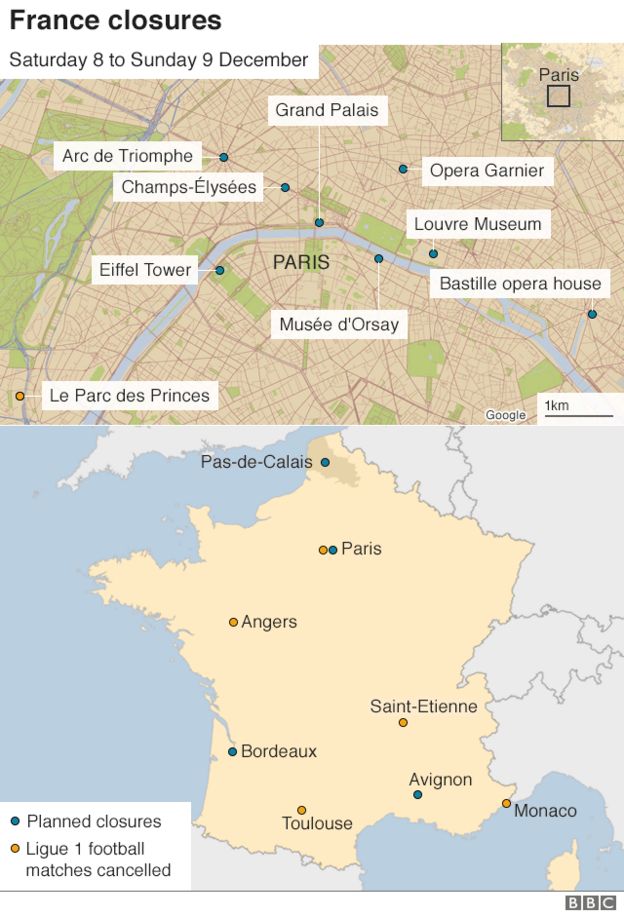
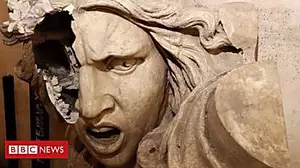
Attractions such as the Louvre museum and Opera Garnier will be open this weekend, as will luxury department stores like Galeries Lafayette and Printemps. Last Saturday they were closed as thousands of sometimes violent protesters tore through the city. The previous weekend the Arc de Triomphe was vandalised,
cars were overturned and torched and businesses smashed up.
The protests have taken a toll on the economy, with output in the last quarter of the year set to be half initial projections, while Macron's concessions are likely to push the budget deficit above an EU agreed limit.
The yellow vest movement, which began as a protest against fuel taxes and then grew into an anti-Macron alliance, appears to have calmed since the president announced a series of measures to help the working poor.
However, many people wearing the high-visibility motorists' safety jackets which are the symbol of the protests were manning barricades outside cities on Friday.
After heavy criticism for not being seen to respond to the protesters' complaints, Macron made a TV address this week during which he said he understood their concerns and acknowledged the need for a different approach.
As well cancelling fuel tax increases that were due to kick in next month, Macron said he would increase the minimum wage by 100 euros a month from January and reduce taxes for poorer pensioners, among other measures.
Since the first yellow vest protests on Nov. 17, supporters have kept up a steady stream of dissent, although the numbers joining marches have steadily fallen.


Sunday, December 9, 2018

BREAKING AND UPDATE: Yellow vest protests 'economic catastrophe' for France

December 9, 2018  21H:36  GMT/UTC/ZULU TIME
Related Topics

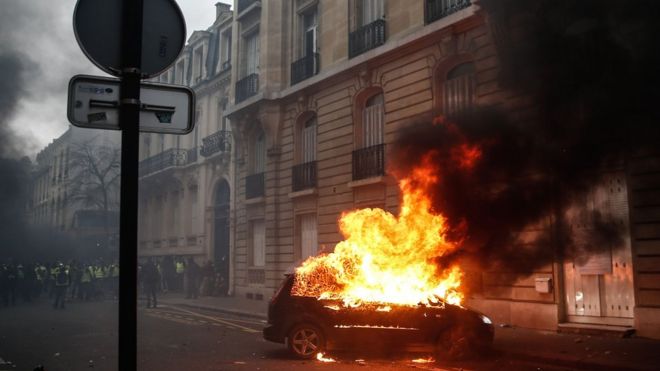
Car set on fire in central Paris - 8 DecemberImage copyrightAFP
Image captionAbout 50 vehicles were set on fire during the protests

by Natalie de Vallieres and Biodun Iginla, BBC News, Paris. Disclosure: Natalie de Vallieres and Biodun Iginla had a romantic relationship in 2007.
The "yellow vest" protests have been "a catastrophe" for the French economy, the finance minister says.
France has seen four consecutive weekends of demonstrations against fuel tax rises, high living costs, and other issues.
About 125,000 protesters took to the streets on Saturday, with more than 1,700 people arrested.
Several tourist sites, including the Eiffel Tower and Louvre Museum, are closed this weekend.
Finance Minister Bruno Le Maire called the situation "a crisis" for both society and democracy.
"It's a catastrophe for commerce, it's a catastrophe for our economy," he said during a visit to shops in Paris that had been damaged during the protests.
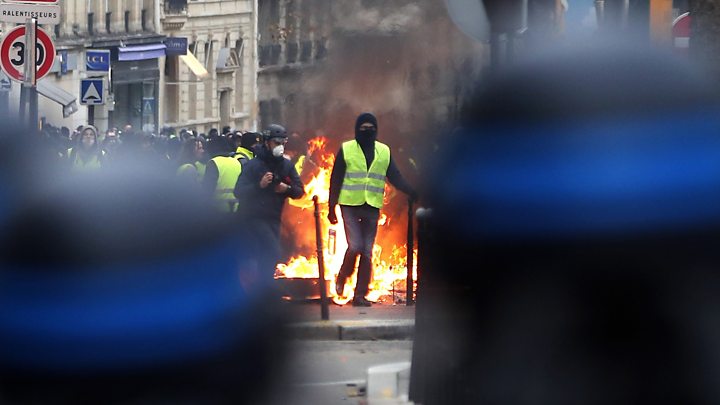
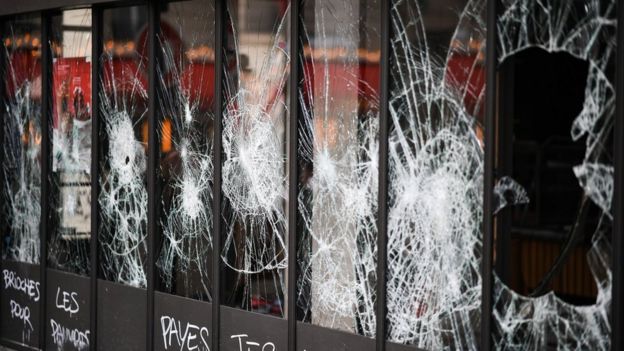
The capital was particularly badly hit, with windows smashed, cars burned, and shops looted, as 10,000 people took part in demonstrations.
"There was much more damage yesterday than a week ago" because Saturday's protests were more dispersed, deputy mayor Emmanuel Gregoire told local radio.
However, he added that there had been fewer injuries compared with last week.


Media captionProtesters have taken to the streets of Paris for another weekend of demonstrations

Meanwhile Foreign Minister Jean-Yves Le Drian responded angrily to US President Donald Trump, who on Saturday in tweets appeared to suggest the Paris Climate Agreement was the reason for the unrest.
"I say this to Donald Trump and the French president says it too: leave our nation be," Mr Le Drian said.
President Emmanuel Macron - who many protesters want to stand down - will address the nation in the coming days.
He is expected to meet trade union and business leaders on Monday morning, according to union sources.
Mr Macron has kept a low profile so far during the protests.

How bad is the economic damage?

It is too early to calculate the full economic cost - but it's clear the damage is severe.

Broken shop windows in Paris on 9 December 2018Image copyrightGETTY IMAGES

Le Parisien newspaper reported that in the capital about 50 vehicles had been burnt and dozens of businesses vandalised, with some of them looted. The authorities in the city say that riots have caused millions of pounds of damage.
On Friday, the French retail federation told Reuters news agency that retailers had lost about €1bn ($1.1bn; £900m) since the protests first began on 17 November.
Mr Le Maire said last week, before the most recent protests, that the restaurant trade had declined by between 20% and 50%.
And Francois Asselin, head of the confederation of small and medium-sized businesses, told the Journal du Dimanche newspaper (in French) that overall the protests could cost his members €10bn.
There are concerns that the protests could lead to a drop in tourism. Paris was visited by a record number of tourists in 2017 - more than 40 million, the Paris Tourism Office said last month.

Map of Paris and France, highlighting closures and protest sites on 8 and 9 December

What is the yellow vest movement?

The movement began as a protest against a rise in duties on diesel, which is widely used by French motorists and has long been less heavily taxed than other types of fuel.
Diesel prices have risen by about 23% over the past 12 months - and Mr Macron's decision to impose a tax increase of 6.5 cents on diesel and 2.9 cents on petrol from 1 January enraged protesters.
Mr Macron had blamed world oil prices for three-quarters of the price rise, but said higher taxes on fossil fuels were needed to fund renewable energy investments.
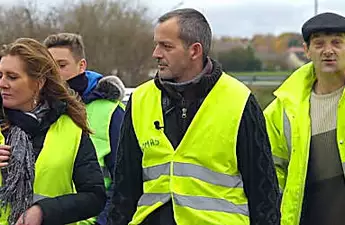
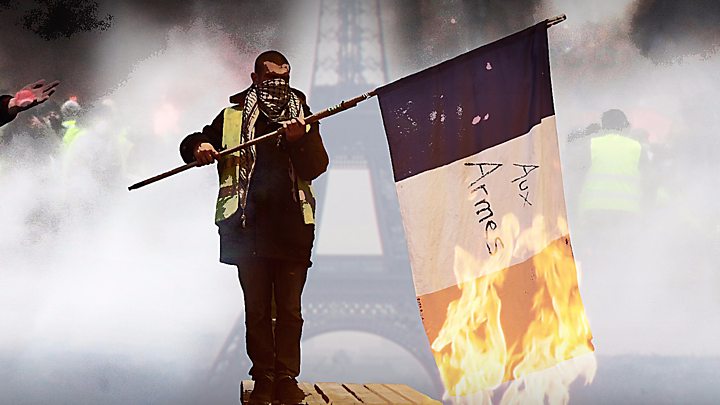
The rallies became known as the "yellow vest" or "gilets jaunes" movement because protesters took to the streets wearing the high-visibility yellow jackets that are required to be carried in every vehicle by French law.
The government has since agreed to scrap the fuel tax increase and has frozen electricity and gas prices for 2019.
But protests have also erupted over other issues, including calls for higher wages, lower taxes, better pensions and easier university entry requirements.
The movement's core aim, to highlight the economic frustration and political distrust of poorer working families, still has widespread support.


Media captionGilets Jaunes: Are nationalists infiltrating the "yellow vests"?

An opinion poll on Friday suggested a dip in support for the protests, but it still stood at 66%.
Meanwhile, President Macron's ratings have fallen to 23% amid the crisis, polls suggest.

Protest timeline

  • 17 November: 282,000 protesters - one dead, 409 wounded - 73 in custody
  • 24 November: 166,000 protesters - 84 wounded - 307 in custody
  • 1 December: 136,000 protesters - 263 wounded - 630 in custody
  • 8 December : 136,000 protesters - 118 wounded - 1,220 in custody

More on this story