
Date created :

Saudi teen Rahaf Mohammed al-Qunun, who drew global notice on Twitter last week after fleeing to Thailand, feels ‘reborn’ in Canada. Despite further aggravating ties with Riyadh, granting Qunun asylum may be a win for Canada and Justin Trudeau, too.
ADVERTISING
With Canada-Saudi relations at a low after a row last summer over Ottawa’s outspoken support of imprisoned Saudi human rights activists, the move was a bold one for Prime Minister Trudeau. The Canadian leader announced the news himself on Friday and sent Foreign Minister Chrystia Freeland to personally welcome the “Canada”-hoodie-clad teen at a Toronto airport on Saturday. But observers say the gesture was broadly an astute one by Trudeau, who is facing re-election later this year.
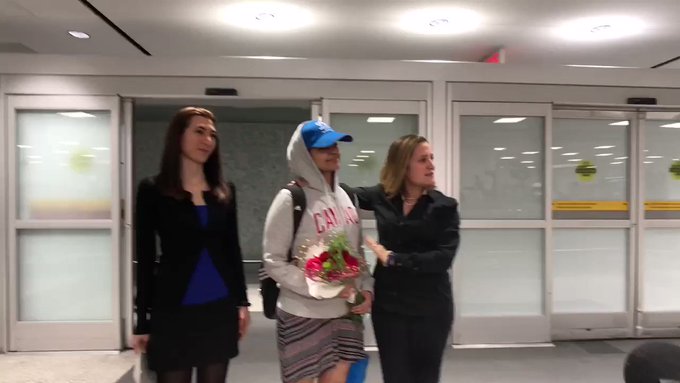
Rahaf has arrived in #Canada! Bravo @rahaf84427714 - you did it! pic.twitter.com/gctwax2lVO #RahafDidIt

482 people are talking about this
In an interview with the CBC, Canada’s public broadcaster, Qunun explained that she had yearned to flee her oppressive family in Saudi Arabia for years and had waited until she turned 18 to take action. She explains seeking to convince her family to choose Kuwait for a holiday to facilitate her escape and then buying a ticket onward to Thailand in secret, absconding while her family slept. In Thailand, after her passport was seized, Qunun holed up in a Bangkok hotel room, where she told the CBC she was ready to take her own life should her plan to escape her family fail. “I wrote [a letter] and sent it to my female friends. Should I disappear they would publish it to the whole world,” she said.
After arriving in Canada over the weekend, Qunun said, “I felt that I was reborn, especially when I felt the love and the welcome.” In her new home, “I will try things that I haven’t tried. I will learn things that I didn’t learn. I will explore life…. I will have a job and live a normal life,” she added.
‘Surprise’ in Saudi, smiles in Canada
In Riyadh’s first apparent public comment on the issue since Canada granted the young Saudi national asylum, the reportedly state-backed National Society of Human Rights on Sunday released a statement naming neither Qunun nor Canada, saying it was “surprised by some countries’ incitement of some Saudi female delinquents to rebel against the values of their families and push them out of the country and seek to receive them under the pretext of granting them asylum”.
For his part, Trudeau has seemed undeterred by what would have been predictable Saudi dismay over the initiative. After announcing the decision on television, Trudeau was immediately asked whether he worried it could further impact Canada’s relationship with the kingdom. “Canada has been unequivocal that we will always stand up for human rights and women’s rights around the world. This is part of a long tradition of Canada engaging constructively and positively in the world and working with our partners, allies and with the United Nations,” he said. “When the United Nations made a request of us that we grant Ms. Al-Qunun asylum, we accepted,” he concluded, breaking into a broad smile.
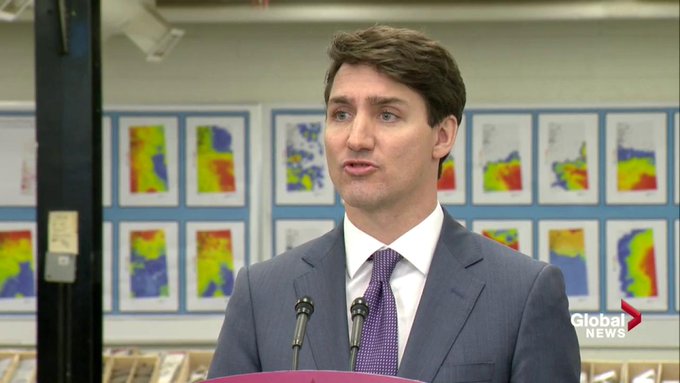
Trudeau confirms Canada will grant asylum to Rahaf al-Qunun, an 18-year-old Saudi teenager who said she is fleeing abuse from her family.

21 people are talking about this
Indeed, the sense among observers appears broadly to be that Trudeau’s move was win-win.
“It’s very good on a humanitarian level, but it’s also a very, very good move for the prime minister and for Canada,” former Canadian diplomat Ferry de Kerckhove told Agence France-Presse. “You had to see Mrs. Freeland’s radiant smile when she welcomed the young woman. One felt that they had scored another point against these ‘awful Saudis’ who dismembered [Saudi journalist Jamal] Khashoggi,” the University of Ottawa political scientist added.
Last summer, Canada’s already tepid relations with Saudi Arabia took a dramatic turn for the worse after its foreign ministry tweeted disapproval of the Gulf monarchy’s detention of a number of women’s rights activists, including Samar Badawi, the sister of jailed Saudi blogger Raif Badawi. His wife Ensaf Haidar and their three children, to whom Canada granted asylum, live in Quebec and became Canadian citizens last July.
Deeply annoyed by Ottawa’s social-media missives in August, Riyadh’s reprisals were swift and sweeping. Saudi Arabia expelled Canada’s ambassador, recalled its own envoy to Canada, severed trade and investment ties with the country, suspended scholarship programmes for Saudis studying there and its state airliner’s flights to Toronto.
At the time, Riyadh’s unflinching reaction was a way for Saudi Crown Prince Mohammed bin Salman, his power on the rise, to flex his muscle and send a stark warning to Western capitals tempted to criticize the kingdom on human rights.
But that was before Khashoggi’s killing in Istanbul. And back when Saudi Arabia still had those bridges to burn with Canada.
“At a time when Saudi Arabia’s global image is tarnished by assassination of critics, I cannot imagine that there was not mirth in the Canadian government shared by the well-meant genuine sense of wanting to protect a refugee,” University of Ottawa law professor Amir Attaran told us at France24 of the Qunun affair.
The Saudis, Attaran added, are “learning the stupidity of their incendiary foreign policy”. When last summer, “they burned their political, educational and financial linkages with Canada, they left no leverage over which to rebuke Canada meaningfully”.
Last August, the Canadian government avoided escalating the dispute with Saudi while Riyadh was piling on sanctions. This week, Ottawa has been more assertive in bringing attention to the Rahaf alQunun case. Why?
1. Elections soon
2. No hope of repairing ties with Saudi anyways

15 people are talking about this
In other words, from Canada’s perspective, doing the right thing today might be cheaper than it had once been.
“Canada will be on the right side of history in giving Ms. Al-Qunun asylum. We are demonstrating our moral leadership on the issue of gender equality. This is us finally walking the walk of being a feminist government in the world,” Bessma Momani, a professor at the University of Waterloo and Balsillie School of International Affairs, wrote in Canada’s Globe and Mail newspaper. “Our bilateral relationship with Saudi Arabia is already at an all-time low, so there may be no lower place to go.”
The former ambassador Kerckhove, for his part, has expressed worry that a vexed Saudi Arabia could seek a different sort of retribution. “My only worry would be that the Saudis take revenge on [Raif] Badawi, which would be pretty ugly. I hope the Khashoggi affair will hinder them from doing so.”
Badawi’s wife, Ensaf Haidar, who marked her husband’s 35th birthday on Monday with renewed calls for his liberation on Twitter after seven years behind bars, made no secret of her support for Qunun’s case. She also made known that she has obtained a meeting with Trudeau this week when the prime minister visits Sherbrooke, the Quebec city where she lives. Haidar says she plans to ask him for help in obtaining Canadian citizenship for her detained husband.
Election year
The centre-left leader faces legislative elections in October. With Trudeau vying for a second term, his Liberal party leads in the polls, although an emboldened Conservative opposition is poised to mount a challenge.
One perilous political issue for the PM that involves Saudi Arabia is Canada’s $15 billion Canadian (€10 billion) contract with the kingdom for light-armoured vehicles. The deal was signed by Trudeau’s conservative predecessors in a bid at the time to deepen trade relations between the two countries. Early on in office, Trudeau distanced himself from a kingdom not known as a guiding light on civil rights. But he has been under pressure from opponents and activists to follow through and renege on the Saudi contract, a withdrawal that would come at a heavy price in penalties to pay (at least CAN$1 billion worth) and jobs forfeited.
Political scientist Thomas Juneau suggests Ottawa’s initiative on Qunun is broadly a win for Ottawa, not least in going some way towards appeasing the critics of that cumbersome military deal.
“Politically, [the Qunun case] is a gift for the Trudeau government: it takes flak for upholding (so far) the LAV deal, but it can now say that it makes concrete gestures to support human rights in Saudi Arabia (as opposed to tweets before),” Juneau tweeted after Qunun won asylum on Friday. “Ottawa won’t say it loud, but it also represents a nice contrast with what our charming neighbours to the south have been doing lately about asylum seekers. Overall, on moral grounds this is a good news story, but it also politically and strategically positive for Canada.”

