Biodun Iginla, BBC News

Biodun Iginla, BBC News
Showing posts with label European Court of Justice. Show all posts

Wednesday, December 20, 2017

Islamic instant divorce 'not legal' under EU law, says ECJ


A Muslim woman is seen during midday prayers at a mosque in BerlinImage copyrightGETTY IMAGES
Image captionDivorces not granted by a state court need not be legally recognised, the ECJ said (File photo)
by Isabelle Roussel and  Biodun Iginla, BBC News, Berlin
A Syrian-born man who divorced his wife in a Sharia court has been told by Europe's top court that the divorce is not legally valid in Germany, where the former couple now live.
The European Court of Justice said EU countries need not legally recognise divorces not granted by a state court.
Some Muslims believe men can end their marriage instantly by saying "talaq" (divorce) three times.
This is the ECJ's first ever ruling on the subject.

What's the case about?

The couple married in 1999 in the Syrian city of Homs before eventually moving to Germany. They hold both Syrian and German nationality.
In 2013, the husband ended the marriage in a Sharia court in the Syrian city of Latakia by having a representative repeating "talaq". The ECJ calls the measure "private divorce", as a state authority is not involved.
The wife acknowledged the divorce in writing, but contested it after the former husband applied for its recognition in a court in the German city of Munich.
The court then referred the case to the ECJ, asking for clarifications over the interpretation of the EU divorce law pact, known as the Rome III Regulation.

What's ECJ ruling?

The ECJ said the regulation "does not apply, by itself, to the recognition of a divorce decision delivered in a third country".
It added that a unilateral declaration of divorce before a religious court does not fall under the scope of the regulation, and said the case must be resolved under German law.
The ECJ does not decide the dispute itself, and the court in Munich will take a final decision on the issue.

What's instant divorce?

Triple talaq divorce has no mention in Sharia Islamic law or the Koran, even though the practice has existed for decades.
Islamic scholars say the Koran clearly spells out how to issue a divorce - it has to be spread over three months, allowing a couple time for reflection and reconciliation.
Media captionShavista Sheikh: 'These words destroy people's lives'
Why must "talaq" be said three times? Under some interpretations of Islamic law, a man can divorce his wife and get back together with her - but only twice. After the third divorce, the marriage is completely over and cannot be started again without an intervening marriage to someone else.
Most Islamic countries have now banned triple talaq.

More on this story

Around the BBC

Europe

Wednesday, September 6, 2017

BREAKING: Europe migrant crisis: EU court rejects quota challenge


  • September 6, 2017  09H:36  GMT/UTC/ZULU TIME 
  • From the sectionEurope
Related Topics
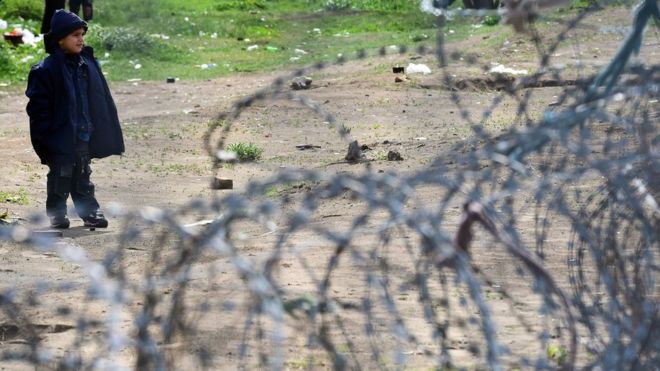
A young migrant boy waits in front of the Hungarian border fence at the Tompa border station transit zone on 6 April 2017 as the Hungarian Interior Minister Sandor Pinter (not pictured) presents the camp to the mediaImage copyrightAFP
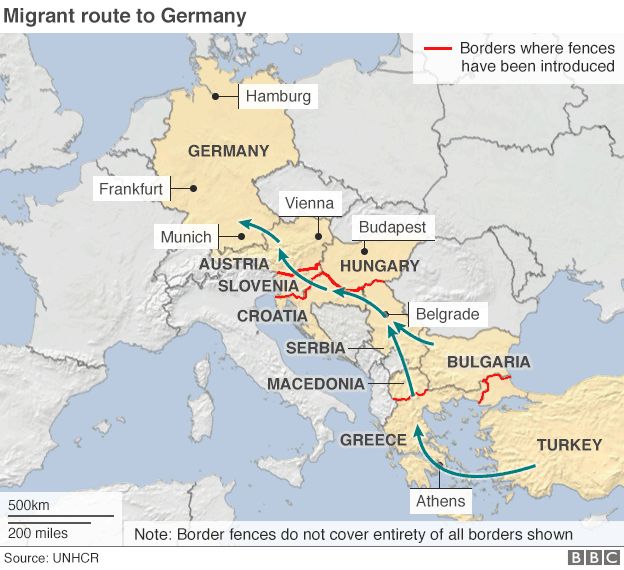
Image captionHungary has built a controversial anti-migrant fence on its southern border with Serbia
by Isabelle Roussel and Biodun Iginla, BBC News, Brussels
The EU's top court has rejected a challenge by eastern European countries to a migrant relocation deal drawn up at the peak of the crisis in 2015.
The European Court of Justice overruled Hungary and Slovakia's objections to the compulsory fixed-quota scheme.
Hungary has not accepted a single asylum seeker since the measures were introduced two years ago.
They were an attempt to ease the pressure on frontline countries such as Greece and Italy.
Just under 28,000 people have been relocated under the scheme, rather than the 160,000 asylum seekers envisaged when it was agreed in September 2015.
EU officials insisted from the start that the scheme was binding on all member states regardless of whether they had voted for it or not. Hungary, Slovakia, the Czech Republic and Romania had objected to the quotas.

'Proportionate'

They argued the problem was not of their making, that the policy exposed them to a risk of Islamist terrorism and that it represented a threat to their homogenous societies.
Hungary and Slovakia argued at the Court of Justice that there were procedural mistakes, and that quotas were not a suitable response to the migrant crisis.
But their case was rejected by the ECJ ruling, which stated: "The Court dismisses the actions brought by Slovakia and Hungary against the provisional mechanism for the mandatory relocation of asylum seekers," it said.
"That mechanism actually contributes to enabling Greece and Italy to deal with the impact of the 2015 migration crisis and is proportionate."

No quick-fix - Kevin Connolly, Europe correspondent, BBC News

The European Union regards the policy of relocating migrants who've crossed the Mediterranean as an important expression of political solidarity between member states.
Under the policy it set quotas for each country to accept fixed numbers of migrants to ease the direct burden on Italy and Greece - the usual points of arrival.
While Hungary and Slovakia have now failed in their legal challenge to the policy, that doesn't fix the political problem. The European Commission may still have to threaten financial penalties against countries that don't co-operate if the ruling from Strasbourg doesn't change their minds.

Map locator
A note on terminology: The BBC uses the term migrant to refer to all people on the move who have yet to complete the legal process of claiming asylum. This group includes people fleeing war-torn countries such as Syria, who are likely to be granted refugee status, as well as people who are seeking jobs and better lives, who governments are likely to rule are economic migrants.