COX'S BAZAR (BANGLADESH) -
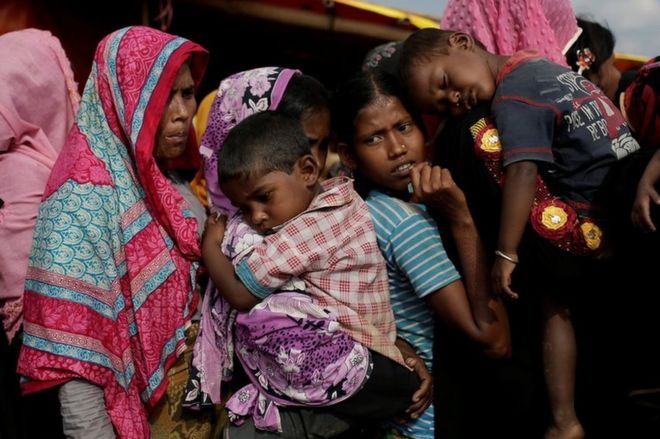
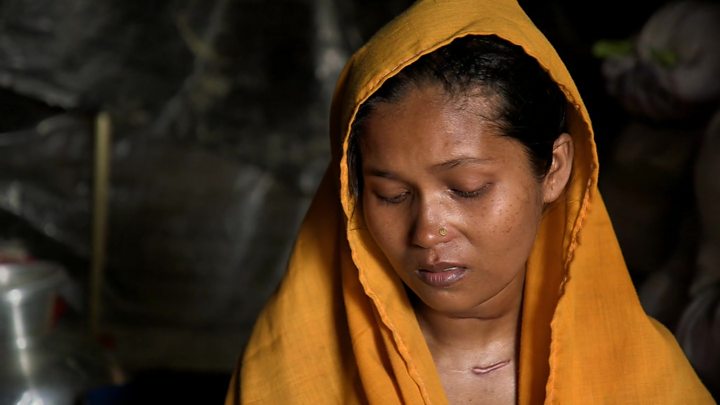
With a repatriation plan in tatters and funding evaporating for a million refugees with ever-growing needs, Rohingya Muslims who fled Myanmar to Bangladesh face a grim future one year after the latest eruption of a decades-old conflict.
Raids by Rohingya militants on August 25 last year across Myanmar's Rakhine state spurred an army crackdown which the United Nations has likened to "ethnic cleansing".
Around 700,000 of the Muslim minority fled by foot or boat to Bangladesh, their villages ablaze behind them, in an exodus unprecedented in speed and scale.
The crisis has heaped enormous pressure on Bangladesh's impoverished Cox's Bazar district, which already hosted around 300,000 of the stateless group.
Myanmar says it is ready to take those who fled back.
But it refuses to recognise the Rohingya as citizens, falsely labelling them "Bengali" illegal immigrants.
A deal between Myanmar and Bangladesh to start sending them back has also gone nowhere, caught up in bureaucracy and mistrust, with fewer than 200 having been repatriated so far.
Myanmar's civilian leader Aung San Suu Kyi this week said it was up to Bangladesh "to decide how quickly" repatriation can be done, while insisting the "terrorist threat" posed by Rohingya militants remains "real and present".
Without safety, citizenship and compensation for homes and land torched or commandeered by the army since they fled, the Rohingya do not want to go back.
- Funding crunch -
But life in the camps, among the most densely populated places on earth, looks set to get harder.
A UN-led appeal for around $1 billion to fund the refugees until March has yielded only a third of that sum.
The slow response has alarmed experts.
"Giving generally peaks in that first year (of a crisis)... then it's much harder to fund," Dr Peter Salama, the emergency response chief of the World Health Organization (WHO), told us at France24.
Without a major cash injection, "remarkable" success in controlling outbreaks of diphtheria, cholera and other diseases could be undone, he said, and provision of non-life saving help -- such as family planning and mental health -- will likely evaporate.
"Bangladesh's government really deserves more regional and international solidarity and support," he added.
The World Bank has pledged $500 million to help with infrastructure, health and education of the Cox's region.
But Bangladesh is tiring of its role as host and insists it will soon relocate around 100,000 Rohingya from Cox's to a remote, flood-prone island.
- 'History of darkness' -
Myanmar has driven out its Rohingya since the late 1970s.
"Our history is of darkness," said Mohammed Kashim, 27, one of thousands of Rohingya refugees born in Bangladesh, but denied citizenship by both countries.
"I have never stepped on Myanmar soil."
And he probably never will.
First he must be "verified" as someone who belongs in Myanmar -- near impossible given he was born outside the country.
Refugees who are verified are required to take a 'NVC' card that does not grant them full citizenship or rights.
Myanmar is unrepentant about last year's crackdown and denies widespread human rights violations, murders, rapes and mass arson of Rohingya villages despite reams of evidence.
But international pressure for accountability is mounting.
Last week Washington hit four Myanmar military commanders and two infantry divisions with punitive financial sanctions over rights abuses and "ethnic cleansing".
The UN Security Council is set to meet next week to discuss the issue, while testimony is being gathered across the camps to press the International Criminal Court (ICC) into launching proceedings against Mynamar.
"There is finally a recognition (in Myanmar) that they cannot merely outlast the opprobrium," Aaron Connelly from the Lowy Institute think tank told us at France24.
But Myanmar is shielded at the UN by ally China, a permanent member of the Security Council. Meanwhile state media reported that the Myanmar military's Commander-in-Chief was in Russia -- another permanent member -- on the eve of the anniversary of a crackdown he ordered.
- Security high in Rakhine -
Myanmar has remade northern Rakhine state without the Rohingya, redistributing land and building new security posts.
It has built massive "transit" camps -- some with room for 30,000 -- for any returnees.
Rohingya refugees fear without citizenship those camps will become permanent, like the ones holding 129,000 Rohingya since 2012.
"We are citizens by birth," said Nay Lin Aung, 35, among hundreds of Rohingya living on a patch of no-man's land between the two countries.
"We won't go back as they (Myanmar) are not calling us with a sincere mind."
Inside Rakhine fear, tension and hatred are razor sharp.
"Both communities (of remaining Rohinya and eEthnic Rakhine Buddhists) have their worries now... so the government has reinforced security," ahead of the anniversary said Ye Htoo, deputy administrator of Maungdaw district on a government-steered trip to Rakhine this week.
burs-apj/fa

![[Photos] These Pictures Was Taken Just a Second Before Fishing Stopped Being Fun](https://images.outbrainimg.com/transform/v3/eyJpdSI6IjI3OWM5MjIwNmRjNTM0NGVhNzI4ZWYwYWE2NjhkZmY0NWQyYzU4ZGVkNTE1YmJiYTgyMDQxZGYyZGMyMjhhZGUiLCJ3IjoyMzAsImgiOjE1MCwiZCI6MS41LCJjcyI6MCwiZiI6MH0.webp "[Photos] These Pictures Was Taken Just a Second Before Fishing Stopped Being Fun")

![[Pics] These Photos Show What It's Really Like To Live In Russia](https://images.outbrainimg.com/transform/v3/eyJpdSI6ImMxODI3YjUxMWEwMGE1NjZjOTM0MzIwNjUyZTFjY2JiZmFiYzlhOWI4M2NkMjBkYTkwYzQyZmNlNDU5OTZhNDkiLCJ3IjoyMzAsImgiOjE1MCwiZCI6MS41LCJjcyI6MCwiZiI6MH0.webp "[Pics] These Photos Show What It's Really Like To Live In Russia")