Biodun Iginla, BBC News

Biodun Iginla, BBC News
Showing posts with label Rohingya crisis. Show all posts

Friday, August 24, 2018

Analysis: Rohingya crisis a year on: refugees going nowhere as cash crunch looms


    by Wang Yang and Biodun Iginla, France24 News Analysts, COX'S BAZAR (BANGLADESH) 


      © AFP | Rohingya refugees gather near the fence in the "no man's land" zone between Myanmar and Bangladesh border, a year after the latest crackdown saw hundreds of thousands flee Rakhine state

      COX'S BAZAR (BANGLADESH)  - 
      With a repatriation plan in tatters and funding evaporating for a million refugees with ever-growing needs, Rohingya Muslims who fled Myanmar to Bangladesh face a grim future one year after the latest eruption of a decades-old conflict.
      Raids by Rohingya militants on August 25 last year across Myanmar's Rakhine state spurred an army crackdown which the United Nations has likened to "ethnic cleansing".
      Around 700,000 of the Muslim minority fled by foot or boat to Bangladesh, their villages ablaze behind them, in an exodus unprecedented in speed and scale.
      The crisis has heaped enormous pressure on Bangladesh's impoverished Cox's Bazar district, which already hosted around 300,000 of the stateless group.
      Myanmar says it is ready to take those who fled back.
      But it refuses to recognise the Rohingya as citizens, falsely labelling them "Bengali" illegal immigrants.
      A deal between Myanmar and Bangladesh to start sending them back has also gone nowhere, caught up in bureaucracy and mistrust, with fewer than 200 having been repatriated so far.
      Myanmar's civilian leader Aung San Suu Kyi this week said it was up to Bangladesh "to decide how quickly" repatriation can be done, while insisting the "terrorist threat" posed by Rohingya militants remains "real and present".
      Without safety, citizenship and compensation for homes and land torched or commandeered by the army since they fled, the Rohingya do not want to go back.
      - Funding crunch -
      But life in the camps, among the most densely populated places on earth, looks set to get harder.
      A UN-led appeal for around $1 billion to fund the refugees until March has yielded only a third of that sum.
      The slow response has alarmed experts.
      "Giving generally peaks in that first year (of a crisis)... then it's much harder to fund," Dr Peter Salama, the emergency response chief of the World Health Organization (WHO), told us at France24.
      Without a major cash injection, "remarkable" success in controlling outbreaks of diphtheria, cholera and other diseases could be undone, he said, and provision of non-life saving help -- such as family planning and mental health -- will likely evaporate.
      "Bangladesh's government really deserves more regional and international solidarity and support," he added.
      The World Bank has pledged $500 million to help with infrastructure, health and education of the Cox's region.
      But Bangladesh is tiring of its role as host and insists it will soon relocate around 100,000 Rohingya from Cox's to a remote, flood-prone island.
      - 'History of darkness' -
      Myanmar has driven out its Rohingya since the late 1970s.
      "Our history is of darkness," said Mohammed Kashim, 27, one of thousands of Rohingya refugees born in Bangladesh, but denied citizenship by both countries.
      "I have never stepped on Myanmar soil."
      And he probably never will.
      First he must be "verified" as someone who belongs in Myanmar -- near impossible given he was born outside the country.
      Refugees who are verified are required to take a 'NVC' card that does not grant them full citizenship or rights.
      Myanmar is unrepentant about last year's crackdown and denies widespread human rights violations, murders, rapes and mass arson of Rohingya villages despite reams of evidence.
      But international pressure for accountability is mounting.
      Last week Washington hit four Myanmar military commanders and two infantry divisions with punitive financial sanctions over rights abuses and "ethnic cleansing".
      The UN Security Council is set to meet next week to discuss the issue, while testimony is being gathered across the camps to press the International Criminal Court (ICC) into launching proceedings against Mynamar.
      "There is finally a recognition (in Myanmar) that they cannot merely outlast the opprobrium," Aaron Connelly from the Lowy Institute think tank told us at France24. 
      But Myanmar is shielded at the UN by ally China, a permanent member of the Security Council. Meanwhile state media reported that the Myanmar military's Commander-in-Chief was in Russia -- another permanent member -- on the eve of the anniversary of a crackdown he ordered.
      - Security high in Rakhine -
      Myanmar has remade northern Rakhine state without the Rohingya, redistributing land and building new security posts.
      It has built massive "transit" camps -- some with room for 30,000 -- for any returnees.
      Rohingya refugees fear without citizenship those camps will become permanent, like the ones holding 129,000 Rohingya since 2012.
      "We are citizens by birth," said Nay Lin Aung, 35, among hundreds of Rohingya living on a patch of no-man's land between the two countries.
      "We won't go back as they (Myanmar) are not calling us with a sincere mind."
      Inside Rakhine fear, tension and hatred are razor sharp.
      "Both communities (of remaining Rohinya and eEthnic Rakhine Buddhists) have their worries now... so the government has reinforced security," ahead of the anniversary said Ye Htoo, deputy administrator of Maungdaw district on a government-steered trip to Rakhine this week.
      burs-apj/fa

      Tuesday, February 27, 2018

      Thousands of Rohingya flee 'no man's land' after resettlement talks

      February 28, 2018  06H:23  GMT/UTC/ZULU TIME
      DHAKA/YANGON - - Thousands of Rohingya Muslims have fled a strip of land on the border between Myanmar and Bangladesh after the two countries met to discuss resettling them, an official and a community leader said.
      The United Nations refugee agency has expressed concern that some 5,300 people who were staying in the area - outside of Myanmar’s border fence but on Myanmar’s side of a creek that marks the international border - would be forcibly returned without due consideration for their safety.
      Nearly 700,000 Rohingya fled Myanmar for Bangladesh after insurgent attacks on Aug. 25 sparked a military crackdown that the United Nation as has said amounted to ethnic cleansing, with reports of arson attacks, murder and rape.
      Major Iqbal Ahmed, a senior Bangladesh border guard official said on Tuesday evening that roughly half of the people who had been staying in no man’s land had entered Bangladesh and made their way to refugee camps in Bangladesh in just over a week.
      ADVERTISING
      “They are leaving the place in fear,” Iqbal Ahmed told us at Reuters. “Now there are roughly 2,500-3,000 people in the no man’s land. We talked to some of them and asked them to go back, but they said they can’t.”
      Local officials from the two sides met on Feb. 20 and visited the area.
      Dil Mohammed, a leader among the people who have been staying in no man’s land, told us at Reuters that a meeting with community leaders promised by Myanmar officials had not materialized, confirming that several hundred families had moved into Bangladesh since Feb. 20.
      “We are in constant fear. We are not going to the camps,” he said, referring to temporary camps Myanmar has established to house possible returnees under a repatriation agreement it signed with Bangladesh in November.
      “There’s no guarantee for life. We need security and all basic rights including citizenship like other communities are granted by the Myanmar government,” said Dil Mohammed.
      Myanmar government spokesman Zaw Htay told Reuters on Wednesday that the area was Myanmar’s territory.
      “According to the rules they cannot stay there, 150 feet from the borderline. They stay there to create a situation where Myanmar security forces and government official will remove them.”
      ”The media, especially Reuters, and human rights organizations would put pressure and make accusations that they are being cleared,” he said. “It is a trap to put more pressure on Myanmar, to make more criticism of Myanmar.”
      After the Feb. 20 meeting, Zaw Htay was quoted in Myanmar-language media saying some of the people staying in the border area were “terrorists” linked to the Arakan Rohingya Salvation Army that attacked Myanmar security posts on Aug. 25.
      “We got information that terrorists are there,” Zaw Htay told Reuters. “This place will become a safe house or a haven for terrorists, and they can do terrorist acts on both sides.”

      Saturday, February 17, 2018

      Thailand decorates Myanmar's army chief amid Rohingya crisis

      February 18, 2018   00:06  GMT/UTC/ZULU TIME
      BANGKOK - 

      FILE PHOTO - Myanmar military commander-in-chief, Senior General Min Aung Hlaing, attends a military exercise at Ayeyarwaddy delta region in Myanmar, February 3, 2018. REUTERS/Lynn Bo Bo/Pool
      Thailand awarded Myanmar’s army chief a royal decoration on Friday amid allegations of crimes by Myanmar security forces against Rohingya Muslims that have prompted international condemnation.
      Nearly 700,000 Rohingya have fled Myanmar’s Rakhine state and crossed into Bangladesh since last August, when attacks on security posts by insurgents triggered a military crackdown that the United Nations has said amounts to ethnic cleansing, with reports of arson attacks, murder and rape.
      Myanmar army commander-in-chief Senior General Min Aung Hlaing was granted the Knight Grand Cross (First Class) of the Most Exalted Order of the White Elephant at a ceremony in Bangkok, according to the general’s official website.
      The website also showed a picture of the commander-in-chief shaking hands with his Thai counterpart, General Tarnchaiyan Srisuwan.
      Buddhist-majority Thailand often gives royal decorations to army chiefs of other countries who are supportive of Thailand’s army, Thai army spokesman Lieutenant General Nothapol Boonngam said.
      “He received the honour because of our military relations. We support each other’s missions and exchange visits. Our armies have many joint activities,” Nothapol told us at Reuters, adding that the Thai army had requested Hlaing’s award since last year.
      “This is a separate issue from human rights.”
      The Burma Human Rights Network said Thailand had crossed a “red line” by granting the award to Hlaing because Thailand is seen as a place of refuge by many Rohingya and other minority groups fleeing persecution in Myanmar, also a Buddhist-majority country.
      “This kind of person doesn’t deserve to win this great award,” Kyaw Win, the group’s executive director, told Reuters.
      Earlier this week, Thailand and the United States kicked off the annual Cobra Gold military drills in Thailand - the largest such exercises in the Asia-Pacific region.
      Thailand invited Myanmar as observers to the disaster relief and humanitarian assistance portions of Cobra Gold, prompting criticism from rights groups who questioned why a military accused of ethnic cleansing was being given access.
      The U.S. Embassy in Bangkok this week said Myanmar was not a participant in any of the exercises.

      Thursday, January 25, 2018

      Rohingya crisis: US diplomat quits advisory panel


      January 26, 2018  00H:12  GMT/UTC/ZULU TIME
      Related Topics
      Media captionWhat has Aung San Suu Kyi said about Rohingya Muslims?
      by Wang Yang and Biodun Iginla, BBC News, Yangon/Washington DC
      Veteran US diplomat Bill Richardson has resigned from an international panel set up by Myanmar leader Aung San Suu Kyi to advise on the Rohingya crisis.
      He claimed the panel was a "whitewash" and accused Ms Suu Kyi, his long-time friend, of lacking "moral leadership".
      Myanmar accused him of pursuing "his own agenda".
      More than 650,000 Rohingya people, from a mostly-Muslim minority in Buddhist Myanmar, fled to Bangladesh last year in the face of a military crackdown.
      Many are now living in refugee camps in the neighbouring country. Bangladesh has said they will all be returned to Myanmar within two years.
      Mr Richardson added that Ms Suu Kyi had been "furious" when he raised the case of two Reuters reporters on trial in Myanmar.
      The journalists have been charged with breaching the Official Secrets Actwhile working on coverage of the Rohingya crisis.
      "Her face was quivering, and if she had been a little closer to me, she might have hit me, she was so furious," Mr Richardson said.
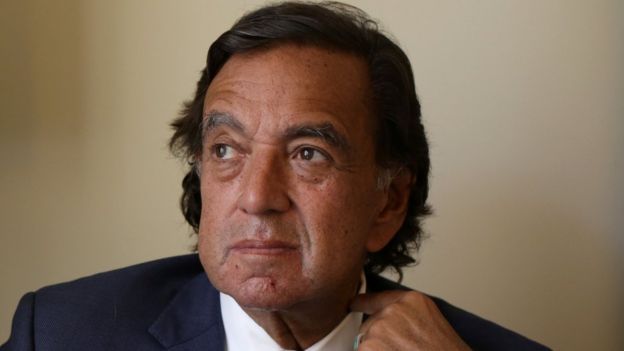
      Bill Richardson, speaking to Reuters, on 24 January 2018Image copyrightREUTERS
      Image captionBill Richardson, a former governor of New Mexico, has sharply criticised Aung San Suu Kyi
      Mr Richardson, a former adviser to the Clinton administration, has known Ms Suu Kyi for decades and visited the Nobel laureate while she was under house arrest in the 1990s.
      He told Reuters he was resigning from the advisory board because it was a "whitewash" and he did not want to be part of a "cheerleading squad for the government".
      He was "alarmed by the lack of sincerity with which the critical issue of citizenship was discussed," he wrote in a statement.

      What has happened to the Rohingya?

      Media captionWatch: Who are the Rohingya?
      There were around one million Rohingya people in Myanmar at the start of 2017, where they have their own language and culture. But the government sees them as illegal immigrants from Bangladesh and denies them citizenship.
      In August last year, after Rohingya militants in Rakhine state attacked police posts, people started to flee across the border. Arriving in Bangladesh, they told repeated stories of troops, backed by local Buddhist mobs, burning villages and attacking and killing civilians.
      The military offensive has been described by the United Nations as a "textbook example of ethnic cleansing" - something Myanmar denies.

      Mr Richardson went on to say he had been "taken aback by the vigour" with which Ms Suu Kyi had "disparaged" the media, the UN, human rights groups and the international community during three days of meetings.
      "She's not getting good advice from her team," he said.
      "I like her enormously and respect her. But she has not shown moral leadership on the Rakhine issue and the allegations made, and I regret that."
      Myanmar's government said Mr Richardson was pursuing "his own agenda" and the government had decided his continued participation on the board was "not in the best interest of all concerned".
      The Advisory Board for the Committee for Implementation of the Recommendations on Rakhine State was set up by Ms Suu Kyi's government last year.

      Blistering criticism

      BBC South East Asia correspondent Jonathan Head
      Rarely can such blistering criticism have come from a seasoned diplomat of a woman whose cause he once championed, and whom he considered a friend.
      Ms Suu Kyi's government has denied allegations of horrific human rights abuses and stubbornly resisted pressure to allow international organisations access to Rakhine state. Bill Richardson's fear that the board could be just a cheerleader for the government may be quietly shared by other members and his reservations will have surprised few.
      But strong and personal reproaches of Ms Suu Kyi's attitude may destroy a personal relationship going back more than two decades.
      She is known to be intolerant of such slights and strong-willed to the point of stubbornness.
      There is little likelihood that she will change her views because of his comments. More likely they will compound a sense, shared by her millions of supporters, that western governments and political leaders are treating her unfairly, and that she should look elsewhere for sympathy.

      Until Mr Richardson resigned, the board had 10 members, five of whom are from overseas.
      One of those, former South African Defence Minister Roelof Meyer, travelled with the board's remaining members to Rakhine state on Wednesday.
      He told Reuters the visit had been "very constructive", and said any suggestion the board was "just a rubber stamp or a voice on behalf of the government... would be completely untrue, unfair. We haven't done any recommendations so far."
      Another member of the board, Khin Nyo, told the BBC that Mr Richardson was asked not to urge for the release of the Reuters journalists in the meeting as it did not concern the board.
      "The advisory board is independent and [the government] don't restrict anything on us," she said.

      More on this story