Biodun Iginla, BBC News

Biodun Iginla, BBC News
Showing posts with label San Antonio. Show all posts

Saturday, May 19, 2018

After the election, Venezuela emigrees still streaming across border

May 19, 2019  23H:13  GMT/UTC/ZULU TIME
SAN ANTONIO, Venezuela - Crouched on a sidewalk near Venezuela’s border with Colombia, construction worker Deiver Guarate said Sunday’s presidential election has already been decided in favor of President Nicolas Maduro, and he did not plan to stay around to hear the results.
A Venezuelan National Guard keeps watch next to the Simon Bolivar international bridge in San Antonio del Tachira, Venezuela May 16, 2018. Picture taken May 16, 2018. REUTERS/Carlos Eduardo Ramirez
Unable to cover even the most basic of expenses amid hyperinflation, Guarate was emigrating to Colombia and had to spend the night on the street as he waited for overwhelmed Venezuelan migration authorities to stamp his passport.
“People aren’t voting anymore because they know that it’s rigged. If we had any hope that this would change, we wouldn’t be migrating,” said Guarate, 35, huddled beside suitcases on a street were several hundred people have been sleeping this week.
“The situation in Venezuela is critical,” said Guarate, whose grandmother died last year of kidney problems because the family was unable to obtain medicine due to drug shortages.
Venezuela’s opposition has called on supporters to sit out Sunday’s vote due to concerns of fraud but tens of thousand of migrants are so skeptical of the election that they prefer to leave.
They are flocking to border towns like San Antonio, where they anxiously push through streets crowded with informal vendors under sweltering sun to escape a country where a monthly minimum wage can at best buy a few pounds of rice.
Maduro challenger Henri Falcon, who is breaking the boycott to face his rival, insists that a massive turnout by discontented Venezuelans would bring about change.
Many among the opposition, however, believe Falcon is legitimizing a rigged process, which governments around the world including the United States and Latin American neighbors have condemned.
People carry their luggage as they walk outside the customs building in San Antonio del Tachira, Venezuela May 16, 2018. Picture taken May 16, 2018. REUTERS/Carlos Eduardo Ramirez
Maduro, who insists the election is free and fair, has warned migrants they would face difficult circumstances abroad and recently said some are now “cleaning toilets.”
He has said that Venezuela’s situation has been caused by an “economic war” led by U.S.-backed adversaries.
The Information Ministry did not respond to a request for comment.

‘WE KNOW WHAT’S COMING’

In April, Maduro launched a program called “Return to the Fatherland” meant to raise money for Venezuelans who sold their possessions to emigrate, then wanted to return.
In San Antonio, migrants carrying tatty bags with their belongings did not believe the government would help them or that the vote represented an opportunity for change.
“The situation is just too difficult. Money doesn’t buy anything,” said Alejandro Lugo, 25, a bodyguard who planned to settle in Colombian capital Bogota.
“On Sunday there are elections. We all know what’s coming. They know the results already,” Lugo said.
The border is closed over the weekend as a security measure during the election, so migrants would have to wait until Monday to cross or cut through dozens of illegal paths.
The United Nations has estimated that 1 million Venezuelans left the country between 2015 and 2017.
Slideshow (12 Images)
Some 13,000 per day leave in search of a new life from the Venezuelan state of Tachira, the most heavily trafficked border crossing state, according to Venezuelan military sources working in the area who asked not to be identified.
Another 50,000 leave and return the same day or shortly after, the sources said.
Emigrees who carry on get their passports stamped, then walk across the Simon Bolivar bridge with suitcases and backpacks to reach Colombia or continue on by bus toward Ecuador or Peru.
The exodus of the last year has put a strain on neighboring Latin American countries, where Venezuelans are routinely seen sleeping on the streets.
Maduro halted vehicle traffic over the bridge three years ago. Sweaty pedestrians now line up in the heat to get through Colombia’s border check point.
Some cross to buy goods that have run short in Venezuela such as diapers or flour, while others smuggle goods to the Colombian border city of Cucuta, one of the few remaining ways to consistently make a living.
“Here your money won’t buy anything, no matter how much you make,” said Wilma Morales, 50, a lawyer, waiting to cross the border on her way to Peru. “For me there are no elections. I’m not going to be legitimizing a dictatorship.”
See graphics on upcoming elections in Latin America tmsnrt.rs/2wSwu9k and in Venezuela tmsnrt.rs/2IWH6ZD

Wednesday, December 20, 2017

Desperate Venezuelans peddle wares door-to-door in Colombia to survive

DECEMBER 20, 2017  14H:05  GMT/UTC/ZULU TIME
CUCUTA, Colombia  - Thousands of impoverished Venezuelans are crossing the border to Colombia every day to sell cheap basics, from oranges to candles, in a desperate attempt to earn hard currency amid their country’s worsening economic collapse.
Marlon Carrillo (R) organizes the fruits bought in Venezuela as he waits for customers in Cucuta, Colombia December 15, 2017. REUTERS/Carlos Eduardo Ramirez
The porous roughly 2,220-kilometer (1,380-mile) frontier for years has been rife with smuggling due to the massive differences in prices on either side due to controls imposed by Venezuela’s socialist government.
But in the past three months there has been a spike in Venezuelans migrating to the border area and spending their days going door-to-door trying to sell low-cost goods in Colombia.
SPONSORED
Hundreds of vendors are sleeping in the streets of the Venezuelan border town of San Antonio, while the surge in hawkers on the Colombian side is stoking anger among local shopkeepers.
Albert Rodriguez, 22, spends his nights on a plastic sheet in the streets of San Antonio since moving from Venezuela’s inland agricultural state of Lara a month ago. He sells coffee in Colombia, but still has not been able to send money home to help his newborn daughter.
ADVERTISING
“It’s tough because there are so many Venezuelans. I feel like crying because I am so impotent,” said Rodriguez, who said he hopes to eventually migrate to central Colombia where he thinks job prospects will be better.
The flood of vendors is evidence of how a fourth year of recession - which has fomented malnutrition, disease and violent crime - is tearing Venezuela’s social fabric apart.
It also highlights that Colombia, already home to the most Venezuelan migrants in South America, remains particularly vulnerable to the crisis.
Genesis Materan (L) counts Colombian pesos as she sells vegetables and fruits bought in Venezuela to a customer in Cucuta, Colombia December 15, 2017. REUTERS/Carlos Eduardo Ramirez
The Colombian government did not respond to a request for comment.

TENSIONS IN COLOMBIA

Come daybreak, Venezuelan hawkers jostle for hours to get a spot on a bus traveling to the Colombian border. They then cross the teeming frontier on foot, many silently praying that the National Guard will not demand payment to let them through with their goods.
Slideshow (7 Images)
Once safely in Cucuta, the vendors disperse on different buses that take them across the Colombian border city. In the low-income hillside neighborhood of La Libertad, around a hundred Venezuelans rang doorbells offering mayonnaise, insecticide, cereal boxes and more.
Sales are often brisk. Prices are roughly half those in Colombian stores due to Venezuela’s depreciated bolivar currency.
Some worried Colombian shopkeepers are demanding the border be closed to protect their businesses. Colombians also at times fret that the influx of Venezuelan vendors could lead to crime.
Marlon Carrillo, a 21-year-old Venezuelan who abandoned university studies to start selling fruit in Colombia three months ago, said some locals slammed doors in his face out of fear.
“It’s hard to pay for the sins of others,” said Carrillo, who crisscrosses Cucuta for eight hours a day selling the lemons, strawberries, bananas and pineapples he crams into his backpack.
“I want to progress and study but I have to work. I‘m not going to let my family die of hunger,” said Carrillo, who is supporting his three nephews after his sister died of bone marrow failure.

Sunday, July 23, 2017

BREAKING: San Antonio: Eight found dead in truck in Walmart car park


  • July From the section
    July 23, 2017  15H:51  GMT/UTC/ZULU TIME
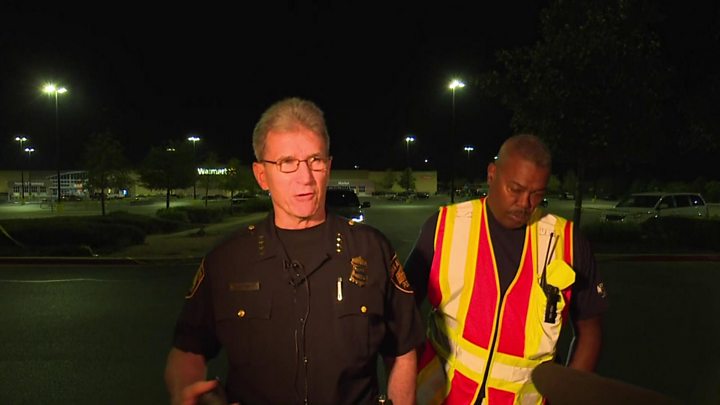
Media captionPolice Chief William McManus and Fire Chief Charles Hood told reporters about the discovery
by Alyssa Mann and Biodun Iginla, BBC News, San Antonio, Texas
Eight suspected illegal immigrants have been found dead inside a trailer truck parked outside a Walmart store in the US state of Texas, authorities say.
Twenty others were in critical condition, some suffering from heatstroke or dehydration, and taken to hospital in the city of San Antonio.
Police did not say where the vehicle came from, but said the driver has been arrested and would be charged.
They are investigating a possible people-smuggling offence.
The US immigration department is trying to establish the victims' status.
San Antonio is a few hours' drive from the border with Mexico.
Police Chief William McManus said in a press briefing that the bodies were discovered after a call from a Walmart employee, who had been approached by someone from the truck asking for water.
Video footage from the store showed a number of vehicles arriving to pick up some of the survivors.
"We're looking at a human trafficking crime this evening," he added.
Officials investigate a truck that was found to contain 38 suspected illegal immigrants in San Antonio, Texas, USA, 23 July 2017Image copyrightEPA
Image captionThe truck contained 38 suspected illegal immigrants, both adults and children
Several others may have managed to escape on foot into the woods nearby.
Local fire chief Charles Hood said they had arrived at the scene just after midnight to find eight people dead in the back of the trailer truck, which had no functioning air conditioning and no signs of water inside.
The survivors had heart rates of over 130 beats per minute and were very hot to touch. In addition to the 20 people in a critical condition, eight others were taken to hospital in a less severe state.
The fire chief confirmed at least two of the victims were school-age children. Their condition is not clear.
"We're very fortunate that there weren't 38 of these people who were all locked inside this vehicle dead," he added.
Media captionMigrant deaths: How one Texas county is struggling to cope
The US attorney for the Western District of Texas, Richard Durbin, said the authorities were working to identify those responsible for the incident.
"These people were helpless in the hands of their transporters. Imagine their suffering, trapped in a stifling trailer in 100-plus degree heat," he said in a statement.
They were victims of "ruthless human smugglers indifferent to the wellbeing of their fragile cargo," he added.
Weather in the area has been hot and dry.
Map of San Antonio

More on this story