Biodun Iginla, BBC News

Biodun Iginla, BBC News
Showing posts with label Syria and Iraq. Show all posts

Friday, June 14, 2019

ANALYSIS: IS focus on millennial women is worry for future: Europol


In a report on IS propaganda focussed on women, Europol said that this could "pave the way" for a change in the role of female jihadists in future terror organisations
In a report on IS propaganda focussed on women, Europol said that this could "pave the way" for a change in the role of female jihadists in future terror organisations AFP/File
ADVERTISING
The Hague 
The Islamic State group is targeting women from the millennial generation as it seeks new recruits after the fall of its so-called caliphate, the EU's police agency said Friday.
In a report on IS propaganda focussed on women, Europol said that this could "pave the way" for a change in the role of female jihadists in future terror organisations.
"We are talking about especially millennials," Manuel Navarette, Head of Europol's European Counter Terrorism Centre, told reporters in The Hague as he unveiled the report.
"IS propaganda is focussed on women between 16 to 25, a group more vulnerable to these activities and they have access to social media. IS has adapted to the new target".
IS had in particular assigned new and "more active" roles to female jihadists within the organisation, while keeping its fundamentalist ideas about the position of women in society.
"They kept somehow the traditional role given to women: being supportive, taking care of men," Navarette said.
"But then they start asking women to take a different role, to assist as a doctor, to assist in a different way, not only as the traditional housewife."
The Islamic State's "caliphate" in Iraq and Syria fell in March but the group remains active in several countries in the Middle East, Africa, and Asia, as well as still inspiring jihadists through an online presence.
The international community is also torn over what to do with around 4,000 foreign women and 8,000 children linked to IS who remain stranded in Syria and Iraq.
The fear is that the targeting by IS of women for propaganda could pay dividends for jihadists in years to come.
"The worry is that this increase in the involvement of women could pave the way for potentially major changes in the role of jihadi women in the future," the Europol report said.
Navarette said there had been an increase in arrests of women connected to jihadism in France and Britain in particular.
"There could be a kind of relation between the propaganda machine of IS asking, demanding, for more active of specific groups of women and children to be a part of terrorism," he added.
Europol director Catherine De Bolle said that despite the findings law enforcement agencies needed to take a "gender neutral approach" looking at the reasons for radicalisation.
"It's the way to paradise, for both men and women," she added.


Tuesday, June 11, 2019

ANALYSIS: Repatriate or reject: What countries are doing with IS group families


Delil Souleiman, AFP | US-backed Syrian Democratic Forces (SDF) escort a woman and child in the northern Kurdish city of Qamishli as they are handed over to diplomats from Uzbekistan, May 2019.
Since the fall of the Islamic State group's so-called "caliphate" in March, the international community has been torn over what to do with the families of foreign jihadists captured or killed in Syria and Iraq.
ADVERTISING
Some 12,000 foreigners from as many as 40 countries  4,000 women and 8,000 children  are currently stranded, mainly in Al-Hol camp in northeastern Syria.
The Kurdish authorities are pressing for them to be returned to their countries of origin.
Here are several examples of how countries around the world are dealing with the issue:
Russia, Kosovo, first
Nearly 4,500 Russian citizens went abroad to fight alongside the IS group and it was the first to organise returns over a year ago.
By February around 200 women and children had returned, originating mainly from Russia's Islamic republics in the Caucasus. Moscow estimates that nearly 1,400 children are still stranded.
Kosovo, which is 90 percent Muslim, announced in April it is repatriating 110 nationals from Syria, almost all of them wives and children of jihadists.
France and Belgium: 'case by case'
After months of hesitation amid hostile public opinion, 12 orphaned children of French jihadists were flown homefrom Syria on Monday.
France repatriated five orphans from Syria in mid-March, as well as a three-year-old girl whose mother was sentenced to life imprisonment in Iraq.
Paris has said it is studying the files of all its citizens held in northeastern Syria on a case-by-case basis.
Like France, Belgium has been one of the biggest sources of foreign fighters for the IS group.
The authorities recorded more than 400 travelling from 2012 while 160 children and adolescents have been born with at least one Belgian parent involved.
Belgium says it will help the repatriation of children younger than 10, as long as the link with a Belgian parent is proven. "For the others it is case by case," the government says.
Germany: children repatriated
A dozen children of jihadist fighters have been repatriated from Iraq to Germany since March.
The German authorities, while cautious, say that the children are "victims" and that they should be repatriated if they have family to take them in.
Children who have been radicalised will be placed in a special institution but will not be locked up.
Denmark: stripped of nationality
The Danish government in late March drew up draft legislation under which children born abroad to jihadists will not have Danish nationality.
United States
The United States has urged Western countries to take their nationals back and has started repatriating some of its own.
Two American women and six children from families of suspected IS group members were repatriated in early June.
In July 2018 Washington brought home three IS group fighters for prosecution and also repatriated one woman with her four children.
Tunisia: no repatriation
Some 5,000 Tunisians have joined the IS group in Syria and Libya, according to the UN in 2015  one of the biggest contingents.
No children have been brought home from Syria or Iraq, according to Human Rights Watch in February.
Tunisia's government worries that repatriating children will only accelerate the return of their jihadist parents, according to a local rights group, the Rescue Association of Tunisians Trapped Abroad. 
Turkey
In late May, Iraq repatriated to neighbouring Turkey 188 children of Turks accused of belonging to the IS group, a capital offence in Iraq.
Tajikistan, Uzbekistan
Tajikistan, from where more than 1,000 travelled to fight for the IS group, said in May that 84 children had been brought back from Iraq, where their parents had been either jailed or killed in battle.
On May 30, Uzbekistan said it had repatriated 156 nationals, mostly women and children.


Friday, May 11, 2018

DR Congo's Kasai crisis: 400,000 children face starvation


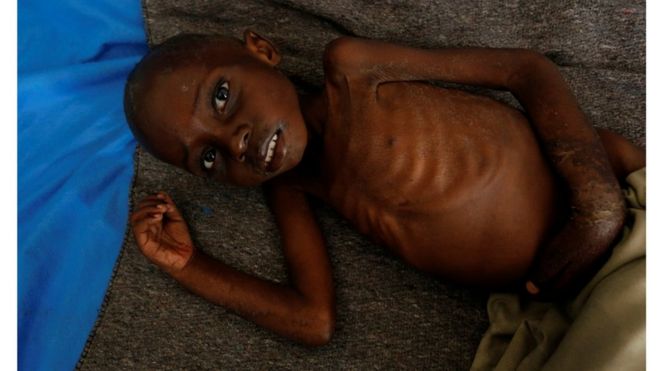
A malnourished child in KasaiImage copyrightREUTERS
Image captionSome children are already starving to death in Kasai
by Rashida Adjani and Biodun Iginla, BBC News, Kasai region
Some 400,000 children are at risk of starving to death in the Democratic Republic of Congo, the United Nations says.
Thousands of families in the Kasai region fled to the bush, where they stayed for months, short of food and water, many have already died.
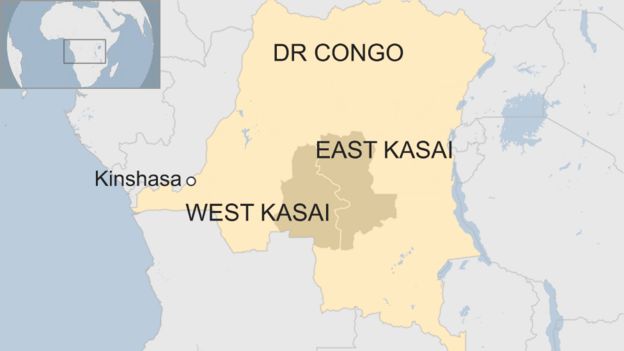
The Kasai region, once one of the most prosperous and peaceful in DR Congo, descended into violence in 2016.
Long-simmering resentment exploded into rebellion against the government.
In December 2017, the UN declared the crisis in DR Congo as the highest level of emergency - the same as Yemen, Syria and Iraq.
The UN children's agency Unicef has appealed for $88m (£65m) in aid for Kasai.
Unicef spokesperson Christophe Boulierac has just returned from a trip to Kasai.
"I was really shocked by what I saw there," he told us at the BBC.
Media captionFergal Keane reports on hunger road in the Democratic Republic of Congo's Kasai region.
Mr Boulierac said he had visited three hospitals and seen children suffering from severe acute malnutrition. When he returned a few days later, several of the children had died.
"We are not saying that children are at risk of dying of malnutrition in Kasai, we are saying that children are already dying, they are dying, they have died, in silence, in the bush".

What is the fighting about?

Some of those who fled the fighting are now returning to their destroyed villages, where no crops have been planted.
Unicef estimates that almost four million people in Kasai need aid. Malnourished children are the most vulnerable.
The organisation says it wants to scale up feeding centres, train medical staff, and support children who were forcibly recruited by armed groups.
The rebellion broke out in 2016 after the government refused to recognise a traditional chief, Kamina Nsapu, and imposed its own man instead.
Both his supporters and the army have been accused of widespread atrocities.
map

More on this story