October 2, 2019 09H:49 GMT/ZULU
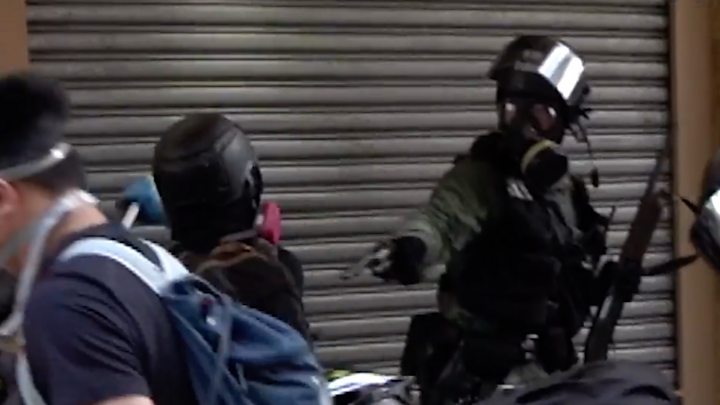
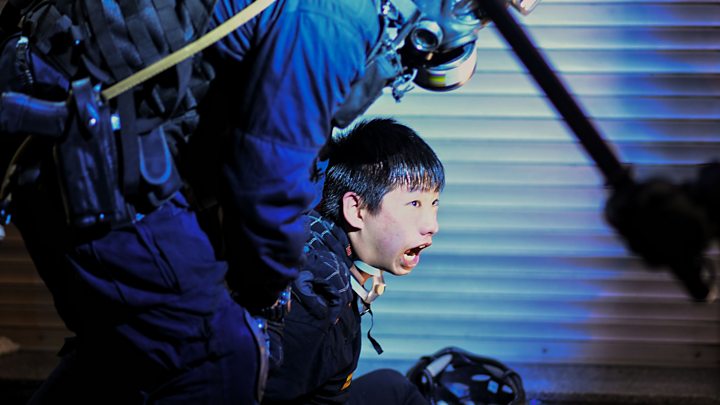
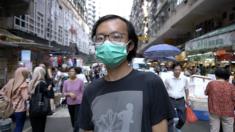
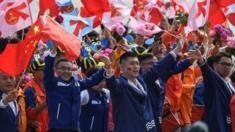
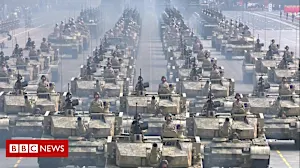
HONG KONG - A young demonstrator was shot and police fired tear gas and water cannon at petrol-bomb throwing protesters, as violence flared in Hong Kong as the city’s Chinese rulers celebrated the 70th anniversary of the founding of the People’s Republic.
Riot police stand guard in Sham Shui Po district, on China's National Day in Hong Kong, China October 1, 2019. REUTERS/Athit Perawongmetha
Tuesday’s unrest was the most widespread in nearly four months of street clashes and demonstrations that have plunged the former British colony into its biggest political crisis in decades and pose the most serious popular challenge to China’s President Xi Jinping since he came to power.
Protests were sparked in June by planned legislation that would have allowed the extradition of suspected criminals to mainland China. The bill was later withdrawn, but the protests have since expanded into a broader pro-democracy movement.
Following is a timeline of the key dates around the extradition bill and the protests it triggered:
February 2019 – Hong Kong’s Security Bureau submits a paper to the city’s legislature proposing amendments to extradition laws that would provide for case-by-case extraditions to countries, including mainland China, beyond the 20 states with which Hong Kong already has treaties.
March 31 - Thousands take to the streets of Hong Kong to protest against the proposed extradition bill.
ADVERTISEMENT
April 3 – Hong Kong leader Carrie Lam’s government introduces amendments to Hong Kong’s extradition laws that would allow criminal suspects to be sent to mainland China for trial.
April 28 – Tens of thousands of people march on Hong Kong’s city assembly building, the Legislative Council, to demand the scrapping of the proposed amendments to the extradition laws.
May 11 – Scuffles break out in Hong Kong’s legislature between pro-democracy lawmakers and those loyal to Beijing over the extradition bill.
May 21 – Lam says her administration is determined to push the bill through the legislature.
May 30 – Hong Kong introduces concessions to the extradition bill, including limiting the scope of extraditable offences. Critics say they are not enough.
June 6 – More than 3,000 Hong Kong lawyers take to the streets dressed in black in a rare protest march against the extradition law.
ADVERTISEMENT
June 9 - More than half a million take to the streets in protest.
June 12 – Police fire rubber bullets and tear gas during the city’s largest and most violent protests in decades. Government offices are shut for the rest of the week.
June 15 – Lam indefinitely delays the proposed extradition law.
July 1 - Protesters storm the Legislative Council on the 22nd anniversary of the handover from British to Chinese rule, destroying pictures and daubing walls with graffiti.
July 9 - Lam says the extradition bill is dead and that government work on the legislation had been a “total failure”.
July 21 - Men, clad in white T-shirts and some armed with poles, flood into rural Yuen Long station and storm a train, attacking passengers and passers-by, including members of the media, after several thousand activists surrounded China’s representative office in the city earlier in the day, and clashed with police.
July 30 - Forty-four activists are charged with rioting, the first time this charge has been used during these protests.
Aug. 9 - China’s aviation regulator demands Hong Kong flag carrier Cathay Pacific suspend personnel who have taken part in the protests. The airline suspends a pilot, one of 44 charged with rioting the month before, the next day.
Aug. 14 - Police and protesters clash at Hong Kong’s international airport after flights were disrupted for a second day. The airport resumed operations later that day, rescheduling hundreds of flights.
Aug. 21 - China’s biggest e-commerce company Alibaba delays its up to $15 billion listing in Hong Kong, initially set for late August.
Sept. 2 - Lam says she has caused “unforgivable havoc” by igniting the political crisis engulfing the city and would quit if she had a choice, according to an audio recording obtained by us at Reuters of remarks she made to a group of businesspeople.
Sept. 3 - Lam says she had never asked the Chinese government to let her resign to end the city’s political crisis, responding to the Reuters report.
Sept. 4 - Lam announces formal withdrawal of controversial extradition bill. Critics say it is too little, too late.
Sept. 7 - Police fire tear gas for a second consecutive night after fending off airport protests.
ADVERTISEMENT
Sept. 8 - Security forces fire tear gas to disperse protesters in upmarket Causeway Bay shopping district.
Sept. 17 - Hong Kong leader Carrie Lam pledges to hold talks with the community to try to ease tensions.
Sept. 22 - Hong Kong police fire tear gas to break up pro-democracy demonstrators who trashed fittings at a railway station and shopping mall.
Sept. 26 - Hong Kong protesters trap city leader Carrie Lam in a stadium for hours after she holds her first “open dialogue” with the people.
Oct. 1 - City rocked by the most widespread unrest since the start of the protests, as China’s Communist Party rulers celebrate 70th anniversary of the founding of the People’s Republic.