Biodun Iginla, BBC News

Biodun Iginla, BBC News
Showing posts with label Legislative Council. Show all posts

Wednesday, October 2, 2019

ANALYSIS: Key dates in Hong Kong's protests

October 2, 2019  09H:49  GMT/ZULU
HONG KONG - A young demonstrator was shot and police fired tear gas and water cannon at petrol-bomb throwing protesters, as violence flared in Hong Kong as the city’s Chinese rulers celebrated the 70th anniversary of the founding of the People’s Republic.
Riot police stand guard in Sham Shui Po district, on China's National Day in Hong Kong, China October 1, 2019. REUTERS/Athit Perawongmetha
Tuesday’s unrest was the most widespread in nearly four months of street clashes and demonstrations that have plunged the former British colony into its biggest political crisis in decades and pose the most serious popular challenge to China’s President Xi Jinping since he came to power.
Protests were sparked in June by planned legislation that would have allowed the extradition of suspected criminals to mainland China. The bill was later withdrawn, but the protests have since expanded into a broader pro-democracy movement.
Following is a timeline of the key dates around the extradition bill and the protests it triggered:
February 2019 – Hong Kong’s Security Bureau submits a paper to the city’s legislature proposing amendments to extradition laws that would provide for case-by-case extraditions to countries, including mainland China, beyond the 20 states with which Hong Kong already has treaties.
March 31 - Thousands take to the streets of Hong Kong to protest against the proposed extradition bill.
ADVERTISEMENT
April 3 – Hong Kong leader Carrie Lam’s government introduces amendments to Hong Kong’s extradition laws that would allow criminal suspects to be sent to mainland China for trial.
April 28 – Tens of thousands of people march on Hong Kong’s city assembly building, the Legislative Council, to demand the scrapping of the proposed amendments to the extradition laws.
May 11 – Scuffles break out in Hong Kong’s legislature between pro-democracy lawmakers and those loyal to Beijing over the extradition bill.
May 21 – Lam says her administration is determined to push the bill through the legislature.
May 30 – Hong Kong introduces concessions to the extradition bill, including limiting the scope of extraditable offences. Critics say they are not enough.
June 6 – More than 3,000 Hong Kong lawyers take to the streets dressed in black in a rare protest march against the extradition law.
ADVERTISEMENT
June 9 - More than half a million take to the streets in protest.
June 12 – Police fire rubber bullets and tear gas during the city’s largest and most violent protests in decades. Government offices are shut for the rest of the week.
June 15 – Lam indefinitely delays the proposed extradition law.
July 1 - Protesters storm the Legislative Council on the 22nd anniversary of the handover from British to Chinese rule, destroying pictures and daubing walls with graffiti.
July 9 - Lam says the extradition bill is dead and that government work on the legislation had been a “total failure”.
July 21 - Men, clad in white T-shirts and some armed with poles, flood into rural Yuen Long station and storm a train, attacking passengers and passers-by, including members of the media, after several thousand activists surrounded China’s representative office in the city earlier in the day, and clashed with police.
July 30 - Forty-four activists are charged with rioting, the first time this charge has been used during these protests.
Slideshow (2 Images)
Aug. 9 - China’s aviation regulator demands Hong Kong flag carrier Cathay Pacific suspend personnel who have taken part in the protests. The airline suspends a pilot, one of 44 charged with rioting the month before, the next day.
Aug. 14 - Police and protesters clash at Hong Kong’s international airport after flights were disrupted for a second day. The airport resumed operations later that day, rescheduling hundreds of flights.
Aug. 21 - China’s biggest e-commerce company Alibaba delays its up to $15 billion listing in Hong Kong, initially set for late August.
Sept. 2 - Lam says she has caused “unforgivable havoc” by igniting the political crisis engulfing the city and would quit if she had a choice, according to an audio recording obtained by us at Reuters of remarks she made to a group of businesspeople.
Sept. 3 - Lam says she had never asked the Chinese government to let her resign to end the city’s political crisis, responding to the Reuters report.
Sept. 4 - Lam announces formal withdrawal of controversial extradition bill. Critics say it is too little, too late.
Sept. 7 - Police fire tear gas for a second consecutive night after fending off airport protests.
ADVERTISEMENT
Sept. 8 - Security forces fire tear gas to disperse protesters in upmarket Causeway Bay shopping district.
Sept. 17 - Hong Kong leader Carrie Lam pledges to hold talks with the community to try to ease tensions.
Sept. 22 - Hong Kong police fire tear gas to break up pro-democracy demonstrators who trashed fittings at a railway station and shopping mall.
Sept. 26 - Hong Kong protesters trap city leader Carrie Lam in a stadium for hours after she holds her first “open dialogue” with the people.
Oct. 1 - City rocked by the most widespread unrest since the start of the protests, as China’s Communist Party rulers celebrate 70th anniversary of the founding of the People’s Republic.

Wednesday, June 12, 2019

ANALYSIS: Hong Kong extradition: Police fire rubber bullets at protesters


Media captionThousands of people are blockading streets

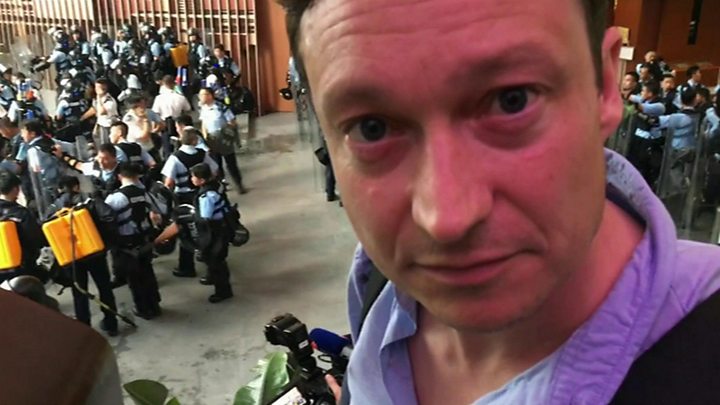
by Xian Wan and Biodun Iginla, BBC News Analysts, Hong Kong
Police have fired rubber bullets and tear gas at protesters in Hong Kong where anger at a new extradition bill has spilled over into violence.
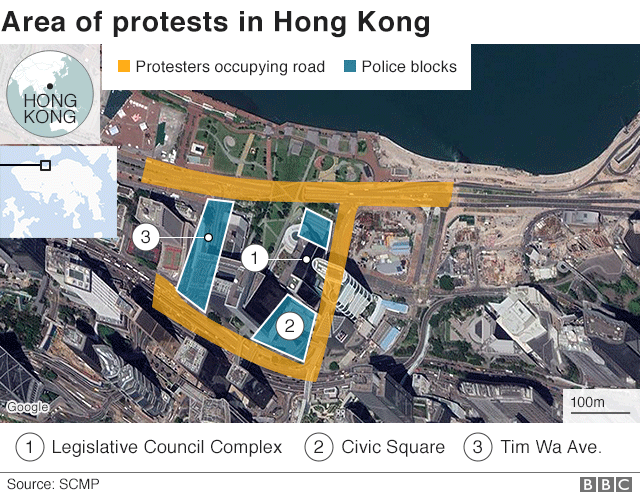
Protesters have blocked key roads around government buildings and threw bricks and projectiles at police.
The government is still pushing for the bill which would allow extradition to mainland China and it is expected to pass its final vote on 20 June.
But the Legislative Council (LegCo) has now delayed its second reading.
The pro-Beijing LegCo said Wednesday's scheduled meeting would instead be held at an unspecified "later time".
This is the first time rubber bullets have been used in Hong Kong for decades.

What's happening?

Protests had been largely peaceful as thousands of protesters took to the streets and attempted to block access to government buildings ahead of the scheduled debate of the bill.
But on Wednesday, the demonstrations escalated, with tear gas, rubber bullets and non-lethal "beanbag" rounds being fired as activists tried to storm government buildings.
Police have formed a hard barricade with plastic shields and are waving a banner saying "Warning, tear gas" in an attempt to keep protesters away, according to live coverage on local television outlets.
ADVERTISEMENT


Media captionHong Kong protesters force way into government building

But protesters seem also undeterred, throwing traffic cones and other random objects they can get their hands on.
The BBC's Gabriel Gatehouse is inside the LegCo building where police have effectively barricaded themselves. He reports one officer is injured and was carried away. The doors have been padlocked.

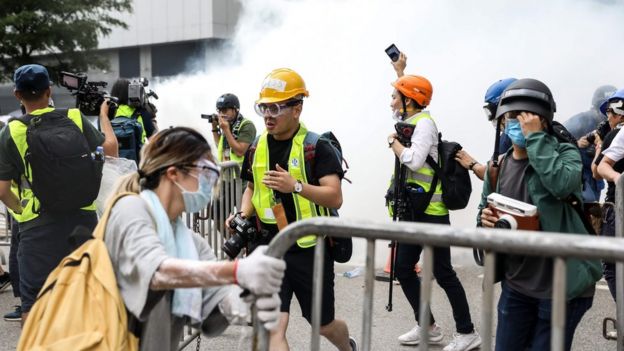
Protesters and members of the media react after police fired tear gas during a rally against a controversial extradition law proposal outside the government headquarters in Hong Kong on June 12, 2019.Image copyrightAFP/GETTY

Ambulances are now making their way towards the protest site, according to the Reuters news agency.
Police Commissioner Stephen Lo Wai-chung described the clashes as "rioting", punishable by 10 years in prison, according to the South China Morning Post.
He said police had "no choice" but to use weapons to stop protesters from barging at defence lines.
"We condemn such irresponsible behaviour. There's no need to hurt innocent people to express your opinions.
But one young protester, decked in a black mask and gloves, told news agency AFP that they would not "leave [until] they scrap the law".

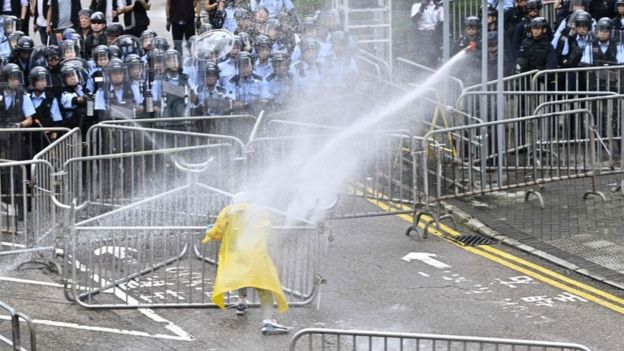
Police officers spray a lone protester near the government headquarters in Hong Kong on June 12, 2019Image copyrightGETTY IMAGES
Image captionPolice officers spray a lone protester near the government headquarters

Critics of the bill of amendments to the extradition laws cite the alleged use of torture, arbitrary detentions and forced confessions in the Chinese judicial system.
The government has promised legally binding human rights safeguards and other measures it says should alleviate concerns.
Nevertheless, this has led to the largest rallies the territory has seen since it was handed back to China by the British in 1997.
Police said they are also investigating death threats made against Hong Kong's Chief Executive, Carrie Lam, over the bill.

line

'Test of wills'

By Rupert Wingfield-Hayes, BBC News, Hong Kong
On Harcourt road in central Hong Kong thousands of protesters cheered as volunteers ran forward with goggles and umbrellas - protection against police pepper spray.
Almost all are young and wearing face masks. This is not a sanctioned protest and they fear retaliation or even prosecution.
For now at least the protesters appear to have succeeded. But this is a test of wills. So far the police have stood back allowing the shut down of much of central Hong Kong.
But if the protests continue and the government remains determined to pass the extradition bill many here have told me they fear things here could turn ugly.

line

Who is involved?

A wide range of groups have spoken out against extradition to China in recent days including schools, lawyers and businesses, with hundreds of petitions also in circulation.
More than 100 businesses have said they will shut to allow their staff to protest for freedom and nearly 4,000 teachers said they would strike.
Powerful business lobbies say they fear the plans will damage Hong Kong's competitiveness as a base of operations.

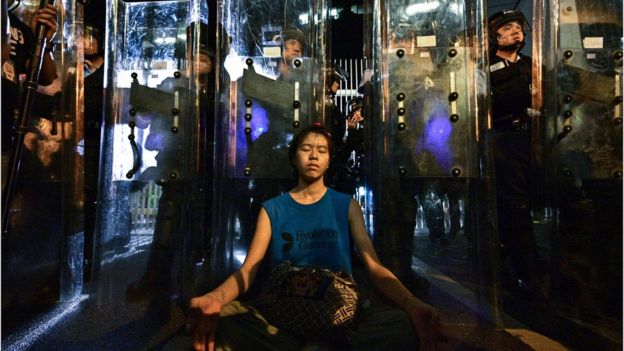
A woman (C) meditates in front of a line of riot police standing guard with their shields outside the government headquarters in Hong Kong early on June 12, 2019Image copyrightAFP
Image captionA broad range of groups oppose the proposed laws

On Sunday, organisers say, more than a million people took to the streets demanding the government abandon the amendments, though police estimated turnout was 240,000 at its peak.

What are the proposed changes?

They allow for extradition requests from authorities in mainland China, Taiwan and Macau for suspects accused of criminal wrongdoing such as murder and rape. The requests will then be decided on a case-by-case basis.
The move came after a 19-year-old Hong Kong man allegedly murdered his 20-year-old pregnant girlfriend while they were holidaying in Taiwan together in February last year.
The man fled to Hong Kong and could not be extradited to Taiwan because they do not have an extradition treaty.


Media captionThe BBC's Helier Cheung on why people are taking to the streets in Hong Kong

Hong Kong officials have said courts in the territory will have the final say over whether to grant extradition requests, and suspects accused of political and religious crimes will not be extradited.
The government has sought to reassure the public with some concessions, including promising to only hand over fugitives for offences carrying a maximum sentence of at least seven years.
Hong Kong has entered into extradition agreements with 20 countries, including the UK and the US.

Have there been other protests recently?

In 2014, the Beijing government ruled that voters in Hong Kong would only be able to choose their chief executive in 2017 from a list of pre-approved candidates.
Tens of thousands of activists took to the streets demanding change for 79 days. The protests became known as the Umbrella movement after people used umbrellas to shield themselves from pepper spray fired by police to disperse the crowd.

Map showing site of protestsImage copyrightBBC NEWS

Despite being mostly peaceful, the protests failed to achieve any concessions.

What is Hong Kong's relationship with China?

Hong Kong was a British colony from 1841 until sovereignty was returned to China in 1997.
Central to the handover was the agreement of the Basic Law, a mini-constitution that gives Hong Kong broad autonomy and sets out certain rights.

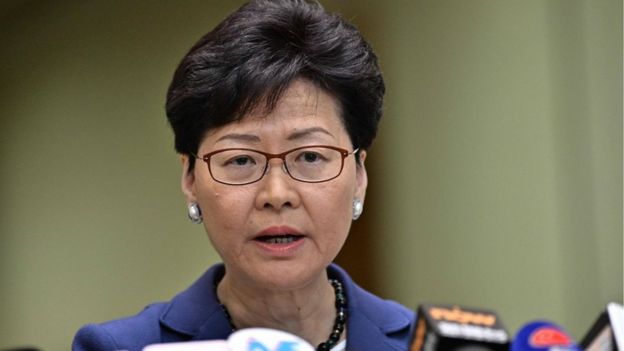
Carrie LamImage copyrightAFP
Image captionDespite the protests, Ms Lam refused to scrap the bill

Under the "one country, two systems" principle, Hong Kong has kept its judicial independence, its own legislature, its economic system and the Hong Kong dollar.
Its residents were also granted protection of certain human rights and freedoms, including freedom of speech and assembly.
Beijing retains control of foreign and defence affairs, and visas or permits are required for travel between Hong Kong and the mainland.
However, the Basic Law expires in 2047 and what happens to Hong Kong's autonomy after that is unclear.

More on this story