SAN FRANCISCO - Microsoft Corp is stepping up its hiring of women seeking to rejoin the workforce, following a rash of complaints about sexual harassment and gender discrimination at the world’s largest software company.
FILE PHOTO: A Microsoft logo is seen a day after Microsoft Corp's $26.2 billion purchase of LinkedIn Corp, in Los Angeles, California, U.S., on June 14, 2016. REUTERS/Lucy Nicholson/File Photo - RC17B8BED5A0 - RC16AAA7C2C0
Such “returnship” programs, aimed at workers who had paused their careers to raise children or care for loved ones, are gaining popularity in Silicon Valley as technology companies seek to address criticism about its bias toward young male staff.
Women make up 26 percent of Microsoft’s worldwide employees, and 19 percent of its leadership, according to the company’s September 2017 diversity figures.
“Not only do we want to empower women’s come back but also tap into non-traditional talent pools,” said Microsoft Human Resources Manager Belen Welch in a May 31 LinkedIn post promoting the program.
The program is part of Microsoft’s LEAP diversity initiative, aimed at hiring women and minorities from unconventional backgrounds, such as self-taught coders and graduates of so-called coding boot camps. The camps typically consist of about 40 candidates who sign six- to eight-month contracts with the likelihood of full-time offers upon completion.
The returnship trainees will go to two teams in Vancouver, one related to augmented and virtual reality, the other a video game studio, according to job listings posted by Microsoft.
Microsoft received 238 internal complaints of gender discrimination or sexual harassment from 2010 to 2016, according to court filings made public in March. It was sued in a Seattle federal court in 2015 for systematically denying pay raises or promotions to women. The company has denied these claims.
The company said in March it had dealt with 83 complaints of harassment and 84 complaints of gender discrimination in 2017. The complaints resulted in about 20 employees being fired.
Among U.S. adults aged 25 to 54 who are not in the workforce, 36 percent are female caregivers, according to The Hamilton Project, an economic research group.
“It’s a missing workforce,” said Tami Forman, executive director of Path Forward, a New York organization that has helped more than 40 companies launch returnship programs since 2016. These include Apple Inc, PayPal Holdings Inc and Intuit Inc.
“That’s a big chunk of people who are not participating and most of them want to go back to work at some point,” she said in a telephone interview.
(This version of the story has been refiled adds missing “said” to paragraph 10)
Auditors PwC have separately reviewed the pay and diversity of presenters, correspondents and on-air talent.
The BBC's media editor Amol Rajan says the corporation is proposing a pay cap of £320,000 for its news presenters.
The change, following an outcry about the size of the salaries of the BBC's highest paid stars, will only affect a handful of people but forms part of a wider restructuring of pay of on-air staff.
Tuesday's announcement about on-air pay and Wednesday's committee session take place against the backdrop of a long-running debate about gender pay at the BBC, which began last summer after the corporation published its salaries for on-air staff earning more than £150,000.
BBC director general,Tony Hall and Carrie Gracie whoquit as the BBC's China editorover "pay discrimination" this month, will be questioned by the committee of MPs.
The BBC's media editor says the proposed £320,000 cap has not yet been fully agreed or signed off and will apply only to on-air staff working full time.
It will affect presenters, editors and correspondents, who will be given time to respond to the proposals.
However, it is not clear whether on air-staff will be able to earn more from other BBC work, for instance on entertainment programmes.
The National Union of Journalists and the BBC Women group have criticised the BBC's record on equal pay ahead of the MPs' inquiry into the issue.
BBC Women, a group that represents female BBC journalists and producers, said it had "no confidence in the on-air review" because it had not been consulted and felt it had "been excluded from the process".
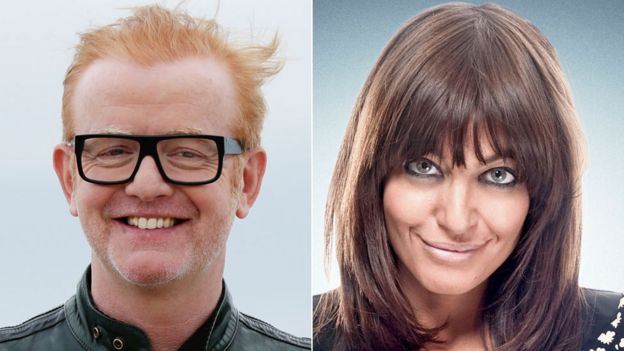
Image copyrightPA/BBCImage captionThe salaries of Chris Evans and Claudia Winkleman were among those revealed last summer
"We believe there is a wider culture of gender discrimination, which can be seen in patterns of promotion, especially after women take maternity leave."
They added: "While individual BBC managers have been supportive there is still a bunker mentality in some quarters and women have experienced veiled threats made against them when they raised the subject of equal pay."
The group included several individual testimonies in its evidence to MPs, including one from former BBC Scotland health correspondent, Eleanor Bradford.
Bradford said she discovered she "was one of the lowest-paid correspondents at BBC Scotland, despite regularly appearing on UK-wide news and delivering exclusive stories".
She said she regularly asked for a pay rise and eventually was given a £5,000 increase but it was not backdated and she remained about £10,000 below some male colleagues doing exactly the same job.
She subsequently left the BBC.
Bradford told BBC Radio 4 Today that she felt it was an "unconscious bias", but there were "efforts to change things" during her last couple of years with the BBC.
"I do hope that there will be change, but I think nevertheless the spotlight should be shown on this because I think the change isn't happening fast enough," she said.
Thirteen further cases have been put forward anonymously.
They include:
A TV news presenter who said she "had been sitting next to a man doing an identical job who was being paid tens of thousands of pounds more... I am told that we are now being paid at the same rate per day, but there is no transparency"
A BBC reporter who found her full time equivalent salary for making identical programmes was about half her male counterpart
A sports broadcaster who has worked for the BBC for almost 30 years, both as staff and freelance, who found her £500 pay on a flagship radio programme was less than half of the male presenter
A regional news presenter who after becoming aware that her male colleague's salary was a third more than the figure she had been offered was given a 5% increase
An award-winning broadcaster on a flagship arts programme said she found her male colleague was being paid 50% more per show. "When I asked for (the) pay gap to be corrected the line manager told me 'the BBC doesn't do equal pay', and that in raising the issue I was being 'aggressive'. I refused to back down and eventually was given the same rate as my male colleague and it was backdated".
'Help women'
A BBC spokesperson said: "We look forward to an informed debate at the select committee based on all the facts.
"The BBC is committed to equal pay, and we don't accept the assertion we have not been complying with the Equality Act, nor do we offer inferior contracts based on someone's gender or race.
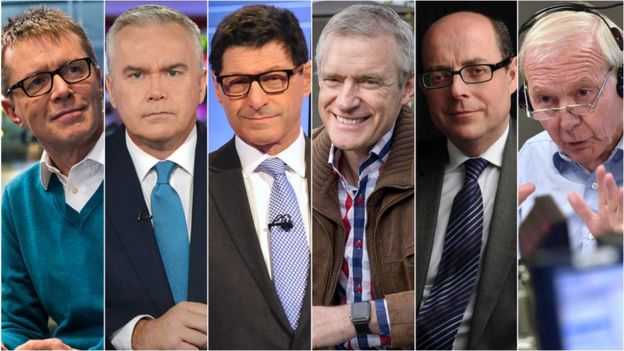
Image captionNicky Campbell, Huw Edwards, Jon Sopel, Jeremy Vine, Nick Robinson and John Humphrys are to take pay cuts
"We want to help women progress in their career and have set out ambitious targets to close the gender pay gap, filled by women. We've also set out action to achieve them.
"We have already set out how we plan to deliver real pay transparency for our staff, and today we'll publish proposals to significantly change how we manage on-air pay so we have a clear, transparent and fair system for the future."
The spokesperson added that the corporation would "not getting in to debates at the moment on pay band levels".
Damian Collins MP, chair of the DCMS committee, said that the complaints from the BBC Women group and the NUJ included those about "unlawful pay disparities on grounds of race, discrimination against women returning to work after periods of maternity leave, and discrimination against part-time workers and/or those who request flexible working".