
by Xian Wan and Biodun Iginla, Political News Analysts, The Economist Intelligence Unit, Beijing
Xi Jinping has more clout than Donald Trump. The world should be wary
Do not expect Mr Xi to change China, or the world, for the better
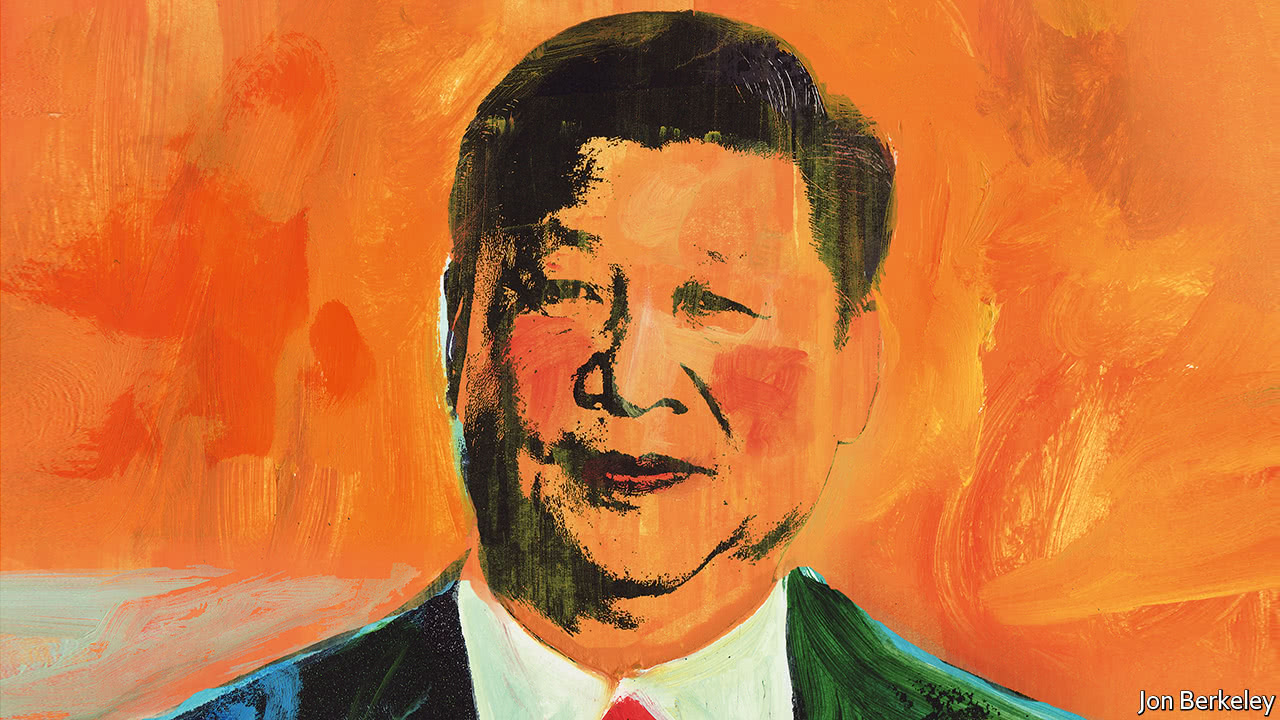
AMERICAN presidents have a habit of describing their Chinese counterparts in terms of awe. A fawning Richard Nixon said to Mao Zedong that the chairman’s writings had “changed the world”. To Jimmy Carter, Deng Xiaoping was a string of flattering adjectives: “smart, tough, intelligent, frank, courageous, personable, self-assured, friendly”. Bill Clinton described China’s then president, Jiang Zemin, as a “visionary” and “a man of extraordinary intellect”. Donald Trump is no less wowed. The Washington Post quotes him as saying that China’s current leader, Xi Jinping, is “probably the most powerful” China has had in a century.
Mr Trump may be right. And were it not political suicide for an American president to say so, he might plausibly have added: “Xi Jinping is the world’s most powerful leader.” To be sure, China’s economy is still second in size to America’s and its army, though rapidly gaining muscle, pales in comparison. But economic heft and military hardware are not everything. The leader of the free world has a narrow, transactional approach to foreigners and seems unable to enact his agenda at home. The United States is still the world’s most powerful country, but its leader is weaker at home and less effective abroad than any of his recent predecessors, not least because he scorns the values and alliances that underpin American influence.
The president of the world’s largest authoritarian state, by contrast, walks with swagger abroad. His grip on China is tighter than any leader’s since Mao. And whereas Mao’s China was chaotic and miserably poor, Mr Xi’s is a dominant engine of global growth. His clout will soon be on full display. On October 18th China’s ruling Communist Party will convene a five-yearly congress in Beijing (see Briefing). It will be the first one presided over by Mr Xi. Its 2,300 delegates will sing his praises to the skies. More sceptical observers might ask whether Mr Xi will use his extraordinary power for good or ill.
Mr Xi’s words are heeded partly because he has the world’s largest stockpile of foreign currency to back them up. His “Belt and Road Initiative” may be puzzlingly named, but its message is clear—hundreds of billions of dollars of Chinese money are to be invested abroad in railways, ports, power stations and other infrastructure that will help vast swathes of the world to prosper. That is the kind of leadership America has not shown since the post-war days of the Marshall Plan in western Europe (which was considerably smaller).
Mr Xi is also projecting what for China is unprecedented military power abroad. This year he opened the country’s first foreign military base, in Djibouti. He has sent the Chinese navy on manoeuvres ever farther afield, including in July on NATO’s doorstep in the Baltic Sea alongside Russia’s fleet. China says it would never invade other countries to impose its will (apart from Taiwan, which it does not consider a country). Its base-building efforts are to support peacekeeping, anti-piracy and humanitarian missions, it says. As for the artificial islands with military-grade runways it is building in the South China Sea, these are purely defensive.
Unlike Vladimir Putin, Russia’s president, Mr Xi is not a global troublemaker who seeks to subvert democracy and destabilise the West. Still, he is too tolerant of troublemaking by his nuke-brandishing ally, North Korea (see Schumpeter). And some of China’s military behaviour alarms its neighbours, not only in South-East Asia but also in India and Japan.
At home, Mr Xi’s instincts are at least as illiberal as those of his Russian counterpart. He believes that even a little political permissiveness could prove not only his own undoing, but that of his regime. The fate of the Soviet Union haunts him, and that insecurity has consequences. He mistrusts not only the enemies his purges have created but also China’s fast-growing, smartphone-wielding middle class, and the shoots of civil society that were sprouting when he took over. He seems determined to tighten control over Chinese society, not least by enhancing the state’s powers of surveillance, and to keep the commanding heights of the economy firmly under the party’s thumb. All this will make China less rich than it should be, and a more stifling place to live. Human-rights abuses have grown worse under Mr Xi, with barely a murmur of complaint from other world leaders.
Liberals once mourned the “ten lost years” of reform under Mr Xi’s predecessor, Hu Jintao. Those ten years have become 15, and may exceed 20. Some optimists argue that we have not yet seen the real Mr Xi—that the congress will help him consolidate his power, and after that he will begin social and economic reforms in earnest, building on his relative success in curbing corruption. If he is a closet pluralist, however, he disguises it well. And alarmingly for those who believe that all leaders have a sell-by date, Mr Xi is thought to be reluctant to step down in 2022, when precedent suggests he should.
Mr Trump may be right. And were it not political suicide for an American president to say so, he might plausibly have added: “Xi Jinping is the world’s most powerful leader.” To be sure, China’s economy is still second in size to America’s and its army, though rapidly gaining muscle, pales in comparison. But economic heft and military hardware are not everything. The leader of the free world has a narrow, transactional approach to foreigners and seems unable to enact his agenda at home. The United States is still the world’s most powerful country, but its leader is weaker at home and less effective abroad than any of his recent predecessors, not least because he scorns the values and alliances that underpin American influence.
Latest updates
World, take note
On his numerous foreign tours, Mr Xi presents himself as an apostle of peace and friendship, a voice of reason in a confused and troubled world. Mr Trump’s failings have made this much easier. At Davos in January Mr Xi promised the global elite that he would be a champion of globalisation, free trade and the Paris accord on climate change. Members of his audience were delighted and relieved. At least, they thought, one great power was willing to stand up for what was right, even if Mr Trump (then president-elect) would not.Mr Xi’s words are heeded partly because he has the world’s largest stockpile of foreign currency to back them up. His “Belt and Road Initiative” may be puzzlingly named, but its message is clear—hundreds of billions of dollars of Chinese money are to be invested abroad in railways, ports, power stations and other infrastructure that will help vast swathes of the world to prosper. That is the kind of leadership America has not shown since the post-war days of the Marshall Plan in western Europe (which was considerably smaller).
Mr Xi is also projecting what for China is unprecedented military power abroad. This year he opened the country’s first foreign military base, in Djibouti. He has sent the Chinese navy on manoeuvres ever farther afield, including in July on NATO’s doorstep in the Baltic Sea alongside Russia’s fleet. China says it would never invade other countries to impose its will (apart from Taiwan, which it does not consider a country). Its base-building efforts are to support peacekeeping, anti-piracy and humanitarian missions, it says. As for the artificial islands with military-grade runways it is building in the South China Sea, these are purely defensive.
Unlike Vladimir Putin, Russia’s president, Mr Xi is not a global troublemaker who seeks to subvert democracy and destabilise the West. Still, he is too tolerant of troublemaking by his nuke-brandishing ally, North Korea (see Schumpeter). And some of China’s military behaviour alarms its neighbours, not only in South-East Asia but also in India and Japan.
At home, Mr Xi’s instincts are at least as illiberal as those of his Russian counterpart. He believes that even a little political permissiveness could prove not only his own undoing, but that of his regime. The fate of the Soviet Union haunts him, and that insecurity has consequences. He mistrusts not only the enemies his purges have created but also China’s fast-growing, smartphone-wielding middle class, and the shoots of civil society that were sprouting when he took over. He seems determined to tighten control over Chinese society, not least by enhancing the state’s powers of surveillance, and to keep the commanding heights of the economy firmly under the party’s thumb. All this will make China less rich than it should be, and a more stifling place to live. Human-rights abuses have grown worse under Mr Xi, with barely a murmur of complaint from other world leaders.
Liberals once mourned the “ten lost years” of reform under Mr Xi’s predecessor, Hu Jintao. Those ten years have become 15, and may exceed 20. Some optimists argue that we have not yet seen the real Mr Xi—that the congress will help him consolidate his power, and after that he will begin social and economic reforms in earnest, building on his relative success in curbing corruption. If he is a closet pluralist, however, he disguises it well. And alarmingly for those who believe that all leaders have a sell-by date, Mr Xi is thought to be reluctant to step down in 2022, when precedent suggests he should.
Reasons to be fearful
Mr Xi may think that concentrating more or less unchecked power over 1.4bn Chinese in the hands of one man is, to borrow one of his favourite terms, the “new normal” of Chinese politics. But it is not normal; it is dangerous. No one should have that much power. One-man rule is ultimately a recipe for instability in China, as it has been in the past—think of Mao and his Cultural Revolution. It is also a recipe for arbitrary behaviour abroad, which is especially worrying at a time when Mr Trump’s America is pulling back and creating a power vacuum. The world does not want an isolationist United States or a dictatorship in China. Alas, it may get both.