Biodun Iginla, BBC News

Biodun Iginla, BBC News
Showing posts with label President Xi Jinping. Show all posts

Saturday, March 3, 2018

Trump praises Chinese president extending tenure 'for life'

March 4, 2018, 07H:18  GMT/UTC/ZULU TIME
WASHINGTON - U.S. President Donald Trump praised Chinese President Xi Jinping Saturday after the ruling Communist party announced it was eliminating the two-term limit for the presidency, paving the way for Xi to serve indefinitely, according to audio aired by CNN.
U.S. President Donald Trump and China's President Xi Jinping meet business leaders at the Great Hall of the People in Beijing, China, November 9, 2017. REUTERS/Jonathan Ernst
“He’s now president for life, president for life. And he’s great,” Trump said, according to audio of excerpts of Trump’s remarks at a closed-door fundraiser in Florida aired by CNN.“And look, he was able to do that. I think it’s great. Maybe we’ll have to give that a shot someday,” Trump said to cheers and applause from supporters.
It is not clear if Trump, 71, was making the comment about extending presidential service in jest. The White House did not respond to a request for comment late Saturday.
U.S. Representative Ro Khanna, a Democrat, said on Twitter that“whether this was a joke or not, talking about being President for life like Xi Jinping is the most unAmerican sentiment expressed by an American President. George Washington would roll over in his grave.”
U.S. presidents by tradition served a maximum of two four-year terms until President Franklin Roosevelt was elected a record four times starting in 1932. An amendment to the U.S. Constitution approved in 1951 limits presidents to two terms in office.
In order to change the current prohibition, it would require initial support of two-thirds of both houses of Congress or support of two-thirds of state legislatures - and then would need to be ratified by three-quarters of the states.
China’s annual parliament gathering kicks off on Monday as Xi presses ahead with efforts to ward off financial risks without undermining the economy. The Communist party announced on Feb 25 the end of the two-term limit for the president - and the parliament is expected to ratify the move.
During the remarks, Trump praised Xi as“a great gentleman” and added:“He’s the most powerful (Chinese) president in a hundred years.” Trump said Xi had treated him“tremendously well” during his visit in November.
Trump has often praised Xi, but in January Trump told us at Reuters that the United States was considering a big“fine” as part of a probe into China’s alleged theft of intellectual property. He has been critical of China’s trade policies.
Trump told The New York Times in December that because of North Korea he had“been soft on China because the only thing more important to me than trade is war.”

Tuesday, October 31, 2017

China's Xi meets Zuckerberg, Cook in Beijing


by Xian Wan and Biodun Iginla, France24, Beijing

    © GETTY IMAGES NORTH AMERICA/AFP/File | Zuckerberg has made a big show of courting China's leadership in hopes of convincing Beijing to relax its ban on Facebook

    BEIJING  - 
    Apple's Tim Cook and Facebook's Mark Zuckerberg met Chinese President Xi Jinping in Beijing, state media said Tuesday, as the Communist Party pushes for a larger role in private firms.
    The meeting came days after Xi secured his position as China's most powerful leader since Mao and as Facebook seeks to gain entry to the massive market.
    "As a beneficiary of and contributor to economic globalisation, China's development is the opportunity for the world," Xi told the annual gathering of advisers to Tsinghua University's School of Economics and Management, according to the official Xinhua news agency.
    Under Xi, the Communist Party has increasingly tightened its grip on state-owned companies and has asked foreign firms to include party cells in their offices.
    The move has raised concerns that the party may try to create alternative power structures within companies and potentially exercise control over management decisions, as it has in the case of state-owned enterprises.
    Of the more than one hundred thousand foreign-funded companies in China, 70 percent had set up party organisations by the end of 2016, according to Qi Yu, deputy head of the party's Organisation Department.
    Foreign companies regularly complain about the lack of access to Chinese markets and Zuckerberg in particular has made a big show of courting the country's top leadership in hopes of convincing Beijing to relax its ban on Facebook.
    The Silicon Valley entrepreneur has been photographed with a collection of Xi's writings and happily jogging across Tiananmen Square in choking pollution. He has also given a lecture in China in halting Chinese.
    The company has recently begun staffing up on the mainland, but appears to have made little progress in convincing Beijing to change its mind, a prospect that seems even less likely as the country tightens social media controls.
    Tsinghua University's business school has attracted a bevy of A-list advisers from the worlds of tech and finance, including Blackstone's Stephen Schwarzman, Goldman Sachs' Lloyd Blankfein, and Tesla's Elon Musk, as well as China's own leading entrepreneurs, such as Alibaba's Jack Ma.


    Thursday, October 26, 2017

    Russia under Vladimir Putin--analysis

    by Maria Ogryzlo and Biodun Iginla, Political News Analysts, The Economist Intelligence Unit, Moscow

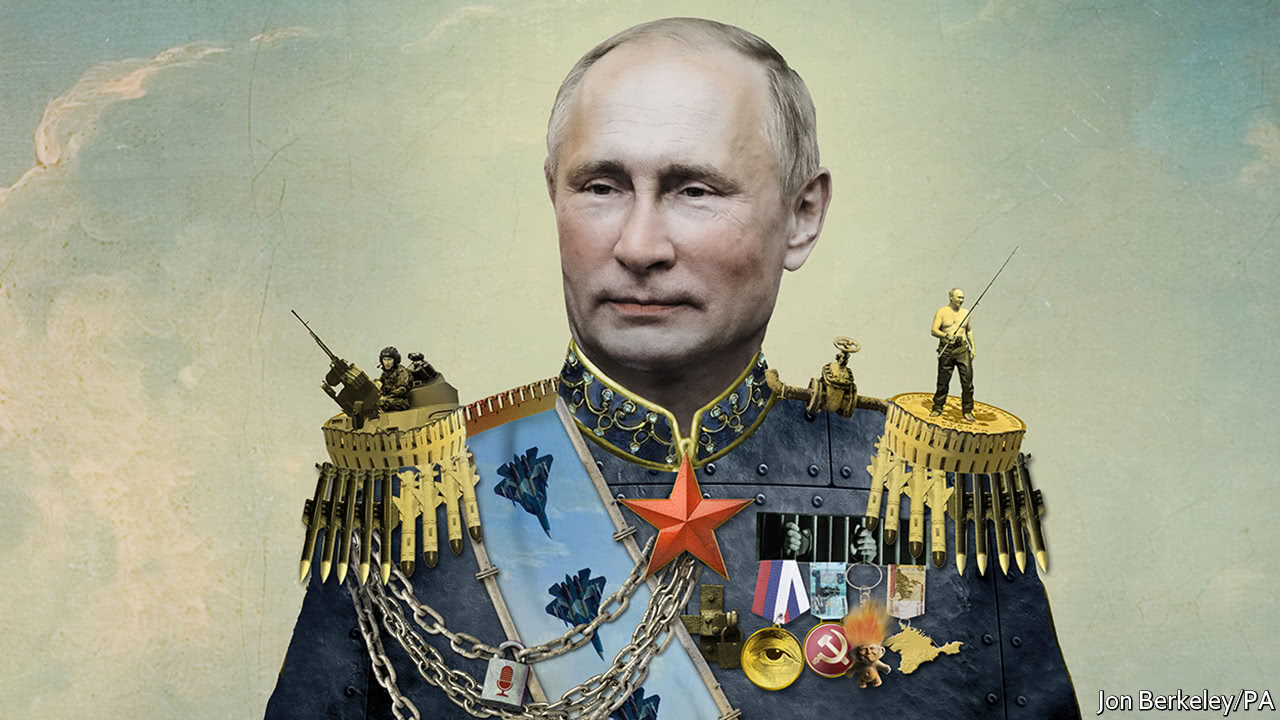
    A tsar is born

    As the world marks the centenary of the October Revolution, Russia is once again under the rule of the tsar
    SEVENTEEN years after Vladimir Putin first became president, his grip on Russia is stronger than ever. The West, which still sees Russia in post-Soviet terms, sometimes ranks him as his country’s most powerful leader since Stalin. Russians are increasingly looking to an earlier period of history. Both liberal reformers and conservative traditionalists in Moscow are talking about Mr Putin as a 21st-century tsar.
    Mr Putin has earned that title by lifting his country out of what many Russians see as the chaos in the 1990s and by making it count again in the world. Yet as the centenary of the October revolution draws near, the uncomfortable thought has surfaced that Mr Putin shares the tsars’ weaknesses, too.

    Latest updates

    See all updates
    Although Mr Putin worries about the “colour” revolutions that swept through the former Soviet Union, the greater threat is not of a mass uprising, still less of a Bolshevik revival. It is that, from spring 2018 when Mr Putin starts what is constitutionally his last six-year term in office after an election that he will surely win, speculation will begin about what comes next. And the fear will grow that, as with other Russian rulers, Tsar Vladimir will leave turbulence and upheaval in his wake.
    Firm rule
    Mr Putin is hardly the world’s only autocrat. Personalised authoritarian rule has spread across the world over the past 15 years—often, as with Mr Putin, built on the fragile base of a manipulated, winner-takes-all democracy. It is a rebuke to the liberal triumphalism which followed the collapse of the Soviet Union. Leaders such as Recep Tayyip Erdogan of Turkey (see article), the late Hugo Chávez of Venezuela and even Narendra Modi, India’s prime minister, have behaved as if they enjoy a special authority derived directly from the popular will. In China Xi Jinping this week formalised his absolute command of the Communist Party (see article).
    Mr Putin’s brand of authoritarianism blazed the trail. It evokes Russia’s imperial history (see Briefing), offering a vivid picture of how power works and how it might go wrong.
    Like a tsar, Mr Putin surmounts a pyramid of patronage. Since he moved against the oligarchs in 2001, taking control first of the media and then of the oil and gas giants, all access to power and money has been through him. These days the boyars serve at his pleasure, just as those beneath them serve at their pleasure and so on all the way down. He wraps his power in legal procedure, but everyone knows that the prosecutors and courts answer to him. He enjoys an approval rating of over 80% partly because he has persuaded Russians that, as an aide says, “If there is no Putin, there is no Russia.”
    Like a tsar, too, he has faced the question that has plagued Russia’s rulers since Peter the Great—and which acutely confronted Alexander III and Nicholas II in the run-up to the revolution. Should Russia modernise by following the Western path towards civil rights and representative government, or should it try to lock in stability by holding fast against them? Mr Putin’s answer has been to entrust the economy to liberal-minded technocrats and politics to former KGB officers. Inevitably, politics has dominated economics and Russia is paying the price. However well administered during sanctions and a rouble devaluation, the economy still depends too heavily on natural resources. It can manage annual GDP growth of only around 2%, a far cry from 2000-08, which achieved an oil-fired 5-10%. In the long run, this will cramp Russia’s ambitions.
    And like a tsar, Mr Putin has buttressed his power through repression and military conflict. At home, in the name of stability, tradition and the Orthodox religion, he has suppressed political opposition and social liberals, including feminists, NGOs and gays. Abroad, his annexation of Crimea and the campaigns in Syria and Ukraine have been burnished for the evening news by a captive, triumphalist media. However justified, the West’s outrage at his actions underlined to Russians how Mr Putin was once again asserting their country’s strength after the humiliations of the 1990s.
    What does this post-modern tsar mean for the world? One lesson is about the Russian threat. Since the interference in Ukraine, the West has worried about Russian revanchism elsewhere, especially in the Baltic states. But Mr Putin cannot afford large numbers of casualties without also losing legitimacy, as happened to Nicholas II in the Russo-Japanese war of 1904-05 and in the first world war. Because today’s tsar knows history, he is likely to be opportunistic abroad, shadowboxing rather than risking a genuine confrontation. The situation at home is different. In his time in power Mr Putin has shown little appetite for harsh repression. But Russia’s record of terrible suffering suggests that, whereas dithering undermines the ruler’s legitimacy, mass repression can strengthen it—at least for a time. The Russian people still have something to fear.
    Mother Russia’s offspring
    The other lesson is about succession. The October revolution is just the most extreme recent case of power in Russia passing from ruler to ruler through a time of troubles. Mr Putin cannot arrange his succession using his bloodline or the Communist Party apparatus. Perhaps he will anoint a successor. But he would need someone weak enough for him to control and strong enough to see off rivals—an unlikely combination. Perhaps he will try to cling to power, as Deng Xiaoping did behind the scenes as head of the China Bridge Association, and Mr Xi may intend to overtly, having conspicuously avoided naming a successor after this week’s party congress. Yet, even if Mr Putin became the Ã©minence grise of the Russian Judo Federation, it would only delay the fatal moment. Without the mechanism of a real democracy to legitimise someone new, the next ruler is likely to emerge from a power struggle that could start to tear Russia apart. In a state with nuclear weapons, that is alarming.
    The stronger Mr Putin is today, the harder he will find it to manage his succession. As the world tries to live with that paradox, it should remember that nothing is set in stone. A century ago the Bolshevik revolution was seen as an endorsement of Marx’s determinism. In the event, it proved that nothing is certain and that history has its own tragic irony.
    Reuse this content

    Thursday, October 12, 2017

    Xi Jinping: The world’s most powerful man--analysis


    by Xian Wan and Biodun Iginla, Political News Analysts, The Economist Intelligence Unit, Beijing
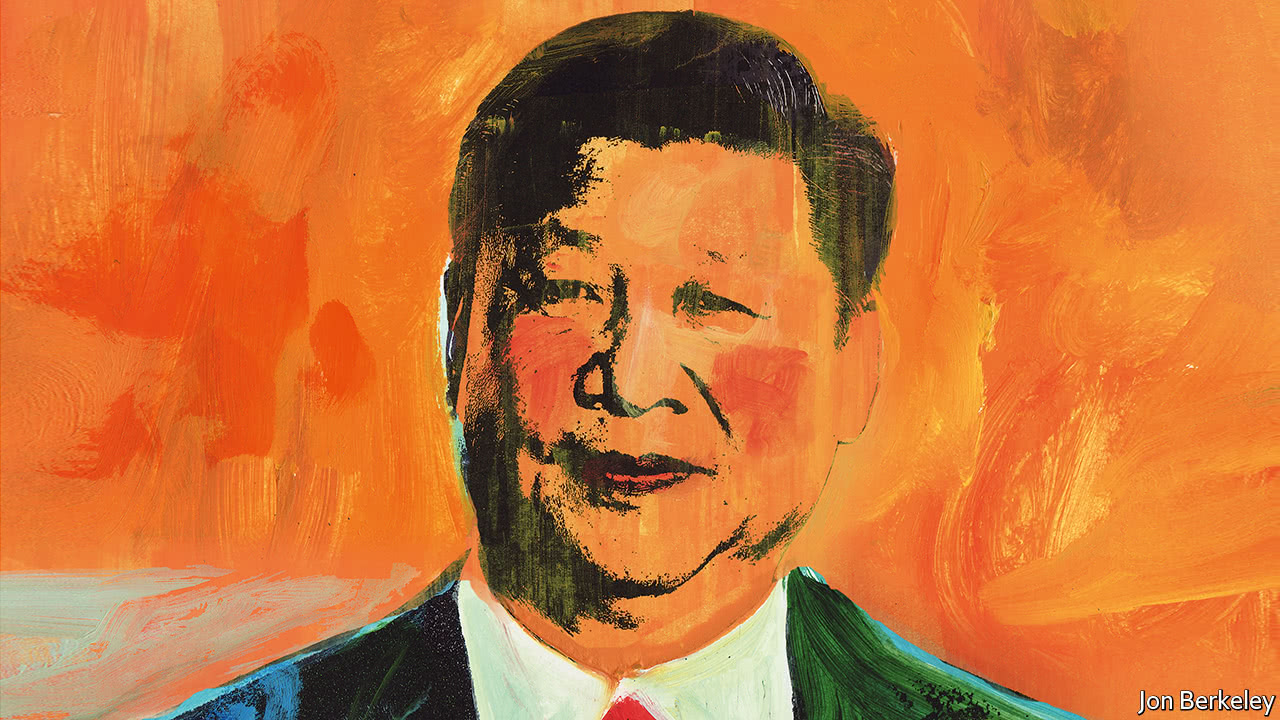
    Xi Jinping has more clout than Donald Trump. The world should be wary

    Do not expect Mr Xi to change China, or the world, for the better
    AMERICAN presidents have a habit of describing their Chinese counterparts in terms of awe. A fawning Richard Nixon said to Mao Zedong that the chairman’s writings had “changed the world”. To Jimmy Carter, Deng Xiaoping was a string of flattering adjectives: “smart, tough, intelligent, frank, courageous, personable, self-assured, friendly”. Bill Clinton described China’s then president, Jiang Zemin, as a “visionary” and “a man of extraordinary intellect”. Donald Trump is no less wowed. The Washington Post quotes him as saying that China’s current leader, Xi Jinping, is “probably the most powerful” China has had in a century.
    Mr Trump may be right. And were it not political suicide for an American president to say so, he might plausibly have added: “Xi Jinping is the world’s most powerful leader.” To be sure, China’s economy is still second in size to America’s and its army, though rapidly gaining muscle, pales in comparison. But economic heft and military hardware are not everything. The leader of the free world has a narrow, transactional approach to foreigners and seems unable to enact his agenda at home. The United States is still the world’s most powerful country, but its leader is weaker at home and less effective abroad than any of his recent predecessors, not least because he scorns the values and alliances that underpin American influence.

    Latest updates

    See all updates
    The president of the world’s largest authoritarian state, by contrast, walks with swagger abroad. His grip on China is tighter than any leader’s since Mao. And whereas Mao’s China was chaotic and miserably poor, Mr Xi’s is a dominant engine of global growth. His clout will soon be on full display. On October 18th China’s ruling Communist Party will convene a five-yearly congress in Beijing (see Briefing). It will be the first one presided over by Mr Xi. Its 2,300 delegates will sing his praises to the skies. More sceptical observers might ask whether Mr Xi will use his extraordinary power for good or ill.
    World, take note
    On his numerous foreign tours, Mr Xi presents himself as an apostle of peace and friendship, a voice of reason in a confused and troubled world. Mr Trump’s failings have made this much easier. At Davos in January Mr Xi promised the global elite that he would be a champion of globalisation, free trade and the Paris accord on climate change. Members of his audience were delighted and relieved. At least, they thought, one great power was willing to stand up for what was right, even if Mr Trump (then president-elect) would not.
    Mr Xi’s words are heeded partly because he has the world’s largest stockpile of foreign currency to back them up. His “Belt and Road Initiative” may be puzzlingly named, but its message is clear—hundreds of billions of dollars of Chinese money are to be invested abroad in railways, ports, power stations and other infrastructure that will help vast swathes of the world to prosper. That is the kind of leadership America has not shown since the post-war days of the Marshall Plan in western Europe (which was considerably smaller).
    Mr Xi is also projecting what for China is unprecedented military power abroad. This year he opened the country’s first foreign military base, in Djibouti. He has sent the Chinese navy on manoeuvres ever farther afield, including in July on NATO’s doorstep in the Baltic Sea alongside Russia’s fleet. China says it would never invade other countries to impose its will (apart from Taiwan, which it does not consider a country). Its base-building efforts are to support peacekeeping, anti-piracy and humanitarian missions, it says. As for the artificial islands with military-grade runways it is building in the South China Sea, these are purely defensive.
    Unlike Vladimir Putin, Russia’s president, Mr Xi is not a global troublemaker who seeks to subvert democracy and destabilise the West. Still, he is too tolerant of troublemaking by his nuke-brandishing ally, North Korea (see Schumpeter). And some of China’s military behaviour alarms its neighbours, not only in South-East Asia but also in India and Japan.
    At home, Mr Xi’s instincts are at least as illiberal as those of his Russian counterpart. He believes that even a little political permissiveness could prove not only his own undoing, but that of his regime. The fate of the Soviet Union haunts him, and that insecurity has consequences. He mistrusts not only the enemies his purges have created but also China’s fast-growing, smartphone-wielding middle class, and the shoots of civil society that were sprouting when he took over. He seems determined to tighten control over Chinese society, not least by enhancing the state’s powers of surveillance, and to keep the commanding heights of the economy firmly under the party’s thumb. All this will make China less rich than it should be, and a more stifling place to live. Human-rights abuses have grown worse under Mr Xi, with barely a murmur of complaint from other world leaders.
    Liberals once mourned the “ten lost years” of reform under Mr Xi’s predecessor, Hu Jintao. Those ten years have become 15, and may exceed 20. Some optimists argue that we have not yet seen the real Mr Xi—that the congress will help him consolidate his power, and after that he will begin social and economic reforms in earnest, building on his relative success in curbing corruption. If he is a closet pluralist, however, he disguises it well. And alarmingly for those who believe that all leaders have a sell-by date, Mr Xi is thought to be reluctant to step down in 2022, when precedent suggests he should.
    Reasons to be fearful
    Mr Xi may think that concentrating more or less unchecked power over 1.4bn Chinese in the hands of one man is, to borrow one of his favourite terms, the “new normal” of Chinese politics. But it is not normal; it is dangerous. No one should have that much power. One-man rule is ultimately a recipe for instability in China, as it has been in the past—think of Mao and his Cultural Revolution. It is also a recipe for arbitrary behaviour abroad, which is especially worrying at a time when Mr Trump’s America is pulling back and creating a power vacuum. The world does not want an isolationist United States or a dictatorship in China. Alas, it may get both.
    This article appeared in the Leaders section of the print edition under the headline "The world’s most powerful man"
    Reuse this content