Biodun Iginla, BBC News

Biodun Iginla, BBC News
Showing posts with label G20. Show all posts

Thursday, March 26, 2020

ANALYSIS: Covid-19 could devastate poor countries

The next calamity


It is in the rich world’s self-interest to help


Leaders

Mar 27th 2020 edition

Editor’s note: The Economist is making some of its most important coverage of the covid-19 pandemic freely available to readers of The Economist Today, our daily newsletter. To receive it, register here. For more coverage, see our coronavirus hub

THE NEW coronavirus is causing havoc in rich countries. Often overlooked is the damage it will cause in poor ones, which could be even worse. Official data do not begin to tell the story. As of March 25th Africa had reported only 2,800 infections so far; India, only 650. But the virus is in nearly every country and will surely spread. There is no vaccine. There is no cure. A very rough guess is that, without a campaign of social distancing, between 25% and 80% of a typical population will be infected. Of these, perhaps 4.4% will be seriously sick and a third of those will need intensive care. For poor places, this implies calamity.
Social distancing is practically impossible if you live in a crowded slum. Hand-washing is hard if you have no running water (see article). Governments may tell people not to go out to work, but if that means their families will not eat, they will go out anyway. If prevented, they may riot.
So covid-19 could soon be all over poor countries. And their health-care systems are in no position to cope. Many cannot deal with the infectious diseases they already know, let alone a new and highly contagious one. Health spending per head in Pakistan is one two-hundredth the level in America. Uganda has more government ministers than intensive-care beds. Throughout history, the poor have been hardest-hit by pandemics. Most people who die of AIDS are African. The Spanish flu wiped out 6% of India’s entire population.
Dozens of developing countries have ordered lockdowns. India has announced a “total ban” on leaving home for 21 days (see article). South Africa has deployed the army to help enforce one. They may slow the disease, but they are unlikely to stop it.
Many places are still in denial. Street markets in Myanmar are packed. Brazil’s populist president, Jair Bolsonaro, dismisses covid-19 as just “a sniffle” (see article). Some leaders are clueless. Tanzania’s president, John Magufuli, said churches should stay open because the coronavirus is “satanic” and “cannot survive in the body of Christ”. Many autocrats see covid-19 as a handy excuse to tighten their grip. Expect some to ban political rallies, postpone elections and extend surveillance over citizens’ daily lives—all to protect public health, of course.
Granted, there are some reasons for hope. Poor countries are young—the median age in Africa is under 20—and the young appear less likely to die from an infection. The poorest are very rural: two-thirds of people in countries with incomes per head below $1,000 a year live in the countryside, compared with less than a fifth in rich countries. Farmers can grow yams without breathing viral droplets on each other. The climate may help. It is possible, though far from certain, that hot weather slows the spread of covid-19. Some places have useful experience. Countries that endured Ebola learned a lot about hand-washing, contact-tracing and securing public trust.
Alas, even the good news comes with caveats. People in poor countries may be young, but they often have weak lungs or immune systems, because of malnutrition, tuberculosis or HIV. Rural folk may get the virus later, but they will probably still get it. Lockdowns will be hard to sustain unless governments can provide a generous safety-net. Firms need credit to avoid laying off staff. Informal workers need cash to tide them over. Unfortunately, poor countries do not have the financial muscle to provide these things, and covid-19 has just made it much harder.
Demand has collapsed for the commodities on which many emerging markets depend, from crude oil to fresh flowers. Tourism has tanked. No one wants to visit the Masai Mara or Machu Picchu just now. Foreign investors have pulled $83bn from emerging markets since the start of the crisis, the largest capital outflow ever recorded, says the Institute of International Finance, a trade group. Remittances, usually a safety-net in hard times, may tumble as migrants in rich countries lose their jobs.
Many poor and middle-income countries face a balance-of-payments crisis and a collapse in government revenues as they need to raise health-related spending and imports (to reduce the death toll) and welfare (so that workers can isolate themselves without running out of money). Whereas governments in rich countries can borrow cheaply in a crisis as investors flock to safety, poor countries see their borrowing costs soar. The trade-off between saving lives and saving livelihoods is excruciating. The worry, as Imran Khan, Pakistan’s prime minister says, is that “if we shut down the cities...we will save [people] from corona at one end, but they will die from hunger.”
Far from helping, many better-off countries have taken a nationalist turn. Some places, such as the EU, are restricting the export of medical kit. That goes against the values they profess to hold. Other countries, such as Kazakhstan, are curbing exports of food, which is not in short supply. If global trade is gummed up, the economic damage will be far greater. For poor countries that rely on imported food, it could be deadly.
Since so much remains unknown about covid-19, any response must be based on imperfect information. But some things are both urgent and obvious. Governments in poor countries, as elsewhere, should supply people with timely, accurate information, by any means practical. No cover-ups, no internet shut-downs, no arresting of those who share unwelcome news.

Time to be generous

The rich world, meanwhile, should help the poor world swiftly and copiously. The IMF says it is ready to deploy its $1trn lending capacity. Much more may be needed. As The Economist went to press, the G20 was about to set out a plan. It should be generous. Some of those vast rich-world bail-out pots should be used to cushion the suffering of the global south. China is winning influence with high-profile deliveries of medical equipment. Poor countries will remember who helped them.
As past campaigns against malaria and HIV showed, it takes a co-ordinated global effort to roll back a global scourge. It is too late to avoid a large number of deaths, but not too late to avert catastrophe. And it is in rich countries’ interests to think globally as well as locally. If covid-19 is left to ravage the emerging world, it will soon spread back to the rich one.

Dig deeper:
For our latest coverage of the covid-19 pandemic, register for The Economist Today, our daily newsletter, or visit our coronavirus hub
This article appeared in the Leaders section of the print edition under the headline "The next calamity"

Reuse this contentThe Trust Project

Sunday, June 30, 2019

ANALYSIS: Timeline: Key dates for Hong Kong extradition bill and protests

July 1, 2019  07H:46  GMT/ZULU
HONG KONG - Millions of people have taken to the streets in the past three weeks to protest against a proposed extradition bill that has plunged Hong Kong into political crisis and triggered calls for embattled leader Carrie Lam to step down.
Helicopters fly the national flags of Hong Kong and China above riot police and protesters during the anniversary of Hong Kong's handover to China in Hong Kong, China July 1, 2019. REUTERS/Thomas Peter
Amendments to the Fugitives Offenders Ordinance bill would have allowed individuals, including foreigners, to be sent to mainland China to face trial in courts controlled by the Communist Party. The changes were seen by many as a threat to the rule of law in the former British colony.
Lam suspended the bill after some of the largest and most violent protests in decades but has stopped short of protesters’ demands to scrap it.
Following is a timeline of the key dates around the extradition bill and the protests it triggered.
February 2019 – Hong Kong’s Security Bureau submits a paper to the city’s legislature proposing amendments to extradition laws that would provide for case-by-case extraditions to countries, including mainland China, beyond the 20 states with which Hong Kong already has treaties.
March 2019 - Thousands take to the streets of Hong Kong to protest against the proposed extradition bill. The American Chamber of Commerce expresses serious reservations in a submission to Hong Kong’s Secretary for Security, John Lee. It says the bill will “undermine perceptions of Hong Kong as a safe and secure haven for international business operations”.
April 3, 2019 – Carrie Lam’s government introduces amendments to Hong Kong’s extradition laws that would allow criminal suspects to be sent to mainland China for trial. Opponents say the changes would put them at the mercy of Chinese courts, controlled by the Communist Party, with a record of arbitrary detentions, torture and other human rights violations.
April 28, 2019 – Tens of thousands of people march on Hong Kong’s parliament to demand the scrapping of the proposed extradition laws.
May 8, 2019 – A U.S. congressional commission says the proposed extradition bill could extend China’s “coercive reach” into the financial hub and create serious risks for U.S. national security and economic interests in the city.
May 11, 2019 – Scuffles break out in Hong Kong’s legislature between pro-democracy lawmakers and those loyal to Beijing over the extradition bill.
May 14, 2019 – Hong Kong legislators clash over the proposed law, with some democrats shouting “Scrap the evil law”.
May 21, 2019 – Hong Kong leader Carrie Lam says her administration is determined to push through the bill despite mounting opposition locally and internationally. Authorities say they will bypass normal legislative procedures to expedite the bill.
May 24, 2019 - The European Union issues a formal diplomatic “demarche” protest note to Hong Kong’s leader over the extradition bill during a meeting of nearly a dozen diplomats from various EU nations, including the United Kingdom.
May 30, 2019 – Hong Kong introduces concessions to the extradition bill, including limiting the scope of extraditable offences, but critics say they are not enough. Canada and Britain say it is vital that extradition arrangements fully respect the city’s high degree of autonomy from China.
June 4, 2019 – More than 120,000 students, alumni, staff and parents from 185 secondary schools sign a petition against the extradition law.
June 6, 2019 – More than 3,000 Hong Kong lawyers take to the streets dressed in black in a rare protest march against the extradition law. Hong Kong’s last British governor, Chris Patten, says the bill is a “terrible blow” to the rule of law.
June 9, 2019 – Protest organizers say around a million people rally against the extradition bill in a march to government headquarters. Violent skirmishes break out late at night between activists and police. Police put the protest numbers at 240,000.
June 10, 2019 – Hong Kong vows to press ahead with the extradition bill despite the mass protest. The United States says it is gravely concerned about the proposed amendments.
ADVERTISEMENT
June 11, 2019 – Lam remains defiant as she again vows to push ahead with extradition bill.
June 12, 2019 – Police fire rubber bullets and 150 canisters of tear gas as the extradition bill triggers the city’s largest and most violent protests in decades.
June 13, 2019 – Hong Kong authorities shut government offices after a day of violence. China’s foreign ministry condemns the behavior of protesters and voices support for the government.
June 14, 2019 – Lam indefinitely delays the proposed extradition law in a dramatic retreat after violent street protests.
June 16, 2019 – Lam issues a written apology to the public after the second massive protest in a week that organizers said drew around 2 million people.
June 18, 2019 – Lam signals the end of the controversial bill but refuses to step down or say the bill is withdrawn. She apologizes in person.
June 21, 2019 - Thousands of demonstrators blockade police headquarters as the city braced itself for a third weekend of mass protests.
June 24, 2019 - Beijing says it will not allow leaders at the G20 meeting in Japan to discuss the Hong Kong issue.
June 25, 2019 - Britain bans sales of tear gas to Hong Kong.
June 26, 2019 - Hong Kong activists call on G20 leaders to help “liberate” the city.
ADVERTISEMENT
June 27, 2019 - Fresh protests hit Hong Kong as activists seek a voice at the G20.
June 28, 2019 - Anti-extradition protesters rally again near government headquarters.
July 1, 2019 - Fresh protests erupt as Hong Kong marks the 22nd anniversary of the handover from British to Chinese rule.

Friday, November 30, 2018

BREAKING: Brexit: Minister resigns over Theresa May's 'naive' deal


December 1, 2018  06H:09  GMT/UTC/ZULU TIME
Related Topics
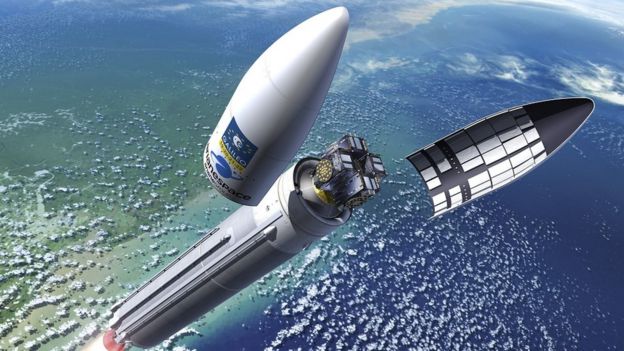
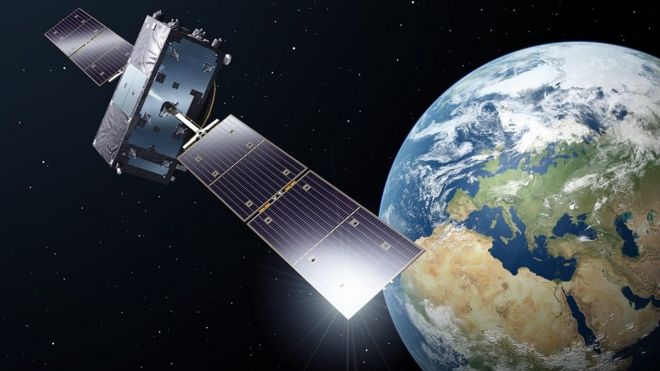
Satellite orbiting earthImage copyrightEUROPEAN SPACE AGENCY
Image captionThe European Union has put together Galileo as its own network of satellites
by Emily Straton and Biodun Iginla, BBC News Technology reporters, London
A UK minister has resigned saying a row over involvement in the EU's Galileo satellite-navigation system exposes Theresa May's Brexit deal as "naive".
The UK had wanted to stay part of Galileo after Brexit, but the EU said it would be banned from the extra-secure elements of the programme.
Mrs May confirmed on Friday that the UK was pulling out of the project.
Science minister Sam Gyimah said the row was "a clarion call" and that any deal with Brussels would be "EU first".
The UK's interests "will be repeatedly and permanently hammered by the EU27 for many years to come", he added in a Facebook post setting out his reasons for resigning.
Mr Gyimah, who is the 10th minister to resign from the government since Mrs May set out her original proposals for leaving the EU at Chequers in July, also said he would be voting against the deal she had eventually negotiated with Brussels.
However, prominent Brexiteer and cabinet minister Michael Gove has defended Mrs May's plan, writing in the Daily Mail that leaving the EU is under "great threat" if the deal is rejected by MPs.

Security interests

Galileo is the EU's upcoming version of the US's GPS, which is used by millions of people around the world, and will be used by EU governments, citizens, military and industry.
Brussels had said that, as a result of Brexit, the UK would not be allowed immediate access to part of the system intended for use by government agencies, the armed forces and emergency responders once it came online in 2020.
But the UK, which has invested €1.4bn in the project, said access was vital to its military and security interests.
Mrs May has now said the British army will not use Galileo and the UK will instead explore options to build its own satellite-navigation system - having already set aside £92m to look at how it can be done.
"I cannot let our armed services depend on a system we cannot be sure of," Mrs May said. "That would not be in our national interest."
Presentational grey line

Will more Remainers voice their fears?

Theresa MayImage copyrightEPA
By Laura Kuenssberg, BBC political editor
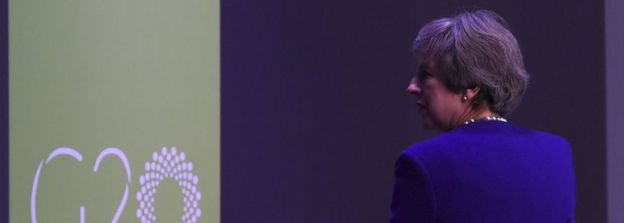
As Theresa May was sitting down to at a glittering evening with her fellow world leaders at the G20, news broke that Sam Gyimah had just become the latest minister to quit over Brexit.
He had a specific reason to leave. But it is his overall verdict on Mrs May's Brexit compromise that will really hurt.
There is some comfort overnight for Mrs May from Michael Gove, who as one of the leading voices in the Leave campaign is, belatedly perhaps, urging his Brexiteer colleagues to get onboard.
But this latest resignation is another sign of how hard it will be for the prime minister to pass the vote that could define her future.
Presentational grey line
Mr Gyimah, who voted for Remain in the referendum, said it was the right decision for Mrs May to leave the Galileo project, saying the negotiations had been "stacked against us from the very beginning".
But the MP for East Surrey said it was "only a foretaste of what's to come" if the PM's deal was voted through.
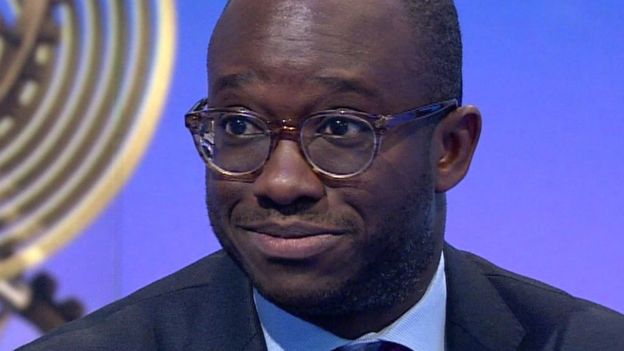
Sam Gyimah
Image captionMr Gyimah said he would be voting against Mrs May's Breit deal
"Having surrendered our voice, our vote and our veto, we will have to rely on the 'best endeavours' of the EU to strike a final agreement that works in our national interest," he said.
"As minister with the responsibility for space technology I have seen first-hand the EU stack the deck against us time and time again, even while the ink was drying on the transition deal.
"Galileo is a clarion call that it will be 'EU first', and to think otherwise - whether you are a Leaver or Remainer - is at best incredibly naive."

'Falling apart'

Former Tory cabinet minister and campaigner for another referendum, Justine Greening, said Mr Gyimah was a "highly respected and capable minister" and praised him for not ruling out a second vote.
And the Lib Dem's education spokeswoman, Layla Moran, said Mr Gyimah's exit showed the government was "falling apart", and that he had "seen at close quarters the devastating effect this botched Brexit will have on these important sectors".
In his Daily Mail article, Environment Secretary Mr Gove admitted the withdrawal agreement was not "perfect".
But he stuck by the prime minister, saying it "delivers in crucial ways which honour the vote to leave".
"Does it deliver 100% of what I wanted? No," he added. "But then we didn't win 100% of the vote on 23 June 2016.
"In politics, as in life, you can't always get everything that you want."
Presentational grey line

What is Galileo?

Artwork: Galileo satellites are now launching on Europe's premier rocket, the Ariane 5Image copyrightEUROPEAN SPACE AGENCY
Image captionGalileo satellites are now launching on Europe's premier rocket, the Ariane 5
Many people's sat-navs and mobile location services currently run on a US military-based system called GPS - global positioning system - which uses satellites to pinpoint our locations. China and Russia also have satellite-navigation positioning systems.
In 1999, the European Union embarked on a plan to put together its own network of satellites, called Galileo, so it was not reliant on the US, Russian and Chinese systems.
The first satellites were put into orbit in 2013 and it is planned to be fully operational in 2020 with 30 satellites orbiting earth.
UK companies have built components for Galileo and one of the project's two Galileo Security Monitoring Centres was based in the UK, in Swanwick. The site is now being relocated to Spain.
The government said there should be no noticeable impact for the public from withdrawing from the project, as devices that already use Galileo, such as smartphones, will carry on doing so.
It says UK industry has earned about €1.15bn from the project but, when the BBC asked if any more money would be given back, a spokesman said the project was "part of the withdrawal agreement" and the UK had reached "a fair financial settlement with the EU".

More on this story