EACH TRUMP administration scandal is different, but the questions they invite are the same. Has another president done something similar before? Does this scandal involve a breach of the law, or merely of norms and precedent? Where does this rank on the Trump-o-Meter, with fibbing about the size of the crowd at his inauguration at one end and obstruction of justice at the other? Finally, if you heard that a president had done something but you were not told which president, how would you judge the behaviour? If Donald Trump did indeed put pressure on the president of Ukraine, Volodymyr Zelensky, to produce material that would embarrass a political rival, might that be the worst Trump scandal yet, as Max Boot, an ex-Republican who is generally a reliable guide, wrote in the Washington Post? Or is it not even worthy of comment, as most Senate Republicans seem to believe—at least in their public statements?
Begin with what we know. In August the government of Ukraine received news that the White House had frozen a package of military aid to the value of $250m. This was unexpected because Congress had already appropriated the money, and because the aid supported America’s interests in Ukraine, which are to see a country that is as peaceful and stable as possible. A month earlier, Mr Trump had spoken to Ukraine’s newly elected president to congratulate him on his election win. Something said by Mr Trump in that call reportedly gave rise to a formal complaint from a whistleblower in America’s intelligence services. We do not know for sure what that something was, but the Wall Street Journal has reported that Mr Trump asked Mr Zelensky about eight times during the call to investigate Hunter Biden, the son of the Democratic front runner for the presidential nomination, who had business interests in Ukraine. Mr Trump has recently admitted that he raised the issue of corruption with Mr Zelensky.
The contents of that call were probably part of the whistleblower’s complaint, which itself is now at the centre of a wrangle between the White House and Congress. The law states that such reports are passed from the Office of the Director of National Intelligence to Congress. The Trump administration is arguing that the law has been incorrectly applied, and that in any case, the president’s calls with foreign leaders should enjoy executive privilege. The administration may offer a compromise of sorts, by releasing the transcript of the call but not the whole of the whistleblower’s report.
That would not clear the matter up. So far most of the focus in the American press has been on the contents of that one phone call. Was the freezing of the money explicitly linked to the investigation of Hunter Biden? Probably not. The Economist’s reporting suggests that the call was characteristically Trumpian, but that there is no smoking gun in the transcript. A former lawyer to the president, Michael Cohen, has spoken of how he often makes his wishes plain without making explicit requests or orders.
From the Ukrainian perspective, the main channel through which Mr Trump applied pressure to help him out politically was via his personal lawyer, Rudy Giuliani. Shortly after the call between the two leaders, Mr Giuliani travelled to Madrid to meet an adviser to Mr Zelensky, Andriy Yermak. He urged the Ukrainian government to investigate the younger Mr Biden and dangled the possibility of a state visit to Washington, DC, as an inducement. Mr Giuliani has since said that he was acting merely in his role as the president’s private lawyer. But this distinction, if it existed, was lost on the Ukrainian government.
The reason this scandal rises above the level of Mr Trump’s others is that, on the face of it, the president appears to have acted against America’s national interest—by freezing aid to a vulnerable ally—in order to pursue a vendetta against a political rival at home. If the administration suggested that the military aid would come if Ukraine’s government investigated the younger Mr Biden—if you give us the dirt we give you the guns—that would be tantamount to extortion.
Even without such an explicit assurance, it looks as if the president failed to put America first, and also used taxpayer’s money to put pressure on a foreign government to produce material that would help his re-election campaign. If in 2015 Barack Obama had given the government of Azerbaijan the impression that American aid was contingent on digging up dirt on Mr Trump’s property deals there, would that have been a betrayal of the trust that America put in him? Yes it would.
That is why more Democratic members of the House of Representatives are now talking about impeachment. There are three groups: the convinced impeachers, who have argued for getting rid of Mr Trump almost from day one; the House leadership, which believes that impeaching Mr Trump in the House and then seeing him acquitted in the Senate (where Republicans have a majority) would be a political own-goal; and the reluctant impeachers, who are willing to believe that impeachment is not in their narrow political interests but believe that to duck impeachment because it is politically inconvenient would be to shirk the role the founders gave to Congress. This is the group to watch closely over the next few days.
As for the Senate, the numbers lined up against any possible impeachment trial are still stacked in Mr Trump’s favour. The Hunter Biden story is hugely helpful for Mr Trump and gives Republicans another genuine scandal to talk about when the subject of Ukraine comes up. Because that the vice-president’s son, who does not know a great deal about hydrocarbons, sat on the board of a Ukrainian gas company, drawing a salary of as much as $50,000 a month, while his father was not just the sitting vice-president but was responsible for the White House’s Ukraine policy was, if not illegal, then the kind of misjudgment that only seems normal for those who have grown accustomed to the cash-for-influence industry in Washington, DC. In moral terms, what Hunter Biden did or did not do in Ukraine has nothing to do with whether the president offered the president of Ukraine guns for “oppo research”. In political terms, the two are linked.
That leaves American politics in a bind. The president may have abused his office. Yet if he has, nothing much can be done about it. Even if the numbers change and the House votes to impeach, Mr Trump will probably be exonerated in the Senate. Mr Trump would be unimpeachable. The glimmer of light is that the scrutiny Mr Trump is being subjected to now over his dealings with Ukraine might make him think twice about doing something similar in the future.
WASHINGTON - Senate Republicans struggled on Monday to salvage President Donald Trump’s nomination of Brett Kavanaugh to the U.S. Supreme Court even as the judge and the woman who accused him of a 1982 sexual assault offered to testify publicly and Trump called the nomination “on track.”
With Kavanaugh’s once-safe nomination for a lifetime job on the top U.S. court now appearing in jeopardy, the conservative federal appeals court judge had meetings at the White House and issued a fresh denial calling the assault allegation “completely false.” Trump’s fellow Republicans in the Senate, which must confirm Supreme Court appointments, looked for a way forward.
A number of senators said Kavanaugh and Ford should be given the chance to testify before the committee, a move that could delay the high-stakes confirmation process including a planned vote in the Judiciary Committee on Thursday. These included moderates in both parties such as pivotal Republican Senator Susan Collins and Democratic Senator Joe Manchin, as well as hard-line conservative Republican Ted Cruz.
Democrats, already fiercely opposed to Kavanaugh, demanded a delay in the committee’s vote to let the FBI investigate.
“Obviously, if Judge Kavanaugh has lied about what happened, that would be disqualifying,” Collins told reporters, adding that she would like the chance to observe Christine Blasey Ford, the university professor in California who made the allegation, to decide the credibility of her account.
Republican Senator Chuck Grassley, chairman of the Judiciary Committee, said Ford “deserves to be heard,” but he and other senior Republicans stopped short of calling for a public hearing or for delaying the panel’s vote.
Republicans control the Senate by only a narrow margin, meaning any defections could sink the nomination and deal a major setback to Trump, who has been engaged in a so-far successful effort since becoming president last year to move the Supreme Court and broader federal judiciary to the right.
SPONSORED
In careful remarks at the White House in which he did not offer his view on the actual allegation against his nominee, Trump called for the Senate to go through a “full process” and accepted a small delay, though warned that “it shouldn’t certainly be very much.”
“If it takes a little delay, it will take a little delay,” said Trump, who dismissed as a “ridiculous question” a reporter’s query about whether Kavanaugh had offered to withdraw his name from consideration.
“I think he’s very much on track,” Trump said.
Ford has accused Kavanaugh of trying to attack her and remove her clothing while drunk 36 years ago in a Maryland suburb outside Washington when they were students in different high schools.
FILE PHOTO: Supreme Court nominee Brett Kavanaugh testifies during the third day of his confirmation hearing before the Senate Judiciary Committee on Capitol Hill in Washington, U.S., September 6, 2018. REUTERS/Alex Wroblewski
In television interviews on Monday, Ford’s Washington-based lawyer, Debra Katz, said her client would be willing to speak out publicly. Asked if that included sworn testimony at a public hearing before senators, Katz told CBS’s “This Morning” program: “She’s willing to do what she needs to do.”
The confirmation fight comes just weeks before the Nov. 6 congressional elections in which Democrats are seeking to take control of Congress from Trump’s party.
Trump picked Kavanaugh to replace the retired Justice Anthony Kennedy, a conservative who sometimes sided with the court’s liberal wing. Without Kennedy on the court, the justices are split 4-4 between liberals and conservatives.
‘RESPECTFUL MANNER’
Grassley said the standard procedure would be to conduct follow-up telephone calls with Kavanaugh and Ford, and that he intended to work with the senior Democrat on the committee, Senator Dianne Feinstein, to schedule the calls. The Democrats have refused to cooperate. In a statement, the committee Democrats said they would not participate in a phone call with Kavanaugh proposed by the Republicans.
Grassley said he will continue working on a way to hear from Ford “in an appropriate, precedented and respectful manner.”
Like Trump, Senate Majority Leader Mitch McConnell criticized Democrats for raising a matter dating back to high school at the last minute “in an irregular manner” after a week-long confirmation hearing this month.
Trump, who himself faced multiple accusations of sexual misconduct that emerged during the 2016 presidential election, said he did not meet with Kavanaugh when the nominee visited the White House.
Slideshow (3 Images)
“I have never done anything like what the accuser describes - to her or to anyone,” Kavanaugh said in a statement issued by the White House, his first comment since Ford’s identity was revealed on Sunday.
“Because this never happened, I had no idea who was making this accusation until she identified herself yesterday,” added Kavanaugh, who said he is willing to talk to the Judiciary Committee in any way it deems appropriate “to refute this false allegation, from 36 years ago, and defend my integrity.
Kavanaugh has said he was not at the party where the incident allegedly occurred, according to a White House official.
Republicans hold a slim 11-10 advantage on the Judiciary Committee and a 51-49 majority in the Senate. Under Senate rules, the committee could forward the nomination to the Senate floor without an affirmative vote.
Trump and other prominent Republicans refrained from attacking Ford. “This woman should not be insulted and she should not be ignored,” White House senior adviser Kellyanne Conway told Fox News.
The comments by Ford’s lawyer suggested any public hearing could be explosive. Ford believes Kavanaugh’s alleged actions were “attempted rape” and “that if it were not for the severe intoxication of Brett Kavanaugh, she would have been raped,” Katz told NBC’s “Today” program.
Katz told CBS that Ford had consumed a beer but was not drunk. Ford was 15 at the time of the alleged incident. Kavanaugh was 17.
The Judicial Crisis Network, a conservative group that backs Trump’s judicial picks, plans to launch a $1.5 million ad campaign backing Kavanaugh, a spokeswoman said.
Ford detailed her story in a letter sent to Feinstein in July. The letter’s contents leaked last week and Ford identified herself in an interview with the Washington Post published on Sunday.
US President Donald Trump has told Senate Republicans they should postpone their summer holiday until they have kept their promise to ditch Obamacare.
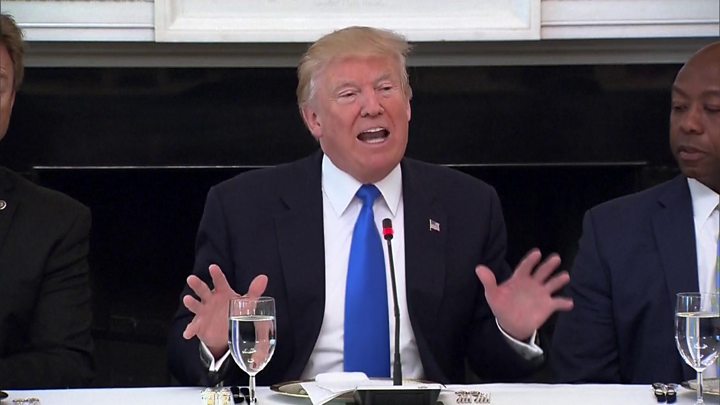
Mr Trump told all 52 Republican senators at the White House: "We should hammer this out and get it done."
In the last two days he has urged the repeal and replace of Obamacare, just repealing it, allowing it to fail, before reverting to repeal and replace.
The Republicans' seven-year mission to overturn the law is in disarray.
Mr Trump told Republican senators at a Wednesday lunch: "For seven years you promised the American people that you would repeal Obamacare.
"People are hurting. Inaction is not an option. And frankly I don't think we should leave town unless we have a health insurance plan."
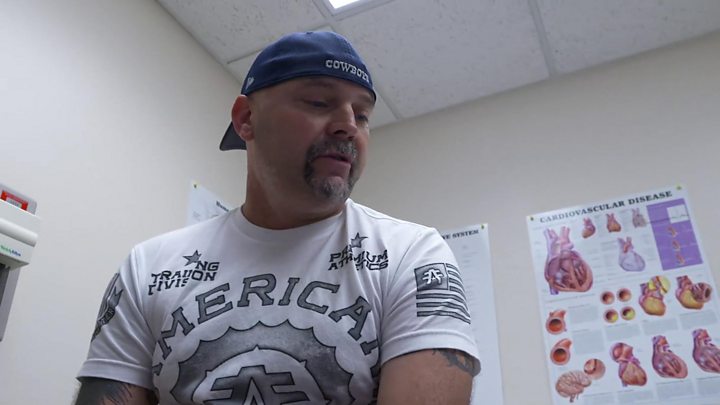
Media captionPresident Trump won big in Kentucky last year but the state also depends heavily on Obamacare
Mr Trump warned a senator who was seated next to him that he could lose his job if he did not toe the party line.
A ripple of uncomfortable laughter was heard in the room as the president said of Nevada's Dean Heller: "And he wants to remain a senator, doesn't he? OK."
Mr Heller, who was one of the earliest senators to oppose the first version of the Republican health bill, is up for re-election next year.
Senate Republican leader Mitch McConnell has scheduled a vote early next week on a straight-up repeal of the Affordable Care Act, known as Obamacare.
However, it looks likely to fail after the defections on Tuesday of at least three of the party's senators.
Mr McConnell pointed out it was the same legislation that all but one Republican senator voted to send to President Barack Obama in 2015, safe in the knowledge he would veto it.
But now the party controls the White House and both chambers of Congress, some rank-and-file Republicans seem wary of enacting legislation that would eliminate medical insurance for millions of Americans.
"Now we thankfully have a president in office who will sign it," said Mr McConnell, whose reputation as a master tactician has been dented by the imbroglio.
"So we should send it to him."
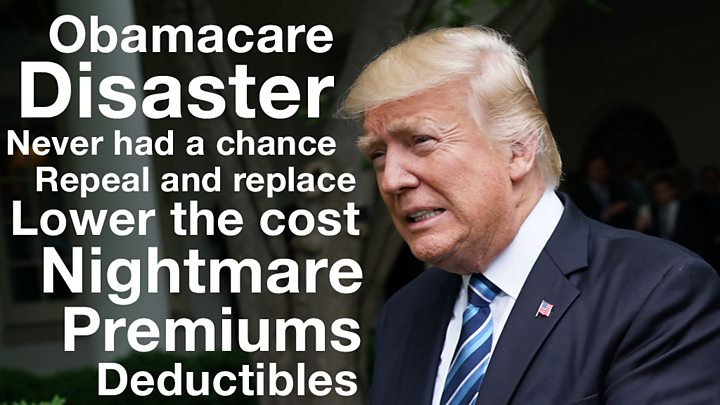
Media captionTrump's battles with Obamacare - in his own words
With Democrats united in opposition, Mr McConnell can only lose two votes from his 52-48 majority in the 100-seat Senate to pass the bill.
Senators Susan Collins of Maine, Lisa Murkowski of Alaska and Shelley Moore Capito of West Virginia are opposed to repeal.
Overturning Obamacare was a top campaign pledge for Mr Trump and congressional Republicans, who view the law as a costly intrusion into the healthcare system.
Texas Senator Ted Cruz, a conservative, told reporters it was time for them to honour their vow.
"For seven years Republicans have told the voters, if you elect us, we'll repeal Obamacare," he said.
"I think we will look like fools if we can't deliver on that promise."
The party's proposed alternative includes steep cuts to Medicaid, a healthcare programme for the poor and disabled.
It would also remove Obamacare's individual mandate, which requires all Americans to have health insurance or pay a tax penalty.
And there would be a six-month ban on obtaining new medical coverage for anyone who lets their previous policy lapse for more than two months.
Trump at six months
Media captionCommander in tweets: What we can learn from Trump's Twitter