Biodun Iginla, BBC News

Biodun Iginla, BBC News
Showing posts with label Spain and Greece. Show all posts

Wednesday, June 26, 2019

Naked biker, topless row as Europe sizzles


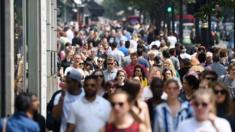
Meteorologists forecast temperatures exceeding 40 degrees Celsius (104 Fahrenheit) in France, Spain and Greece on Thursday and Friday. People are shown here sunbathing on the banks of the Seine in Paris People sun bath on the bank of the river Seine, during first day of a heat wave, on June 25, 2019, in Paris.Forecasters say Europeans will feel sizzling heat this week with temperatures soaring as high as 40 degrees Celsius (104 degrees Fahrenheit) in an "unprecedented" June heatwave hitting much of Western Europe.
by Isabelle Roussel and Biodun Iginla, France24, Berlin


Meteorologists forecast temperatures exceeding 40 degrees Celsius (104 Fahrenheit) in France, Spain and Greece on Thursday and Friday. People are shown here sunbathing on the banks of the Seine in Paris People sun bath on the bank of the river Seine, during first day of a heat wave, on June 25, 2019, in Paris.Forecasters say Europeans will feel sizzling heat this week with temperatures soaring as high as 40 degrees Celsius (104 degrees Fahrenheit) in an "unprecedented" June heatwave hitting much of Western Europe. Meteorologists forecast temperatures exceeding 40 degrees Celsius (104 Fahrenheit) in France, Spain and Greece on Thursday and Friday. People are shown here sunbathing on the banks of the Seine in Paris People sun bath on the bank of the river Seine, during first day of a heat wave, on June 25, 2019, in Paris.Forecasters say Europeans will feel sizzling heat this week with temperatures soaring as high as 40 degrees Celsius (104 degrees Fahrenheit) in an "unprecedented" June heatwave hitting much of Western Europe. AFP
ADVERTISING
Berlin 
German police cautioned a man riding naked on a moped while topless sunbathers sparked a row in Munich, as temperatures were to soar to record highs in several European countries Wednesday.
Meteorologists blamed a blast of hot air from northern Africa for the heatwave early in the European summer, which could send thermometers above 40 degrees Celsius (104 Fahrenheit) in France, Spain and Greece on Thursday and Friday.
ADVERTISING
Scientists warn that global warming could make such scorchers more frequent.
In Germany, where the 70-year-old record temperature for June of 38.5 degrees Celsius could be beaten on Wednesday, police in Brandenburg cautioned a naked man for driving his moped wearing only his helmet and sandals.
According to Brandenburg police, who described themselves as "speechless" over the incident, said on Twitter the man's response when stopped was: "Is it hot or what?"
- Topless solidarity -
However, there was no joking in Munich after burly security guards ordered a group of women who were sunbathing topless on the banks of the Isar to put their bikini tops back on.
But the move apparently backfired, according to the Munich daily Sueddeutsche Zeitung, which quoted another sunbather as saying that she and others took their bikini tops off "out of solidarity".
Munich officials are discussing how much public nudity should be allowed, but Bavaria's ruling conservative Christian Social Union (CSU) party went a step further.
An urgent motion was introduced in a plenary meeting Wednesday, reading "the bathing costume statues of the state capital Munich will be amended to the effect that bathing costumes must completely cover" the breasts and genitals.
On the north coast, sweltering temperatures bent railway tracks out of shape on a popular tourist route near Rostock on the Baltic Sea and an official said a track-laying company were trying to fix the damage.
- 'Hell is coming' -
Authorities were taking no chances in France, where a heatwave in August 2003 was blamed for 15,000 deaths.
Some schools are expected to close Thursday and Friday, while several cities including Paris and Lyon have restricted traffic to limit a build-up of pollution.
The country's weather service, Meteo-France, says the intensity of the heat is unprecedented since 1947, when detailed surveys started.
In Spain, a TV weather presenter tweeted "el infierno (hell) is coming", with the centre and northeast put on alert for soaring temperatures.
The mercury could top 39 degrees Celsius in Zaragoza or Navarre -- a new record for June in those regions.
The worst is expected Friday, when 33 of the 50 Spanish provinces face extreme temperatures, which could reach 44 degrees Celsius in Girona.
In Austria's Innsbruck, the world-famous carriage horses were given time off as the city recorded 36.7 degrees Celsius late Tuesday, breaking the 2012 record for Tyrol state of 36.6 degrees.
Innsbruck passed legislation last year taking horse-drawn "fiaker" carriages off the streets when temperatures rise above 32 degrees.
In Poland, the interior ministry said 90 people have drowned this month while seeking to cool off in lakes or rivers.
Likewise in Lithuania, 27 people were reported to have drowned so far as temperatures in the Baltic state soared above 35 degrees.


Saturday, June 30, 2018

BREAKING: Migrant crisis: Italy minister Salvini closes ports to NGO boats


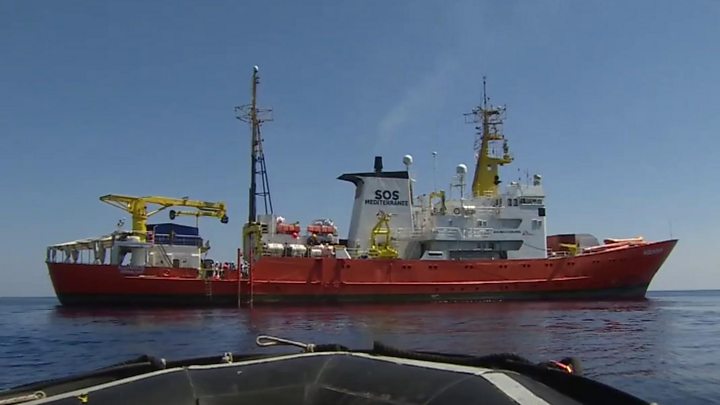
Media captionWhy is the Aquarius migrant rescue ship empty?

by Elodie Bagnol and Biodun Iginla, BBC News, Rome
Migrants saved by boats run by non-governmental organisations will not be allowed into Italy, rightwing Interior Minister Matteo Salvini says.
Mr Salvini has often accused the NGOs of encouraging the trafficking of migrants. He told Corriere della Sera these NGOs were no longer "legitimate".
He also hailed the agreement reached by European Union leaders in Brussels that Italy hopes will lessen its burden.
Thousands of migrants, mainly from African countries, have reached Italy.
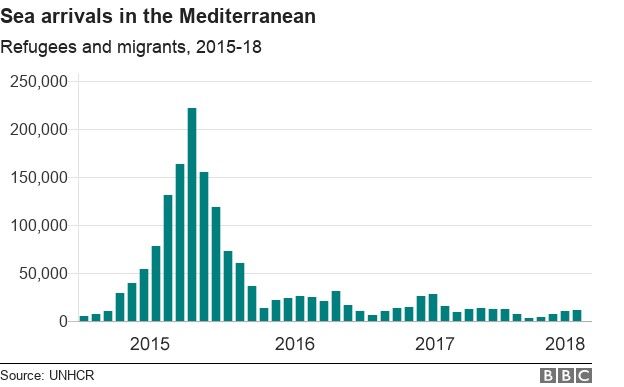
The number is 95% lower than at the peak of the crisis in 2015, the EU says, but started to rise again recently.

What did leaders agree on Thursday?

Several Central European states have so far rejected an EU scheme to relocate 160,000 refugees from overcrowded camps in Greece and Italy.
Mr Salvini posted an image on his Facebook, showing one of the rescue boats, with the hashtag #closetheports.
His message read: "Halt the mafia of human trafficking: the fewer that depart, the fewer will perish."
Italy has complained about the lack of solidarity and its new government sparked a crisis earlier this month when it did not allow a boat full of migrants, the Aquarius, to disembark. Spain agreed to take them after days at sea.
The Brussels summit agreement foresees the creation of secure centres to receive migrants in EU countries on a voluntary basis - but it does not specify where.
President Emmanuel Macron of France, for instance, said hours after the deal that they would be in countries where migrants arrived first - such as Italy and Greece, but not France.
Italy insists these may be set up anywhere in the EU.

What did Merkel negotiate?

The migration procedure, known as the Dublin Regulation, means migrants should register in the first EU country they arrive. Front-line countries want this changed.

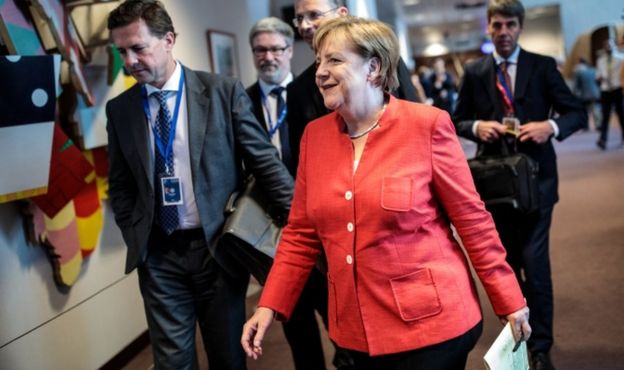
German Chancellor Angela Merkel arrives to give a news conference on the final day of the European Council leaders' summitImage copyrightGETTY IMAGES
Image captionThe deal will likely help to stabilise Angela Merkel's rocky coalition

The issue has destabilised the governing coalition led by German Chancellor Angela Merkel.
Mrs Merkel's key ally, Interior Minister Horst Seehofer, has threatened to start turning away migrants who have already registered elsewhere.
So the German chancellor says she has struck bilateral agreements with 14 countries to return migrants registered there if their claims to asylum in Germany have been rejected.
Spain and Greece have also agreed to take back migrants, but not Italy or Austria - both run by populist governments.
And Hungary, one of the countries listed by the German media, said no such agreement had been reached, either.


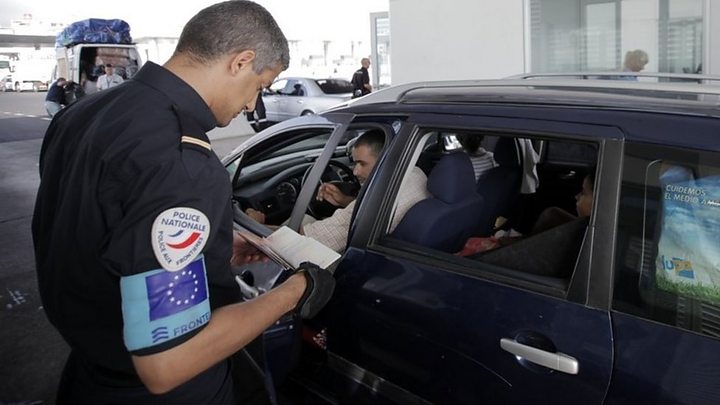
Media captionMigrant crisis: EU border force Frontex explained

What do aid agencies say?

NGOs have fiercely condemned the Brussels deal, saying it betrays vulnerable people and those trying to stop them dying in the Mediterranean.
The deal also aimed to "demonise non-governmental search and rescue operations", MSF's emergencies chief Karline Kleijer said.
On Friday, around 100 people were said to have drowned off the Libyan coast, with 16 rescued.

chart

The best way to get news on the go

Download the BBC News App.

More on this story