What to do about China’s “sharp power”
China is manipulating decision-makers in Western democracies. The best defence is transparency
WHEN a rising power challenges an incumbent one, war often follows. That prospect, known as the Thucydides trap after the Greek historian who first described it, looms over relations between China and the West, particularly America. So, increasingly, does a more insidious confrontation. Even if China does not seek to conquer foreign lands, many people fear that it seeks to conquer foreign minds.
Australia was the first to raise a red flag about China’s tactics. On December 5th allegations that China has been interfering in Australian politics, universities and publishing led the government to propose new laws to tackle “unprecedented and increasingly sophisticated” foreign efforts to influence lawmakers (see article). This week an Australian senator resigned over accusations that, as an opposition spokesman, he took money from China and argued its corner. Britain, Canada and New Zealand are also beginning to raise the alarm. On December 10th Germany accused China of trying to groom politicians and bureaucrats. And on December 13th Congress held hearings on China’s growing influence.
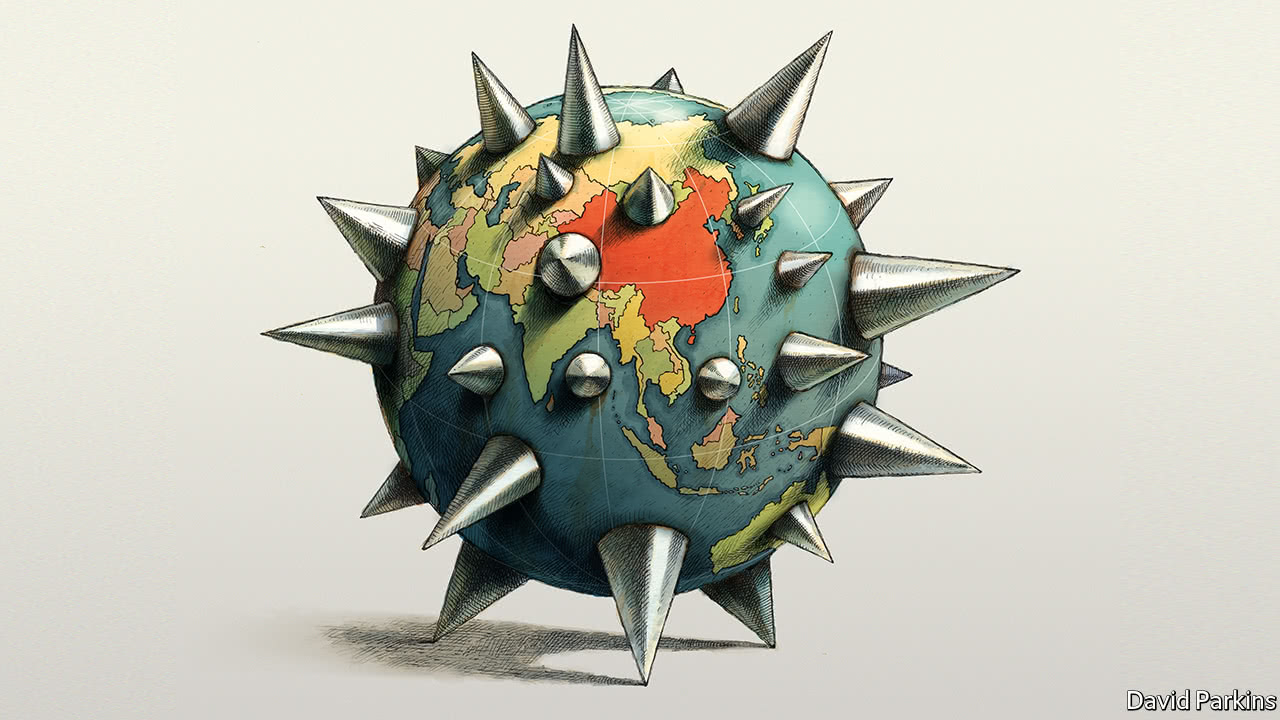
This behaviour has a name—“sharp power”, coined by the National Endowment for Democracy, a Washington-based think-tank. “Soft power” harnesses the allure of culture and values to add to a country’s strength; sharp power helps authoritarian regimes coerce and manipulate opinion abroad.
The West needs to respond to China’s behaviour, but it cannot simply throw up the barricades. Unlike the old Soviet Union, China is part of the world economy. Instead, in an era when statesmanship is in short supply, the West needs to find a statesmanlike middle ground. That starts with an understanding of sharp power and how it works.
China has a history of spying on its diaspora, but the subversion has spread. In Australia and New Zealand Chinese money is alleged to have bought influence in politics, with party donations or payments to individual politicians. This week’s complaint from German intelligence said that China was using the LinkedIn business network to ensnare politicians and government officials, by having people posing as recruiters and think-tankers and offering free trips.
Bullying has also taken on a new menace. Sometimes the message is blatant, as when China punished Norway economically for awarding a Nobel peace prize to a Chinese pro-democracy activist. More often, as when critics of China are not included in speaker line-ups at conferences, or academics avoid study of topics that China deems sensitive, individual cases seem small and the role of officials is hard to prove. But the effect can be grave. Western professors have been pressed to recant. Foreign researchers may lose access to Chinese archives. Policymakers may find that China experts in their own countries are too ill-informed to help them.
Because China is so integrated into economic, political and cultural life, the West is vulnerable to such pressure. Western governments may value trade over scoring diplomatic points, as when Greece vetoed a European Union statement criticising China’s record on human rights, shortly after a Chinese firm had invested in the port of Piraeus. The economy is so big that businesses often dance to China’s tune without being told to. An Australian publisher suddenly pulled a book, citing fears of “Beijing’s agents of influence”.
China has a lot more at stake outside its borders today than it did. Some 10m Chinese have moved abroad since 1978. It worries that they will pick up democratic habits from foreigners and infect China itself. Separately, Chinese companies are investing in rich countries, including in resources, strategic infrastructure and farmland. China’s navy can project power far from home. Its government frets that its poor image abroad will do it harm. And as the rising superpower, China has an appetite to shape the rules of global engagement—rules created largely by America and western Europe and routinely invoked by them to justify their own actions.
To ensure China’s rise is peaceful, the West needs to make room for China’s ambition. But that does not mean anything goes. Open societies ignore China’s sharp power at their peril.
Part of their defence should be practical. Counter-intelligence, the law and an independent media are the best protection against subversion. All three need Chinese speakers who grasp the connection between politics and commerce in China. The Chinese Communist Party suppresses free expression, open debate and independent thought to cement its control. Merely shedding light on its sharp tactics—and shaming kowtowers—would go a long way towards blunting them.
Part should be principled. Unleashing a witch-hunt against Chinese people would be wrong; it would also make Western claims to stand for the rule of law sound hollow. Calls from American politicians for tit-for-tat “reciprocity”, over visas for academics and NGO workers, say, would be equally self-defeating. Yet ignoring manipulation in the hope that China will be more friendly in the future would only invite the next jab. Instead the West needs to stand by its own principles, with countries acting together if possible, and separately if they must. The first step in avoiding the Thucydides trap is for the West to use its own values to blunt China’s sharp power.
Australia was the first to raise a red flag about China’s tactics. On December 5th allegations that China has been interfering in Australian politics, universities and publishing led the government to propose new laws to tackle “unprecedented and increasingly sophisticated” foreign efforts to influence lawmakers (see article). This week an Australian senator resigned over accusations that, as an opposition spokesman, he took money from China and argued its corner. Britain, Canada and New Zealand are also beginning to raise the alarm. On December 10th Germany accused China of trying to groom politicians and bureaucrats. And on December 13th Congress held hearings on China’s growing influence.
Latest updates
The West needs to respond to China’s behaviour, but it cannot simply throw up the barricades. Unlike the old Soviet Union, China is part of the world economy. Instead, in an era when statesmanship is in short supply, the West needs to find a statesmanlike middle ground. That starts with an understanding of sharp power and how it works.
Influencing the influencers
Like many countries, China has long tried to use visas, grants, investments and culture to pursue its interests. But its actions have recently grown more intimidating and encompassing. Its sharp power has a series of interlocking components: subversion, bullying and pressure, which combine to promote self-censorship. For China, the ultimate prize is pre-emptive kowtowing by those whom it has not approached, but who nonetheless fear losing funding, access or influence.China has a history of spying on its diaspora, but the subversion has spread. In Australia and New Zealand Chinese money is alleged to have bought influence in politics, with party donations or payments to individual politicians. This week’s complaint from German intelligence said that China was using the LinkedIn business network to ensnare politicians and government officials, by having people posing as recruiters and think-tankers and offering free trips.
Bullying has also taken on a new menace. Sometimes the message is blatant, as when China punished Norway economically for awarding a Nobel peace prize to a Chinese pro-democracy activist. More often, as when critics of China are not included in speaker line-ups at conferences, or academics avoid study of topics that China deems sensitive, individual cases seem small and the role of officials is hard to prove. But the effect can be grave. Western professors have been pressed to recant. Foreign researchers may lose access to Chinese archives. Policymakers may find that China experts in their own countries are too ill-informed to help them.
Because China is so integrated into economic, political and cultural life, the West is vulnerable to such pressure. Western governments may value trade over scoring diplomatic points, as when Greece vetoed a European Union statement criticising China’s record on human rights, shortly after a Chinese firm had invested in the port of Piraeus. The economy is so big that businesses often dance to China’s tune without being told to. An Australian publisher suddenly pulled a book, citing fears of “Beijing’s agents of influence”.
What to do?
Facing complaints from Australia and Germany, China has called its critics irresponsible and paranoid—and there is indeed a danger of anti-Chinese hysteria. However, if China were being more truthful, it would point out that its desire for influence is what happens when countries become powerful.China has a lot more at stake outside its borders today than it did. Some 10m Chinese have moved abroad since 1978. It worries that they will pick up democratic habits from foreigners and infect China itself. Separately, Chinese companies are investing in rich countries, including in resources, strategic infrastructure and farmland. China’s navy can project power far from home. Its government frets that its poor image abroad will do it harm. And as the rising superpower, China has an appetite to shape the rules of global engagement—rules created largely by America and western Europe and routinely invoked by them to justify their own actions.
To ensure China’s rise is peaceful, the West needs to make room for China’s ambition. But that does not mean anything goes. Open societies ignore China’s sharp power at their peril.
Part of their defence should be practical. Counter-intelligence, the law and an independent media are the best protection against subversion. All three need Chinese speakers who grasp the connection between politics and commerce in China. The Chinese Communist Party suppresses free expression, open debate and independent thought to cement its control. Merely shedding light on its sharp tactics—and shaming kowtowers—would go a long way towards blunting them.
Part should be principled. Unleashing a witch-hunt against Chinese people would be wrong; it would also make Western claims to stand for the rule of law sound hollow. Calls from American politicians for tit-for-tat “reciprocity”, over visas for academics and NGO workers, say, would be equally self-defeating. Yet ignoring manipulation in the hope that China will be more friendly in the future would only invite the next jab. Instead the West needs to stand by its own principles, with countries acting together if possible, and separately if they must. The first step in avoiding the Thucydides trap is for the West to use its own values to blunt China’s sharp power.