
Why the mid-terms matter
Politicians are making Americans miserable. The elections offer a chance to change
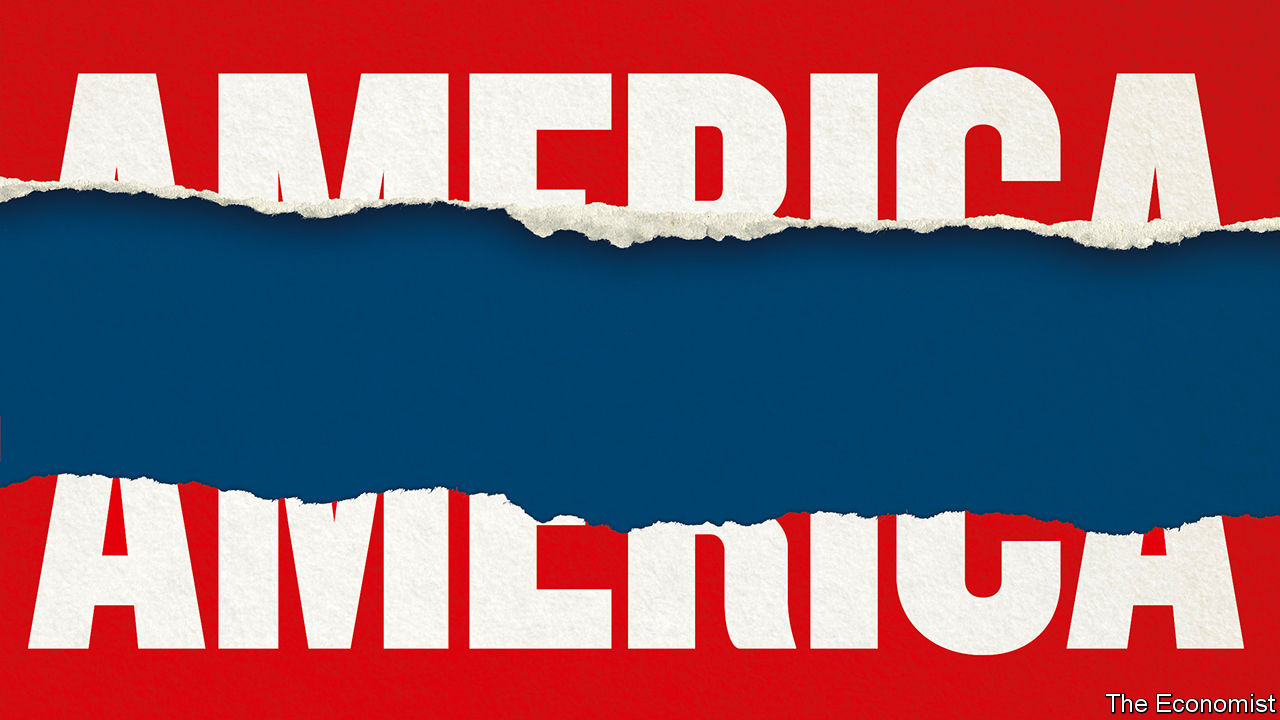
As america prepares to go to the polls on November 6th, the country is more divided and angry than it has been in decades. Campaigning for the mid-terms has been marred by politicians routinely treating each other as rogues, fools or traitors. In recent days a supporter of President Donald Trump has sent bombs to 14 of his opponents and a white supremacist has murdered 11 worshippers at a synagogue, in the worst anti-Semitic act in America’s history.
Latest stories
Mr Trump did not begin this abasement. But he has embraced it as enthusiastically as anyone and carried it to new depths of his own devising. All politicians stretch the truth. Mr Trump lies with abandon—over 5,000 times since he was inaugurated, according to the Washington Post. His deceit is so brazen and effective that many of his supporters take his word above any of his critics’, especially those in the media, and seemingly in the face of all the evidence. That suits Mr Trump because, once nobody is believed, he cannot be held to account. But it is disastrous for America. Once reasoned debate loses its power to win arguments, democracy cannot function.
Mr Trump is also wilfully divisive. All politicians attack their opponents, but presidents see it as their duty to unite the country after a tragedy. Only Mr Trump would think the Tree of Life synagogue shooting a chance to hit back at the media and the Democrats for criticising him (see article). Only he would suggest that, rather than tone down his explosive rhetoric, he might just “tone it up”. Such divisiveness matters because, when your opponents are simply bad people, the compromise that is the foundation of all healthy politics becomes hard within parties and almost impossible between them.
Mr Trump is not the only politician to wallow in division—just the most powerful and one of the most accomplished. Before he was elected, more than half of Democrats told pollsters that they were afraid of Republicans and almost half of Republicans said the same about Democrats. After a Republican congressman was shot by an unstable gunman last summer, leading Democrats expressed “outrage” at the idea that their rhetoric had played any part. Yet they used the attempted bombings and the synagogue shooting to begin a debate about the precise degree of presidential responsibility for domestic terrorism.
America’s democracy is robust—it was designed to be. However, one by one, its institutions are being infected with toxic polarisation. Congress caught the bug in the 1990s, when Newt Gingrich was Speaker. The media have also fallen victim to partisan scepticism—certainly among audiences, if not also among contributors. Just 11% of strong Trump supporters believe the mainstream media, whereas 91% of them trust Mr Trump, a cbs News poll found in the summer. Among Democrats those beliefs tend to be reversed. Now the Supreme Court is perceived to be partisan, too. Democrats see the recent confirmation of Brett Kavanaugh to the court as the ramming through of a partisan who has lied, possibly about a sexual assault, and who will be incapable of putting the law above his party. Republicans, by contrast, see it as a triumph over a monstrous Democratic conspiracy to keep a decent man down. A dishonest executive, conniving with a fawning legislature and empowered by a partisan judiciary: were it to come to that, America truly would be in grave trouble.
What is to be done? Just as American politics did not sour overnight, so the route forward is by many small steps, beginning with next week’s elections. And the first of those steps is for the House, at a minimum, to switch to Democratic control.
This matters because Mr Trump should be subject to congressional oversight. He shows contempt for the norms that, to varying degrees, constrained past presidents—whether by refusing to release his tax returns, mixing official and private business, or bullying officials working in, say, the justice department who should be independent. Congress should hold hearings to investigate such behaviour. But House Republicans have repeatedly failed to do this, neglecting their constitutional responsibility. Faced with the judgment of the intelligence services that Russia intervened in the presidential election, for instance, they subpoenaed the officials overseeing the investigation so as to make their work harder. Their abdication of responsibility means that a continued Republican majority in the House would eventually imperil the rule of law.
For Democrats to win control of the House would, in the long run, benefit both parties. Defeat would encourage some Republicans to start putting forward a conservative alternative to Trumpism. Defeat in the Senate, too, would turbo-charge that effort, though it looks unlikely. The status quo, by contrast, would cement Mr Trump’s takeover of the party.
The calculation for the Democrats rests on the danger of defeat. Even now, they are in the midst of an argument between the centre and the radical wing of the party (see Briefing). Another loss could send them careering leftward. If the Democrats once again won a majority of votes but ended up with only a minority of seats, the party could be tempted to build a platform on norm-busting policies, like expanding the size of the Supreme Court or impeaching justices. By contrast, a House takeover would embolden the party’s moderates.
Nor has divided government always led to gridlock. Even now the president and congressional Democrats agree on some things, such as building infrastructure, confronting China and fighting the opioid epidemic. Let them fight over everything else, but put aside their mutual contempt in pursuit of policies for which they can both claim credit. A single example might show there can be value and dignity in compromise.
America will not mend its politics in a single election. At a minimum, progress will take more votes, a renewal of the Republican Party and a different president with a different moral compass. But the right result next week could point the way.
$12
for 12 weeks' access.


