Biodun Iginla, BBC News

Biodun Iginla, BBC News
Showing posts with label Newt Gingrich. Show all posts

Friday, November 2, 2018

Analysis: America divided

by Melissa Gruz and Biodun Iginla, The Economist Intelligence Unit Political News Analysts, Washington DC/London

Why the mid-terms matter

Politicians are making Americans miserable. The elections offer a chance to change
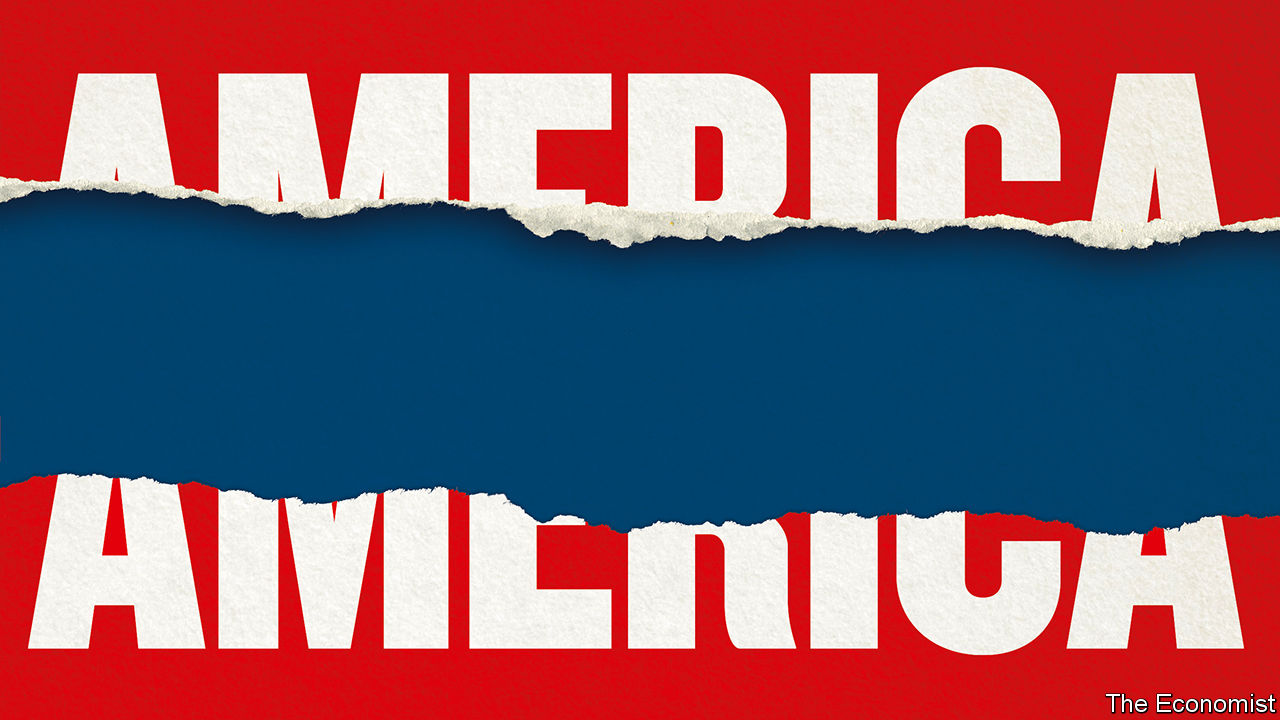
As america prepares to go to the polls on November 6th, the country is more divided and angry than it has been in decades. Campaigning for the mid-terms has been marred by politicians routinely treating each other as rogues, fools or traitors. In recent days a supporter of President Donald Trump has sent bombs to 14 of his opponents and a white supremacist has murdered 11 worshippers at a synagogue, in the worst anti-Semitic act in America’s history.

Latest stories

See more
Toxic federal politics is America’s great weakness. It prevents action on pressing real issues, from immigration to welfare; it erodes Americans’ faith in their government and its institutions; and it dims the beacon of American democracy abroad. The mid-term elections are a chance to begin stopping the rot—and even to start the arduous task of putting it right.
Mr Trump did not begin this abasement. But he has embraced it as enthusiastically as anyone and carried it to new depths of his own devising. All politicians stretch the truth. Mr Trump lies with abandon—over 5,000 times since he was inaugurated, according to the Washington Post. His deceit is so brazen and effective that many of his supporters take his word above any of his critics’, especially those in the media, and seemingly in the face of all the evidence. That suits Mr Trump because, once nobody is believed, he cannot be held to account. But it is disastrous for America. Once reasoned debate loses its power to win arguments, democracy cannot function.
Mr Trump is also wilfully divisive. All politicians attack their opponents, but presidents see it as their duty to unite the country after a tragedy. Only Mr Trump would think the Tree of Life synagogue shooting a chance to hit back at the media and the Democrats for criticising him (see article). Only he would suggest that, rather than tone down his explosive rhetoric, he might just “tone it up”. Such divisiveness matters because, when your opponents are simply bad people, the compromise that is the foundation of all healthy politics becomes hard within parties and almost impossible between them.
Mr Trump is not the only politician to wallow in division—just the most powerful and one of the most accomplished. Before he was elected, more than half of Democrats told pollsters that they were afraid of Republicans and almost half of Republicans said the same about Democrats. After a Republican congressman was shot by an unstable gunman last summer, leading Democrats expressed “outrage” at the idea that their rhetoric had played any part. Yet they used the attempted bombings and the synagogue shooting to begin a debate about the precise degree of presidential responsibility for domestic terrorism.
America’s democracy is robust—it was designed to be. However, one by one, its institutions are being infected with toxic polarisation. Congress caught the bug in the 1990s, when Newt Gingrich was Speaker. The media have also fallen victim to partisan scepticism—certainly among audiences, if not also among contributors. Just 11% of strong Trump supporters believe the mainstream media, whereas 91% of them trust Mr Trump, a cbs News poll found in the summer. Among Democrats those beliefs tend to be reversed. Now the Supreme Court is perceived to be partisan, too. Democrats see the recent confirmation of Brett Kavanaugh to the court as the ramming through of a partisan who has lied, possibly about a sexual assault, and who will be incapable of putting the law above his party. Republicans, by contrast, see it as a triumph over a monstrous Democratic conspiracy to keep a decent man down. A dishonest executive, conniving with a fawning legislature and empowered by a partisan judiciary: were it to come to that, America truly would be in grave trouble.
What is to be done? Just as American politics did not sour overnight, so the route forward is by many small steps, beginning with next week’s elections. And the first of those steps is for the House, at a minimum, to switch to Democratic control.
This matters because Mr Trump should be subject to congressional oversight. He shows contempt for the norms that, to varying degrees, constrained past presidents—whether by refusing to release his tax returns, mixing official and private business, or bullying officials working in, say, the justice department who should be independent. Congress should hold hearings to investigate such behaviour. But House Republicans have repeatedly failed to do this, neglecting their constitutional responsibility. Faced with the judgment of the intelligence services that Russia intervened in the presidential election, for instance, they subpoenaed the officials overseeing the investigation so as to make their work harder. Their abdication of responsibility means that a continued Republican majority in the House would eventually imperil the rule of law.
For Democrats to win control of the House would, in the long run, benefit both parties. Defeat would encourage some Republicans to start putting forward a conservative alternative to Trumpism. Defeat in the Senate, too, would turbo-charge that effort, though it looks unlikely. The status quo, by contrast, would cement Mr Trump’s takeover of the party.
The calculation for the Democrats rests on the danger of defeat. Even now, they are in the midst of an argument between the centre and the radical wing of the party (see Briefing). Another loss could send them careering leftward. If the Democrats once again won a majority of votes but ended up with only a minority of seats, the party could be tempted to build a platform on norm-busting policies, like expanding the size of the Supreme Court or impeaching justices. By contrast, a House takeover would embolden the party’s moderates.
Nor has divided government always led to gridlock. Even now the president and congressional Democrats agree on some things, such as building infrastructure, confronting China and fighting the opioid epidemic. Let them fight over everything else, but put aside their mutual contempt in pursuit of policies for which they can both claim credit. A single example might show there can be value and dignity in compromise.
America will not mend its politics in a single election. At a minimum, progress will take more votes, a renewal of the Republican Party and a different president with a different moral compass. But the right result next week could point the way.
This article appeared in the Leaders section of the print edition under the headline "America divided"
Reuse this content
$12
for 12 weeks' access.
Thursday, July 19, 2018

Analysis: Donald Trump’s humiliation in Helsinki


by Melissa Gruz and Biodun Iginla, The Economist Intelligence Unit Political Analysts, Washington. Melissa Gruz traveled with the President.
American foreign policy

How to interpret a shameful press conference with Vladimir Putin
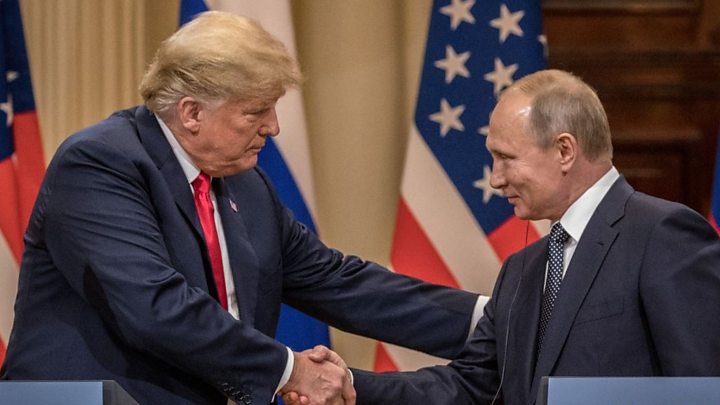
DONALD TRUMP likes to boast that he does things differently from his predecessors. That was certainly true of his trip to Europe. In Brussels he chided Germany for a gas deal that left it “totally controlled by Russia”. In England he humiliated his host, Theresa May, blasting her Brexit plan before holding her hand and hailing “the highest level of special” relationship. From his Scottish golf resort he called the European Union a “foe” on trade. And in Helsinki, asked whether Russia had attacked America’s democracy, he treated President Vladimir Putin as someone he trusts more than his own intelligence agencies. It was a rotten result for America and the world.
Americans were more than usually outraged. At the post-summit press conference in Helsinki, with the world watching and the American flag behind him, their head of state had appeared weak (see article). He was unwilling to stand up for America in the face of an assault that had been graphically described three days earlier by Robert Mueller, the special counsel probing election meddling, in his indictment of 12 Russian military-intelligence officers (see Lexington). Republicans were among Mr Trump’s fiercest critics. “No prior president has ever abased himself more abjectly before a tyrant,” wrote Senator John McCain. Even Newt Gingrich, normally a staunch defender, decried “the most serious mistake of his presidency”. The reaction forced Mr Trump into a convoluted series of climbdowns, which did little to repair the damage.

Latest stories

See more
Yet, for all his hostility towards allies and cosiness with Mr Putin, the trip could have been an even bigger disaster. Fears that Mr Trump might torpedo the NATO summit, as he had the G7 one, proved overblown. He put his name to a communiqué reaffirming the allies’ commitment to mutual defence and their tough stance against Russia. Worries that with Mr Putin he might promise to roll back sanctions or recognise Russia’s annexation of Crimea proved groundless—as far as we can tell (the presidents met with only their interpreters present).
Mr Trump even did some useful things. He was right to press NATO allies to spend more on defence, even if his claim to have raised “vast amounts of money” is an exaggeration. And talking to his Russian counterpart makes sense. To be sure, Mr Trump’s hopes for a tremendous relationship with Mr Putin may end in a familiar disappointment: George W. Bush looked into Mr Putin’s eyes and detected a soul, and Russia invaded Georgia; Barack Obama pressed a “reset” button, and Russia invaded Ukraine. But America and Russia have a lot to discuss, not least on nuclear-arms control.
America worst
However, these gains come at too high a price. Mr Trump’s behaviour, a quixotic mix of poison and flattery, has further undermined Europeans’ trust in America. When asked about the Mueller probe and the decline in relations with Russia, Mr Trump said feebly that he holds “both countries responsible”. Perhaps his vanity does not allow him to treat seriously a Russian attack that he fears could tarnish his own election triumph. Perhaps, as some suspect, Mr Putin really does have material compromising Mr Trump. Either way, where America once aspired to be a beacon, relativism rules. That leaves all democracies more vulnerable.
Mr Putin, fresh from a successful World Cup, thus emerges as the winner in Helsinki. True, he may have scored an own goal in admitting that, yes, he had wanted Mr Trump to win the election. But a self-doubting West, damaged democracy and the spectacle of America’s president deferring to him on the world stage count as a hat-trick at the other end. In Helsinki Mr Putin looked smug. Mr Trump looked, at best, a mug.

Wednesday, July 18, 2018

Trump Putin: US president reverses remark on Russia meddling


Media captionTrump sheds light on his crucial error at Putin summit
by Melissa Gruz and Biodun Iginla, BBC News, Washington. Melissa Gruz was traveling with the President.
US President Donald Trump has said he accepts US intelligence agencies' conclusion that Russia interfered in the 2016 election - despite declining to do so just a day ago.
He said he had misspoken on Monday and had meant to say he saw no reason why it was not Russia that meddled.
The original comments, after he met Russian President Vladimir Putin in Helsinki, drew a barrage of criticism.
Even some of Mr Trump's allies had urged him to clarify his stance.
In his latest remarks, he added that he had "full faith and support" in US intelligence agencies.
Secretary of State Mike Pompeo is to appear before Congress next week to answer questions on what happened during Mr Trump's two-hour meeting with President Putin on Monday.

Damage done

By the BBC's Anthony Zurcher in Washington
Does Donald Trump believe in ominous metaphors? As he affirmed his support for US intelligence agencies, the lights went to black in the White House conference room.
Once order was restored, he said he had been in the dark as to why a storm had swirled around his presidency since his Helsinki summit with Vladimir Putin. It was, he said, because he had misspoken.
ADVERTISEMENT
That is going to be hard for many of the president's critics to swallow, however. Even if he did mean to say, "I don't see a reason why it wouldn't be Russia", it is a pretty weak way to confront the head of a nation accused of targeting the heart of American democracy.
What is more, the context of the president's comments make a simple slip of the tongue seem less likely.
At the very least, the president gave his supporters some material to rally around.
The damage, however, has been done. Mr Trump can give as many White House statements as he likes, but on the biggest stage - standing beside the Russian president - he fumbled. All the explanations cannot change that.

What Trump said then...

The controversy centres on a response he gave to a question at a news conference on Monday following the summit with Mr Putin.
This is an extract from the transcript posted by the White House.
REPORTER: President Putin denied having anything to do with the election interference in 2016. Every US intelligence agency has concluded that Russia did. My first question for you, sir, is, who do you believe?
TRUMP: My people came to me... they said they think it's Russia. I have President Putin; he just said it's not Russia. I will say this: I don't see any reason why it would be.

.... what he says now

Mr Trump said he had reviewed the transcript and realised he needed to clarify.
"In a key sentence in my remarks, I said the word 'would' instead of 'wouldn't," he said.
"The sentence should have been: 'I don't see any reason why I wouldn't' or 'why it wouldn't be Russia'. Sort of a double negative."
The US president added: "I accept our intelligence community's conclusion that Russia's meddling in the 2016 election took place. Could be other people also. A lot of people out there."
Media captionThe ways Trump and Putin see eye to eye
Mr Trump said that the interference had had no impact on the election, in which he defeated Hillary Clinton.
However, he did not respond when reporters asked him if he would condemn Mr Putin.
During the press conference with President Putin - in the same answer as the transcript above - Mr Trump went on to say: "President Putin was extremely strong and powerful in his denial today. And what he did is an incredible offer; he offered to have the people working on the case come and work with their investigators with respect to the 12 people. I think that's an incredible offer."

How great is the outrage?

Chuck Schumer, leader of the opposition Democrats in the Senate, said Mr Trump's retraction of his previous comments was a sign of weakness.
"He made a horrible statement, tried to back off, but couldn't even bring himself to back off," he told the Senate. "It shows the weakness of President Trump that he is afraid to confront Mr Putin directly."
Republicans and Democrats alike were dumbfounded that Mr Trump had sided with Russia over his own intelligence officials after Monday's summit.
The US and Russia have been long-term adversaries and remain far apart on major issues. Some lawmakers were also upset that Mr Trump had refused to offer specific criticisms of Russia and Mr Putin, instead saying both countries were responsible for poor relations.
Even one of his most loyal Republican supporters, Newt Gingrich, said the comments were the "most serious mistake of his presidency".
House Republican Mike Turner accused Mr Trump of having damaged American foreign policy by failing to take Russia to task.
"He's given them a pass and is certainly not holding them accountable for what they're doing," he added.

More on this story