Le Pen has not lost yet. French voters should unite against her
Emmanuel Macron will probably win. But a catastrophic upset is possible

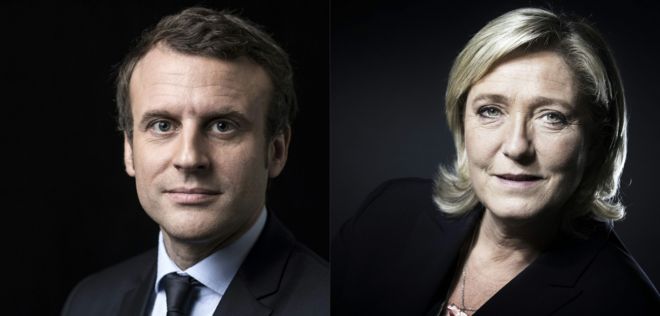
PUNDITS are already looking beyond the French presidential run-off that will take place on May 7th. Emmanuel Macron, the young liberal favourite, is 20 points ahead in the polls. Talk has turned to the obstacles he might face in office. The party he founded, En Marche! (“On the Move!”), will probably not win a majority in the legislature. How, they ask, will he handle the delicate task of coalition-building in a country where old certainties are going up in flames like rum on a banane flambée?
Steady on. Mr Macron has not won yet. And if voters take it for granted that he will, he might not. Betting on politics is banned in France, but foreign bookmakers give his populist, nationalist opponent, Marine Le Pen, a one-in-six chance of victory—the same odds as Russian roulette. The reason is that Ms Le Pen’s supporters will all turn out in force, so if the other side is apathetic and abstains in large numbers, she could win. French people cannot afford to be complacent about this election, or indifferent to the choices on offer (see article).
Though his manifesto lacks detail, Mr Macron offers reform, realism and a chance of a more dynamic France. He would loosen the job-killing labour code, trim the gargantuan state a little, reboot Franco-German chumminess and strengthen the institutions that hold the euro zone together.
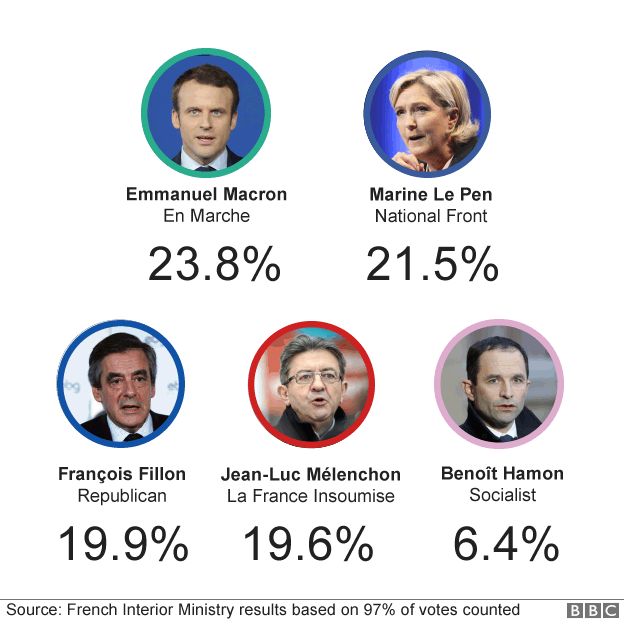
Ms Le Pen, by contrast, offers bigotry mixed with make-believe. Vote for her, she suggests, and the state will shower you with goodies, paid for largely by being less generous to immigrants. She promises earlier retirement, bigger pensions, a short working week, tax cuts and a top-notch hospital on your doorstep. In her belief that French people can prosper by working less and consuming more public services (although government already spends 56% of GDP), she has much in common with Jean-Luc Mélenchon, the far-left candidate who won a fifth of the vote in the first round last month. Her flyers stress this point, hoping to poach his supporters or persuade them to stay at home rather than vote for Mr Macron. Ms Le Pen is also reaching out to mainstream conservatives. To woo followers of François Fillon, a former prime minister who also won a fifth of the vote in the first round, she has borrowed some of his lines about France’s unique place in the universe and downplayed some of her more alarming policies, such as quitting the euro and perhaps the European Union itself.
To voters of all stripes, she promises protection. Against the possibility of being laid off, if they have jobs. Against foreign competition. Against crime: she would add 40,000 prison beds, put 15,000 more cops on the street and let them shoot first if they feel threatened. Against terrorism: she would close mosques suspected of radicalism and deport foreigners suspected of jihadist ties. And against having unfamiliar neighbours: she would cut net migration from around 65,000 people a year to 10,000. She contrasts her own patriotic platform (“Choose France”) with the rootless cosmopolitanism of her opponent, a former Rothschild banker. Echoing an old barb from President François Hollande, she says that “the enemy of the French people is still the world of finance, but this time he has a name, he has a face, he has a party.”
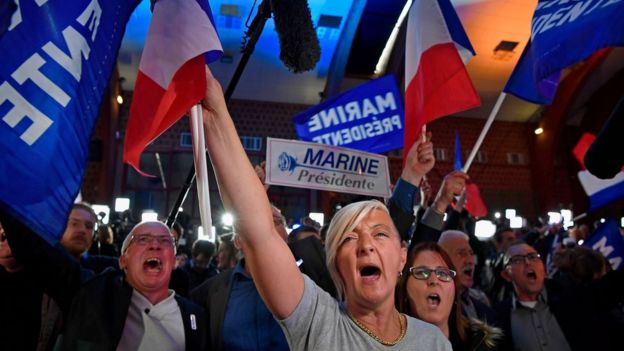
This is powerful stuff. Ms Le Pen stirs deeper passions than Mr Macron. And even among voters repelled by her party’s xenophobic baggage, there is an alarming ambivalence. Many far-leftists talk of a choice between “plague and cholera”, and urge abstention. “There is no hierarchy of unacceptability between Le Pen and Macron. Between xenophobia and bowing to banks,” declared Emmanuel Todd, a public intellectual.
Steady on. Mr Macron has not won yet. And if voters take it for granted that he will, he might not. Betting on politics is banned in France, but foreign bookmakers give his populist, nationalist opponent, Marine Le Pen, a one-in-six chance of victory—the same odds as Russian roulette. The reason is that Ms Le Pen’s supporters will all turn out in force, so if the other side is apathetic and abstains in large numbers, she could win. French people cannot afford to be complacent about this election, or indifferent to the choices on offer (see article).
Latest updates
Ms Le Pen, by contrast, offers bigotry mixed with make-believe. Vote for her, she suggests, and the state will shower you with goodies, paid for largely by being less generous to immigrants. She promises earlier retirement, bigger pensions, a short working week, tax cuts and a top-notch hospital on your doorstep. In her belief that French people can prosper by working less and consuming more public services (although government already spends 56% of GDP), she has much in common with Jean-Luc Mélenchon, the far-left candidate who won a fifth of the vote in the first round last month. Her flyers stress this point, hoping to poach his supporters or persuade them to stay at home rather than vote for Mr Macron. Ms Le Pen is also reaching out to mainstream conservatives. To woo followers of François Fillon, a former prime minister who also won a fifth of the vote in the first round, she has borrowed some of his lines about France’s unique place in the universe and downplayed some of her more alarming policies, such as quitting the euro and perhaps the European Union itself.
To voters of all stripes, she promises protection. Against the possibility of being laid off, if they have jobs. Against foreign competition. Against crime: she would add 40,000 prison beds, put 15,000 more cops on the street and let them shoot first if they feel threatened. Against terrorism: she would close mosques suspected of radicalism and deport foreigners suspected of jihadist ties. And against having unfamiliar neighbours: she would cut net migration from around 65,000 people a year to 10,000. She contrasts her own patriotic platform (“Choose France”) with the rootless cosmopolitanism of her opponent, a former Rothschild banker. Echoing an old barb from President François Hollande, she says that “the enemy of the French people is still the world of finance, but this time he has a name, he has a face, he has a party.”
This is powerful stuff. Ms Le Pen stirs deeper passions than Mr Macron. And even among voters repelled by her party’s xenophobic baggage, there is an alarming ambivalence. Many far-leftists talk of a choice between “plague and cholera”, and urge abstention. “There is no hierarchy of unacceptability between Le Pen and Macron. Between xenophobia and bowing to banks,” declared Emmanuel Todd, a public intellectual.
Vote for the banker. It’s important
If enough voters swallow such sophistry, Ms Le Pen could prevail. Her promised handouts would not materialise, since France is already perilously indebted and her scheme to print francs again would spark a financial crisis. Her bid to protect French jobs would lead to more unemployment. Her plan to shut out foreign goods and ideas would make France poorer and less productive. But the division that she fosters and exploits will endure, even if she loses. Nearly half of voters in the first round backed anti-EU candidates. French Muslims and non-Muslims are far from reaching a modus vivendi. And Ms Le Pen will be back in 2022. French voters should give Mr Macron a thumping majority, and a mandate to address the malaise that makes his opponent’s demagoguery so popular.