Biodun Iginla, BBC News

Biodun Iginla, BBC News
Showing posts with label Political News Analysts. Show all posts

Thursday, March 8, 2018

Analysis: Talks with North Korea

Treat Kim Jong Un’s nuclear offer with caution


His demands are a non-starter
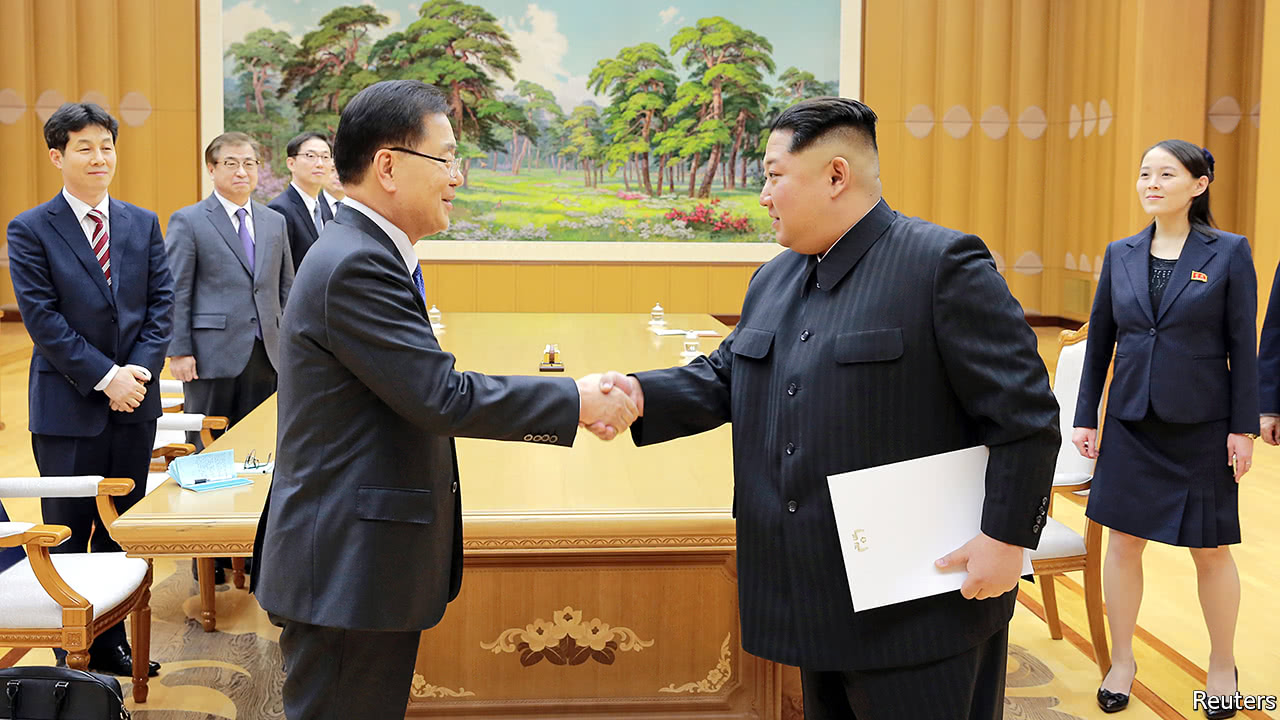
AFTER months when the prospect of a nuclear war on the Korean peninsula seemed all too real, it is a relief that America and North Korea may soon start talking to each other. A flurry of diplomacy has paved the way for negotiations. North Korean athletes and cheerleaders attended the Winter Olympics in Pyeongchang; South Korean officials went to Pyongyang and met the North Korean dictator, Kim Jong Un. However, when Mr Kim suggested on March 6th that talks might lead to him giving up his nuclear weapons, diplomats were astonished. The Trump administration’s policy towards North Korea of “maximum pressure and engagement” has been all about the pressure. Here, many feel, is a chance to try some engagement.
That must be right. But past experience suggests that an ocean of scepticism is warranted (see article). In the past North Korea has used nuclear talks to win concessions and money in return for commitments it has then broken. Mr Kim, who inherited his throne from his equally despotic father and grandfather, may also have inherited their duplicity.

Latest stories

See more
Despite his macho posturing, Mr Kim is feeling the sanctions that America has applied as punishment for his testing of missiles and nuclear devices. China’s unwillingness to risk the collapse of the North Korean regime has limited the bite of the sanctions, but new restrictions imposed by the UN are taking a toll. One sign was the scaling back of North Korea’s winter military exercises, apparently to save fuel as imports of oil and refined petroleum products have become scarcer.
The rumours in Washington about a bloody-nose strategy to punish Mr Kim for testing nuclear weapons may also have got the dictator’s attention. The administration denies having talked in those terms, but Mr Kim cannot rule out that President Donald Trump will order a pre-emptive strike on his nuclear facilities. The communist god-king knows he would have to respond, and for all his braggadocio he knows that escalation could lead to his own demise, as well as his regime’s. Asked what had brought Mr Kim to the negotiating table, Mr Trump said: “Me.” For once, he may be right.
Nonetheless Mr Kim surely feels that he would enter talks from a position of strength. He already has a missile with the range to strike the United States and will probably soon be able to equip it with a thermonuclear warhead. He also has the conventional and nuclear firepower to devastate Seoul, South Korea’s thriving capital. No one really wants to fight him.
Don’t hold your breath
The chances of the talks getting anywhere remain low. When Mr Kim suggests he would give up his nukes for the right security guarantees, he means the withdrawal of American forces from the south and the start of a process to reunite the peninsula on his terms. Neither is going to happen—rich, democratic South Korea is not about to throw in its lot with a North still run by a tyrant. Still, Mr Kim hopes to divide the South from its American ally by making offers that will play well in Seoul, such as opening new lines of communication, bringing separated families together and co-operating on humanitarian projects. At the very least, he will be betting that he can give China and Russia the cover they need to relax sanctions.
America needs to show its allies (and China) that it is open to talks, while making clear that the demands North Korea is making in exchange for denuclearisation are unacceptable. Even if talks result only in measures that reduce tension and the risk of nuclear miscalculation, they will have been worthwhile. Alas, the State Department has just lost its point man on North Korea and it still has no ambassador in Seoul. Dealing with a despot requires diplomacy—and diplomats.

Thursday, March 1, 2018

Analysis: How the West got China wrong

Geopolitics

by Xian Wan and Biodun Iginla, Political News Analysts, The Economist Intelligence Unit, Beijing

It bet that China would head towards democracy and the market economy. The gamble has failed
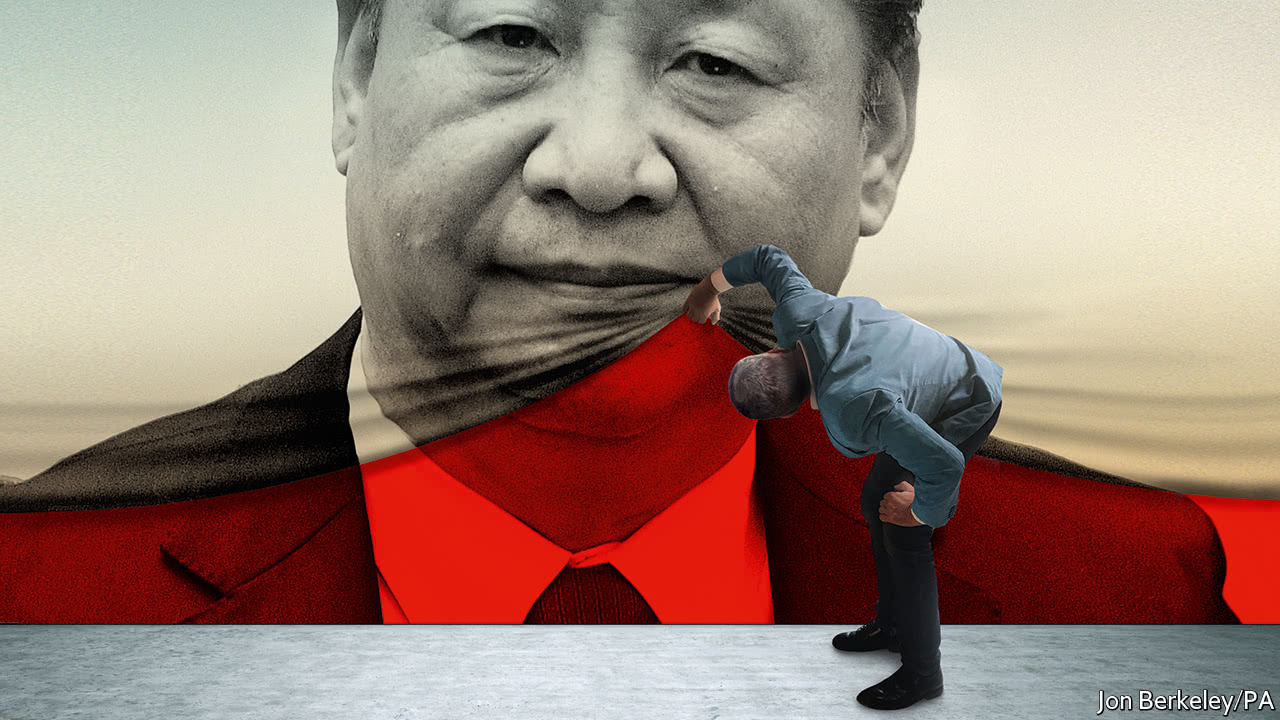
LAST weekend China stepped from autocracy into dictatorship. That was when Xi Jinping, already the world’s most powerful man, let it be known that he will change China’s constitution so that he can rule as president for as long as he chooses—and conceivably for life. Not since Mao Zedong has a Chinese leader wielded so much power so openly. This is not just a big change for China (see article), but also strong evidence that the West’s 25-year bet on China has failed.
After the collapse of the Soviet Union, the West welcomed the next big communist country into the global economic order. Western leaders believed that giving China a stake in institutions such as the World Trade Organisation (WTO) would bind it into the rules-based system set up after the second world war (see Briefing). They hoped that economic integration would encourage China to evolve into a market economy and that, as they grew wealthier, its people would come to yearn for democratic freedoms, rights and the rule of law.

Latest stories

See more
It was a worthy vision, which this newspaper shared, and better than shutting China out. China has grown rich beyond anybody’s imagining. Under the leadership of Hu Jintao, you could still picture the bet paying off. When Mr Xi took power five years ago China was rife with speculation that he would move towards constitutional rule. Today the illusion has been shattered. In reality, Mr Xi has steered politics and economics towards repression, state control and confrontation.
All hail, Xi Dada
Start with politics. Mr Xi has used his power to reassert the dominance of the Communist Party and of his own position within it. As part of a campaign against corruption, he has purged potential rivals. He has executed a sweeping reorganisation of the People’s Liberation Army (PLA), partly to ensure its loyalty to the party, and to him personally. He has imprisoned free-thinking lawyers and stamped out criticism of the party and the government in the media and online. Though people’s personal lives remain relatively free, he is creating a surveillance state to monitor discontent and deviance.
China used to profess no interest in how other countries run themselves, so long as it was left alone. Increasingly, however, it holds its authoritarian system up as a rival to liberal democracy. At the party’s 19th congress last autumn, Mr Xi offered “a new option for other countries” that would involve “Chinese wisdom and a Chinese approach to solving the problems facing mankind.” Mr Xi later said that China would not export its model, but you sense that America now has not just an economic rival, but an ideological one, too.
The bet to embed markets has been more successful. China has been integrated into the global economy. It is the world’s biggest exporter, with over 13% of the total. It is enterprising and resourceful, and home to 12 of the world’s 100 most valuable listed companies. It has created extraordinary prosperity, for itself and those who have done business with it.
Yet China is not a market economy and, on its present course, never will be. Instead, it increasingly controls business as an arm of state power. It sees a vast range of industries as strategic. Its “Made in China 2025” plan, for instance, sets out to use subsidies and protection to create world leaders in ten industries, including aviation, tech and energy, which together cover nearly 40% of its manufacturing. Although China has become less blatant about industrial espionage, Western companies still complain of state-sponsored raids on their intellectual property. Meanwhile, foreign businesses are profitable but miserable, because commerce always seems to be on China’s terms. American credit-card firms, for example, were let in only after payments had shifted to mobile phones.
China embraces some Western rules, but also seems to be drafting a parallel system of its own. Take the Belt and Road Initiative, which promises to invest over $1tn in markets abroad, ultimately dwarfing the Marshall plan. This is partly a scheme to develop China’s troubled west, but it also creates a Chinese-funded web of influence that includes pretty much any country willing to sign up. The initiative asks countries to accept Chinese-based dispute-resolution. Should today’s Western norms frustrate Chinese ambition, this mechanism could become an alternative.
And China uses business to confront its enemies. It seeks to punish firms directly, as when Mercedes-Benz, a German carmaker, was recently obliged to issue a grovelling apology after unthinkingly quoting the Dalai Lama online. It also punishes them for the behaviour of their governments. When the Philippines contested China’s claim to Scarborough Shoal in the South China Sea, China suddenly stopped buying its bananas, supposedly for health reasons. As China’s economic clout grows, so could this sort of pressure.
This “sharp power” in commerce is a complement to the hard power of armed force. Here, China behaves as a regional superpower bent on driving America out of East Asia. As with Scarborough Shoal, China has seized and built on a number of reefs and islets. The pace of Chinese military modernisation and investment is raising doubts about America’s long-run commitment to retain its dominance in the region. The PLA still could not defeat America in a fight, but power is about resolve as well as strength. Even as China’s challenge has become overt, America has been unwilling or unable to stop it.
Take a deep breath
What to do? The West has lost its bet on China, just when its own democracies are suffering a crisis of confidence. President Donald Trump saw the Chinese threat early but he conceives of it chiefly in terms of the bilateral trade deficit, which is not in itself a threat. A trade war would undermine the very norms he should be protecting and harm America’s allies just when they need unity in the face of Chinese bullying. And, however much Mr Trump protests, his promise to “Make America Great Again” smacks of a retreat into unilateralism that can only strengthen China’s hand.
Instead Mr Trump needs to recast the range of China policy. China and the West will have to learn to live with their differences. Putting up with misbehaviour today in the hope that engagement will make China better tomorrow does not make sense. The longer the West grudgingly accommodates China’s abuses, the more dangerous it will be to challenge them later. In every sphere, therefore, policy needs to be harder edged, even as the West cleaves to the values it claims are universal.
To counter China’s sharp power, Western societies should seek to shed light on links between independent foundations, even student groups, and the Chinese state. To counter China’s misuse of economic power, the West should scrutinise investments by state-owned companies and, with sensitive technologies, by Chinese companies of any kind. It should bolster institutions that defend the order it is trying to preserve. For months America has blocked the appointment of officials at the WTO. Mr Trump should demonstrate his commitment to America’s allies by reconsidering membership of the Trans-Pacific Partnership, as he has hinted. To counter China’s hard power, America needs to invest in new weapons systems and, most of all, ensure that it draws closer to its allies—who, witnessing China’s resolve, will naturally look to America.
Rivalry between the reigning and rising superpowers need not lead to war. But Mr Xi’s thirst for power has raised the chance of devastating instability. He may one day try to claim glory by retaking Taiwan. And recall that China first limited the term of its leaders so that it would never again have to live through the chaos and crimes of Mao’s one-man rule. A powerful, yet fragile, dictatorship is not where the West’s China bet was supposed to lead. But that is where it has ended up.

This article appeared in the Leaders section of the print edition under the headline "What the West got wrong"

Thursday, February 22, 2018

Analysis: Russia’s dirty tricks

by Maria Ogryzlo and Biodun Iginla, Political News Analysts, The Economist Intelligence Unit, Moscow

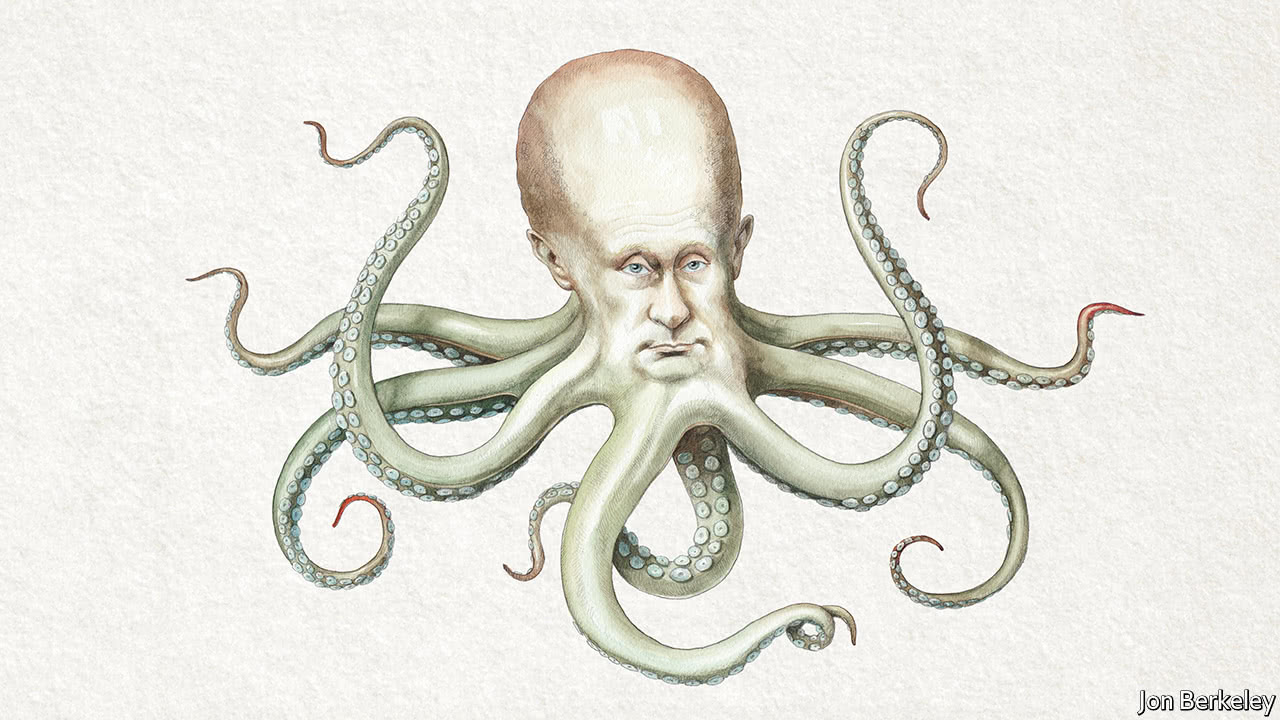
How Putin meddles in Western democracies

And why the West’s response is inadequate
IN THE late 1980s, as Mikhail Gorbachev launched perestroika, Russia made peace with the West. It was possible to believe that each would give up trying to subvert the other with lies and cold-war conspiracy theories. With the indictment of 13 Russians on February 16th by the American special counsel, Robert Mueller, it is clear just how fragile that belief was.
Mr Mueller alleges that in 2014 Russia launched a conspiracy against America’s democracy, and he believes he has the evidence to withstand Russian denials and a court’s scrutiny. Perhaps because Vladimir Putin, Russia’s president, thought the CIA was fomenting an uprising in Ukraine, the Internet Research Agency, backed by an oligarch with links to the Kremlin, set up a trolling team, payments systems and false identities. Its aim was to widen divisions in America and, latterly, to tilt the vote in 2016 from Hillary Clinton to Donald Trump.

Latest stories

See more
Europe has been targeted, too. Although the details are sketchier, and this is not the focus of the Mueller probe, Russia is thought to have financed extremist politicians, hacked computer systems, organised marches and spread lies (see Briefing). Again, its aim seems to have been to deepen divides.
It is futile to speculate how much Russia’s efforts succeeded in altering the outcomes of votes and poisoning politics. The answer is unknowable. But the conspiracies are wrong in themselves and their extent raises worries about the vulnerabilities of Western democracies. If the West is going to protect itself against Russia and other attackers, it needs to treat Mr Mueller’s indictments as a rallying cry.
Trolleology
They hold three uncomfortable lessons. One is that social media are a more potent tool than the 1960s techniques of planting stories and bribing journalists. It does not cost much to use Facebook to spot sympathisers, ferret out potential converts and perfect the catchiest taglines (see article). With ingenuity, you can fool the system into favouring your tweets and posts. If you hack the computers of Democratic bigwigs, as the Russians did, you have a network of bots ready to dish the dirt.
With a modest budget, of a little over $1m a month, and working mostly from the safety of St Petersburg, the Russians managed botnets and false profiles, earning millions of retweets and likes. Other, better-funded, groups exploit similar techniques. Nobody yet knows how the outrage they generate changes politics, but it is a fair guess that it deepens partisanship and limits the scope for compromise.
Hence the second lesson, that the Russia campaign did not create divisions in America so much as hold up a warped mirror to them. It played up race, urging black voters to see Mrs Clinton as an enemy and stay at home on polling day. It sought to inflame white resentment, even as it called on progressives to vote for Jill Stein, of the Green Party. After Mr Trump’s victory, which it had worked to bring about, it organised an anti-Trump rally in Manhattan. Right after the Parkland school shooting, Russian bots began to pile into the debate about gun control (see article). Europeans are to a lesser degree divided, too, especially in Brexit Britain. The divisions that run so deep within Western democracies leave them open to intruders.
The most important lesson is that the Western response has been woefully weak. In the cold war, America fought Russian misinformation with diplomats and spies. By contrast, Mr Mueller acted because two presidents fell short. Barack Obama agonised over evidence of Russian interference but held back before eventually imposing sanctions, perhaps because he assumed Mr Trump would lose and that for him to speak out would only feed suspicions that, as a Democrat, he was manipulating the contest. That was a grave misjudgment.
Mr Trump’s failing is of a different order. Despite having access to intelligence from the day he was elected, he has treated the Russian scandal purely in terms of his own legitimacy. He should have spoken out against Mr Putin and protected America against Russian hostility. Instead, abetted by a number of congressional Republicans, he has devoted himself to discrediting the agencies investigating the conspiracy and hinted at firing Mr Mueller or his minders in the Justice Department, just as he fired James Comey as head of the FBI. Mr Mueller is not done. Among other things, he still has to say whether the conspiracy extended to the Trump campaign. Were Mr Trump to sack him now, it would amount to a confession.
How to win the woke citizens vote
For democracy to thrive, Western leaders need to find a way to regain the confidence of voters. This starts with transparency. Europe needs more formal investigations with the authority of Mr Mueller’s. Although they risk revealing intelligence sources and methods and may even please Russia—because proof of its success sows mistrust—they also lay the ground for action. Party-funding laws need to identify who has given money to whom. And social media should be open to scrutiny, so that anyone can identify who is paying for ads and so that researchers can more easily root out subterfuge.
Then comes resilience, which starts at the top. Angela Merkel successfully warned Mr Putin that there would be consequences if he interfered in German elections. In France Emmanuel Macron frustrated Russian hackers by planting fake e-mails among real ones, which discredited later leaks when they were shown to contain false information. Finland teaches media literacy and the national press works together to purge fake news and correct misinformation.
Resilience comes more easily to Germany, France and Finland, where trust is higher than in America. That is why retaliation and deterrence also matter—not, as in the cold war, through dirty tricks, but by linking American co-operation over, say, diplomatic missions, to Russia’s conduct and, if need be, by sanctions. Republican leaders in Congress are failing their country: at the least they should hold emergency hearings to protect America from subversion in the mid-term elections. Just now, with Mr Trump obsessively blaming the FBI and Democrats, it looks as if America does not believe democracy is worth fighting for.

This article appeared in the Leaders section of the print edition under the headline "The meddler"
Reuse this content

Analysis: Britain and Europe

by Emily Straton and Biodun Iginla, Political News Analysts, The Economist Intelligence Unit, London

The right way to do Brexit

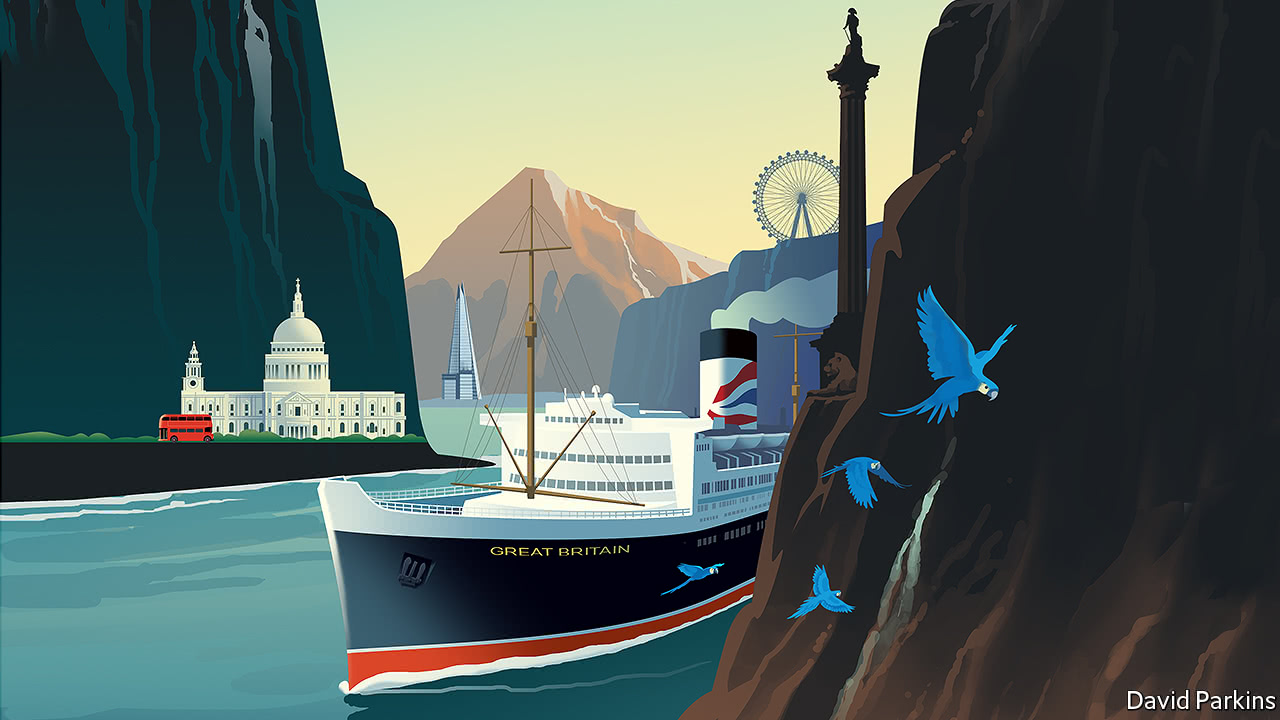
Britain can “take back control” from Europe without cutting all ties
AS WE went to press, the cabinet was due to enter an extended session in order to hammer out what kind of Brexit is best for Britain. Ministers are at loggerheads over the relationship the country should have with the European Union. Time is short. With just over a year until Britain leaves the EU, leaders of the 27 other member states, who will meet in March, are frustrated. Britons on both sides of the Leave/Remain divide need to plan ahead. All they get is blather and contradictions.
The government is groping towards a “hard” Brexit, leaving both the single market and customs union. The prime minister, Theresa May, seems to believe that this is the only way to honour the result of the referendum. On that view, a “soft” exit, into an arrangement closer to that of Norway, is unacceptable because it fails to secure the independence of the courts, the freedom to strike new trade deals and the ability to limit immigration. It would render Britain a “vassal state” that, to add insult to injury, would have to pay the EU a vast annual levy.

Latest stories

See more
Yet a closer look at Norway shows that this depiction of a soft Brexit is simply wrong. Mrs May is right to say that Britain will end up with its own model rather than copying anyone else’s. But instead of ignoring other countries, she should learn from them. And Norway, it turns out, is a good place to start.
Think again
In 1994 Norwegians voted against joining the EU, by the same narrow margin as Britain chose to leave it in 2016. Whereas the debate in Britain has been dominated by hardliners, Norwegians took that as a cue to compromise (see article).
Their country is outside the EU, but inside the single market, allowing it to trade freely with the continent. For Britain, by the government’s estimate, leaving the single market would mean that GDP 15 years after Brexit would be 3-6% lower than if it stayed in it. (Brexiteers counter this with rosy predictions for a hard Brexit, but their models are based on far-fetched assumptions, such as the total abolition of tariffs.) Norway set up carve-outs to keep control over areas it prized, such as farming and fishing. It agreed to follow most other EU rules, open its borders to EU migrants and make hefty annual payments.
How does that square with Leavers’ demands? Start with the money. Per person, Norway’s contributions to the EU are about three-quarters of what Britain pays now. Rather than going into the central EU budget, most of the cash is tied to particular research or educational programmes, such as the Erasmus student exchanges, or sent to poorer countries in the form of grants that are controlled by Norway, not the EU. A country with $1trn in oil wealth may shrug off such payments more easily than one grappling with a budget deficit. But Britain has already said that it will pay for access to the single market and take part in specific programmes.
Next come EU laws. Mrs May has said Britain must escape the jurisdiction of the European Court of Justice (ECJ). Norway’s trade with Europe is instead governed by the court of the European Free Trade Association (EFTA). As a matter of principle, the EFTA court’s rulings are advisory, and it lacks the power to fine member states that do not comply. Britain could expect to nominate a judge to the court, which it could not to the ECJ. As a matter of practicality, British exporters will have to follow the rules of the single market even if they are not in it.
More important, Norway is not the “vassal state” that Brexiteers claim. It is involved in drawing up EU laws and regulations, particularly in areas such as energy, where it knows the ropes. It has no seat in the European Parliament or Council, but most regulations are passed without a formal vote. Instead they are negotiated in committees where what counts is expertise and knowledge. Both Norway and Switzerland wield influence in Brussels. Britain’s clout would be greater still, especially in areas that matter to it, like finance.
It is the same with free movement of people. At least in theory, Norway might be allowed an emergency brake against a sudden upsurge in migration. In practice Britain could anyway take measures that are available under EU rules, such as restricting property purchases or expelling those who have not found a job after six months. Net migration to Britain is falling and worry about immigrants is subsiding. A majority of all voters, including a third of those who voted to leave, would accept free movement in return for free trade.
In one area, however, Britain would need a closer arrangement. Norway is not part of a customs union with the EU, so vehicles crossing at the border with Sweden and Finland are subject to checks. This would not suit Britain. Its borders are busier than Norway’s and its firms more integrated into European supply chains. Worse, customs controls in Northern Ireland would jeopardise the peace process, and hence the security of both British and Irish citizens. The government has ruled out a customs union with the EU, claiming it would preclude signing trade deals with third countries. That, too, is wrong-headed. The customs union applies only to goods; Britain would still be free to strike deals in services, which the government says is the priority in a longed-for deal with America.
A final benefit is choice. Britain is leaving just as the EU is becoming a looser union of countries moving at different speeds. Euro-zone members are heading for closer integration; others outside it hang back. In a multi-speed Europe, being in the single market and the customs union would put Britain in an outer lane, rather than forcing it off the road altogether. Later, it could move closer or farther away, as it wished. To hardliners, who want out at any cost, this flexibility is dangerous. To pragmatists who accept that the future is uncertain, it is valuable.
And think a third time
A regime akin to Norway’s, fortified by a customs agreement, does not honour every promise made in the heat of the Brexit campaign. We know of no deal that could. But it would mean doing what Britain voted for: leaving the EU. This newspaper argued against that course. Now that the country is set on it, it needs a proven, workable model for being out of Europe’s political project but in its economy. Norway would be a good place to start.
You’ve seen the news, now discover the story
Get incisive analysis on the issues that matter. Whether you read each issue cover to cover, listen to the audio edition, or scan the headlines on your phone, time with The Economist is always well spent.
Enjoy 12 weeks’ access for $12
+ receive a free notebook
Reuse this content

Thursday, February 15, 2018

Analysis: Jacob Zuma resigns

by Susan Peterson and Biodun Iginla, Political News Analysts, The Economist Intelligence Unit, Johannesburg

The disastrous legacy of South Africa’s President Jacob Zuma

South Africa’s lost decade
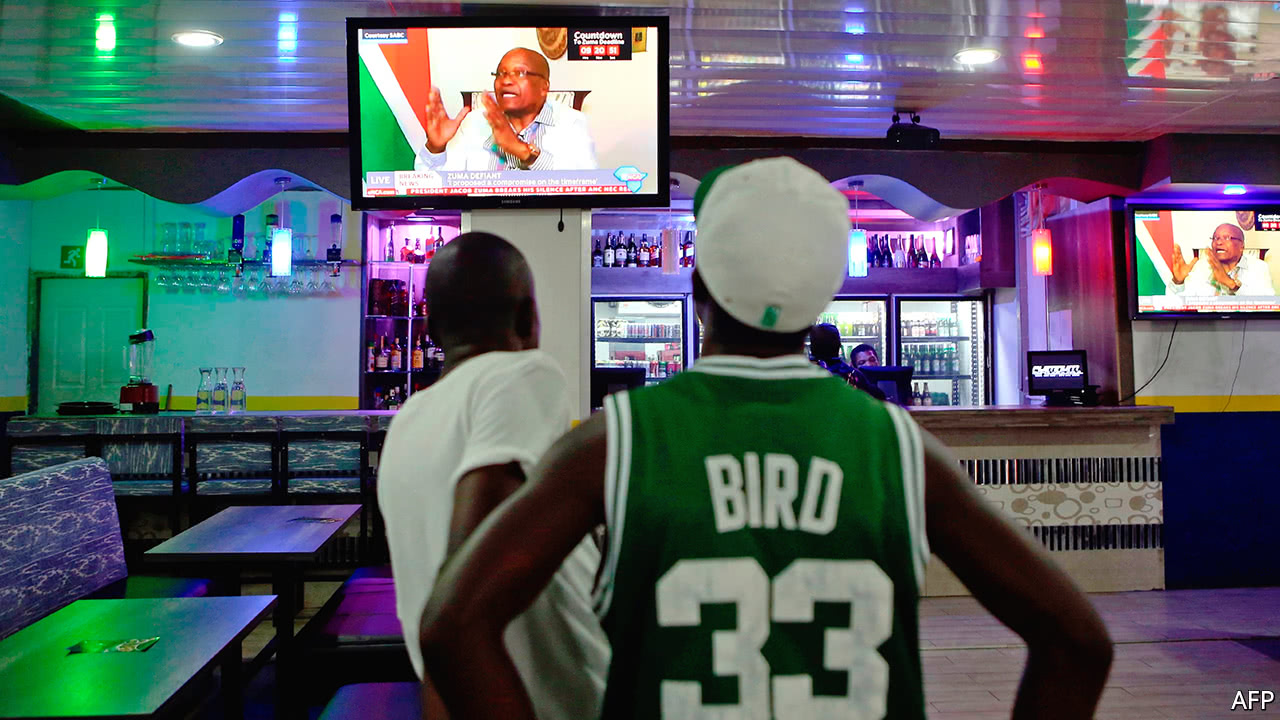
JACOB ZUMA was defiant until the end. For years he had ignored the clamour of South Africans fed up with near-constant scandals and court rulings against him. In his final days as president, Mr Zuma even scorned the appeals of members of his party, the African National Congress (ANC), as they pleaded with him to resign. Yet even as he hardened his heart against leaving, his comrades hardened theirs against him, threatening to support an opposition-sponsored vote of no confidence on February 15th.
Faced with the prospect of humiliation, Mr Zuma announced his resignation “with immediate effect” in a live television broadcast late in the evening of February 14th. It was his second appearance on television that day.

Latest stories

See more
Upon learning that morning of his own party’s decision to support the motion of no-confidence in his government, which would also have seen the entire cabinet dissolved, Mr Zuma gave a rambling television interview. With a hint of menace from a man who had climbed the ranks of the ANC’s underground military wing to become its spymaster, he warned: “We are being plunged into a crisis that I feel some of my comrades will regret.” Wide-eyed, he also declared himself a victim. “What is it that I’ve done?” he asked.
The answer may come rather sooner than he would like. Mr Zuma faces the reinstatement of 783 counts of corruption after a court ruled that a decision to drop the charges was “irrational”. He may also be called to testify in a judicial commission of inquiry into “state capture”. This will probe allegations that the Gupta brothers, his close friends and business associates of his son, improperly influenced cabinet appointments and government tenders.
Just hours before the ANC said it would use parliament to remove Mr Zuma from office, police investigators raided a cluster of mansions belonging to the Gupta family. Five people were arrested in relation to allegations of corruption involving a government-funded dairy farm.
Mr Zuma’s ousting is a triumph for Cyril Ramaphosa, who was elected leader of the ANC at a party conference in December. But Mr Ramaphosa will have a mighty mess to clean up.


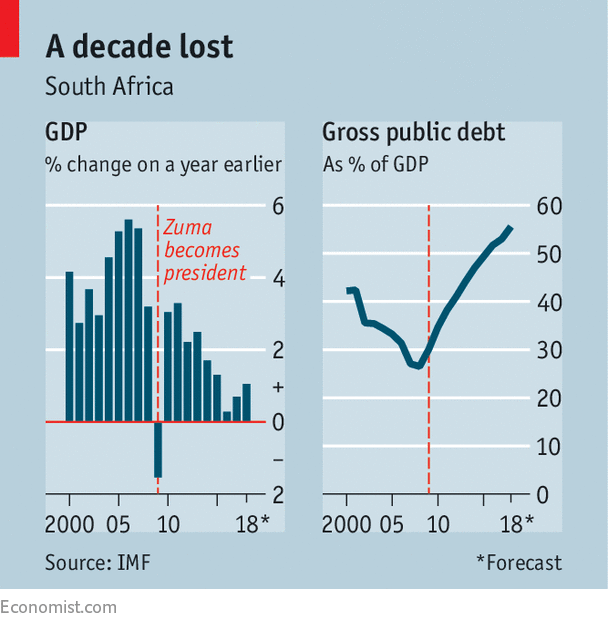
By most measures the country is worse off now than a decade ago, when Mr Zuma became leader of the ANC before being elected as president in 2009. Economic growth has slowed to a crawl, and briefly dipped into recession last year (see chart). Unemployment stands at 36% when people who have abandoned the hunt for jobs are included.
A greater portion of the country was poor in 2015 (the most recent survey) than four years earlier, and public debt has soared. Inequality is yawning and public services are dismal. A league table by the OECD, a club of mainly rich countries, ranked South Africa’s education system 75th out of 76. Its health system was recently shamed by the deaths of 143 mentally ill patients who died of thirst and hunger after they were moved out of a well-run hospital and into unregulated care homes.
Before Mr Ramaphosa can even begin to tackle many of the structural problems that hobble growth, such as a poorly educated workforce and inflexible labour markets, he will have to clean up a government that has been marred by corruption at all levels. Clearing the rot will not be as simple as removing Mr Zuma.
Mr Ramaphosa will also have to take on powerful factions at the top of the ruling party to fire incompetent cabinet ministers and battle a culture of graft that has permeated right down to local councillors. He risks splintering the party should he move too quickly.
But when Mr Ramaphosa steps into the presidency he will be able to tap a deep well of goodwill that he earned in his previous careers, as a trade unionist and then as a businessman. In less than two months since Mr Ramaphosa became head of the party, South Africa’s currency rose to its strongest level against the dollar in almost three years. The prospect of his presidency has already inspired some of the optimism that greeted that of Nelson Mandela, who was elected president in 1994 and who had wanted Mr Ramaphosa to be his successor.
After Mr Ramaphosa lost out to Thabo Mbeki, who was elected president in 1999, he told friends he would not be outfoxed again. His record as a negotiator, leading the ANC side in talks to end apartheid, had already marked him as patient and prudent, and he put both attributes to use in his long struggle to supplant Mr Zuma. Optimistic South Africans speculate that he may pick up Mandela’s mantle.
As for Mr Zuma? Few will mourn the premature end of the presidency of a man whose middle name, Gedleyihlekisa, translates from Zulu as “one who smiles while causing you harm”.


This article appeared in the Middle East and Africa section of the print edition under the headline "South Africa’s lost decade"