WASHINGTON - U.S. President Donald Trump said on Saturday there was no need to keep Canada in the North American Free Trade Agreement and warned Congress not to meddle with the trade negotiations or he would terminate the trilateral trade pact altogether.
“There is no political necessity to keep Canada in the new NAFTA deal. If we don’t make a fair deal for the U.S. after decades of abuse, Canada will be out,” Trump said on Twitter.
SPONSORED
“Congress should not interfere w/ these negotiations or I will simply terminate NAFTA entirely & we will be far better off,” he added.
Trump on Friday notified Congress of his intent to sign a bilateral deal with Mexico, after contentious talks with Canada ended on Friday without a deal to revamp NAFTA. Trump had unveiled a deal with Mexico on Monday.
Lawmakers on Friday warned that a deal with Mexico could struggle to win approval from Congress unless Canada was also included. Support from Democrats would be needed to pass a purely bilateral deal, they said.
FILE PHOTO - U.S. President Donald Trump delivers remarks before signing an executive order on strengthening retirement security in America at Harris Conference Center in Charlotte, NC, U.S., August 31, 2018. REUTERS/Yuri Gripas
Trump on Monday threatened to slap tariffs on Canadian-made cars if Canada did not join the talks to revamp NAFTA, which he has repeatedly criticized. Trump on Saturday, in his Twitter posts, reprised his attacks that NAFTA has resulted in a loss of U.S. jobs and business.
IXTEPEC, Mexico/EDINBURG, Texas - In some of the Mexican towns playing host to a “caravan” of more than 1,200 Central American migrants heading to the U.S. border, the welcome mat has been rolled out despite President Donald Trump’s call for Mexican authorities to stop them.
Central American migrants participating in a caravan heading to the U.S. take a pause from their journey in Matias Romero, Oaxaca, Mexico April 2, 2018. REUTERS/Jose de Jesus Cortes
Local officials have offered lodging in town squares and empty warehouses or arranged transport for the migrants, participants in a journey organized by the immigrant advocacy group Pueblo Sin Fronteras. The officials have conscripted buses, cars, ambulances and police trucks. But the help may not be entirely altruistic.
“The authorities want us to leave their cities,” said Rodrigo Abeja, an organizer from Pueblo Sin Fronteras. “They’ve been helping us, in part to speed the massive group out of their jurisdictions.”
At some point this spring, the caravan’s 2,000-mile (3,200-km) journey that began at Tapachula near the Guatemalan border on March 25 will end at the U.S. border, where some of its members will apply for asylum, while others will attempt to sneak into the United States.
Abeja said there was a lot of pressure from authorities to stop the caravan “because of Donald Trump’s reaction.” The Mexican government issued a statement late on Monday saying it was committed to “legal and orderly” migration.
The government said the caravan had been taking place since 2010 and was largely made up of Central Americans entering Mexico who had not met the necessary legal requirements.
“For this reason, participants in this (caravan) are subject to an administrative migratory procedure, while 400 have already been repatriated to their countries of origin, in strict accordance with the law and respecting their human rights,” it said.
Those without permission to stay in Mexico or who had failed to request it through the proper channels could expect to be returned to their homelands, a government official said, speaking on condition of anonymity.
‘DOING LITTLE’
Trump railed on Twitter against the caravan on Monday, accusing Mexico of “doing very little, if not NOTHING” to stop the flow of immigrants crossing the U.S. border illegally. “They must stop the big drug and people flows, or I will stop their cash cow, NAFTA,” he concluded.
Central American migrants participating in a caravan heading to the U.S. hold bags with food in Matias Romero, Oaxaca, Mexico April 2, 2018. REUTERS/Jose de Jesus Cortes
Mexico’s interior minister Alfonso Navarrete did not directly address the caravan, but he wrote on Twitter that he spoke to the U.S. Homeland Security Secretary Kirstjen Nielsen on Monday, and that the two had “agreed to analyze the best ways to attend to the flows of migrants in accordance with the laws of each country.”
Mexico must walk a delicate line with the United States because the countries are in the midst of renegotiating the North American Free Trade Agreement (NAFTA) along with Canada.
At the same time, Mexican left-wing presidential candidate Andres Manuel Lopez Obrador has an 18-point lead ahead of the July 1 election, according to a poll published on Monday.
A Lopez Obrador victory could usher in a Mexican government less accommodating toward the United States on both trade and immigration issues.
Mexican Senator Angelica de la Pena, who presides over the Senate’s human rights commission, told Reuters that Mexico should protect migrants’ rights despite the pressure from Trump.
Former President Vicente Fox called for Mexican officials to take a stand against Trump’s attacks. Trump keeps “blackmailing, offending and denigrating Mexico and Mexicans,” he wrote on Twitter on Monday.
Under Mexican law, Central Americans who enter Mexico legally are generally allowed to move freely through the country, even if their goal is to cross illegally into the United States.
Slideshow (2 Images)
‘WE’RE SUFFERING’
Migrants in the caravan cite a variety of reasons for joining it. Its members are disproportionately from Honduras, which has high levels of violence and has been rocked by political upheaval in recent months following the re-election of U.S.-backed president, Juan Orlando Hernández, in an intensely disputed election.
Maria Elena Colindres Ortega, a member of the caravan and, until January, a member of Congress in Honduras, said she is fleeing the political upheaval at home. “We’ve had to live through a fraudulent electoral process,” she said. “We’re suffering a progressive militarization and lack of institutions, and ... they’re criminalizing those who protested.”
Colindres Ortega, who opposed the ruling party in Honduras, said she spiraled into debt after serving without pay for the last 18 months of her four-year term. She decided to head north after a fellow congressman from her party put out word on Facebook that a caravan of migrants was gathering in southern Mexico, leaving home with a small bag with necessities and photos of her children.
Pueblo Sin Fronteras has helped coordinate migrant caravans for the past several years, although previously they had a maximum of several hundred participants. During the journey members of the organization instruct the migrants about their rights.
“We accompany at least those who want to request asylum,” said Alex Mensing, Pueblo Sin Fronteras’ program director. “We help prepare them for the detention process and asylum process before they cross the border, because it’s so difficult for people to have success if they don’t have the information.”
Typically, Central Americans have not fared well with U.S. asylum claims, particularly those from Honduras. A Reuters analysis of immigration court data found that Hondurans who come before the court receive deportation orders in more than 83 percent of cases, the highest rate of any nationality. Hondurans also face deportation in Mexico, where immigration data shows that 5,000 Hondurans were deported from Mexico in February alone, the highest number since May 2016.
Maunel Padilla, chief of the border patrol’s Rio Grande Valley sector, one of the busiest crossing points on the U.S. Mexico border, said in an interview with Reuters that he worries the caravan could “generate interest for other groups to do the same thing,” but he was not terribly nervous about coping with the group currently traveling.
“Not to be flippant,” Padilla said, “but it’s similar numbers to what we are seeing every day pretty much.”
NANAIMO, British Columbia - Canadian Prime Minister Justin Trudeau took a tough line on NAFTA on Friday, repeating that he could walk away if he was not happy with talks to modernize a pact the United States contends needs major changes.
Canada's Prime Minister Justin Trudeau addresses the crowd during a town hall meeting at Vancouver Island University in Nanaimo, British Columbia, Canada, February 2, 2018. REUTERS/Kevin Light
“The negotiations are complex and challenging ... I’ve said many times, we are not going to take any old deal,” Trudeau told a sometimes raucous town hall event in the Pacific province of British Columbia. “Canada is willing to walk away from NAFTA if the United States proposes a bad deal.”
“We will not be pushed around. At the same time we can remain confident about NAFTA,” he said, adding that if Washington walked away from the deal it would be “extremely harmful and disruptive” to both the United States and Canada.
Canada and Mexico are striving to address U.S. demands for NAFTA reform, which they argue threaten the highly integrated North American economy.
Slideshow (6 Images)
On Monday, a senior U.S. trade official rejected proposals for unblocking the negotiations but pledged to seek “breakthroughs,” easing concerns that Washington would soon withdraw from the $1.2 trillion North American Free Trade Agreement.
Trudeau said he did not think U.S. President Donald Trump would pull out of NAFTA, despite slow progress at the talks.
During the town hall event Trudeau was interrupted by hecklers angry that his Liberal government approved a plan by Kinder Morgan Canada (KML.TO) to increase the capacity of an oil pipeline from Alberta to British Columbia.
Police removed at least three demonstrators, who complained the risk of a spill was too great to allow the project to continue. Trudeau repeated that the pipeline would be built.
POPULISM’S wave has yet to crest. That is the sobering lesson of recent elections in Germany and Austria, where the success of anti-immigrant, anti-globalisation parties showed that a message of hostility to elites and outsiders resonates as strongly as ever among those fed up with the status quo. It is also the lesson from America, where Donald Trump is doubling down on gestures to his angry base, most recently by adopting a negotiating position on NAFTA that is more likely to wreck than remake the trade agreement (see article).
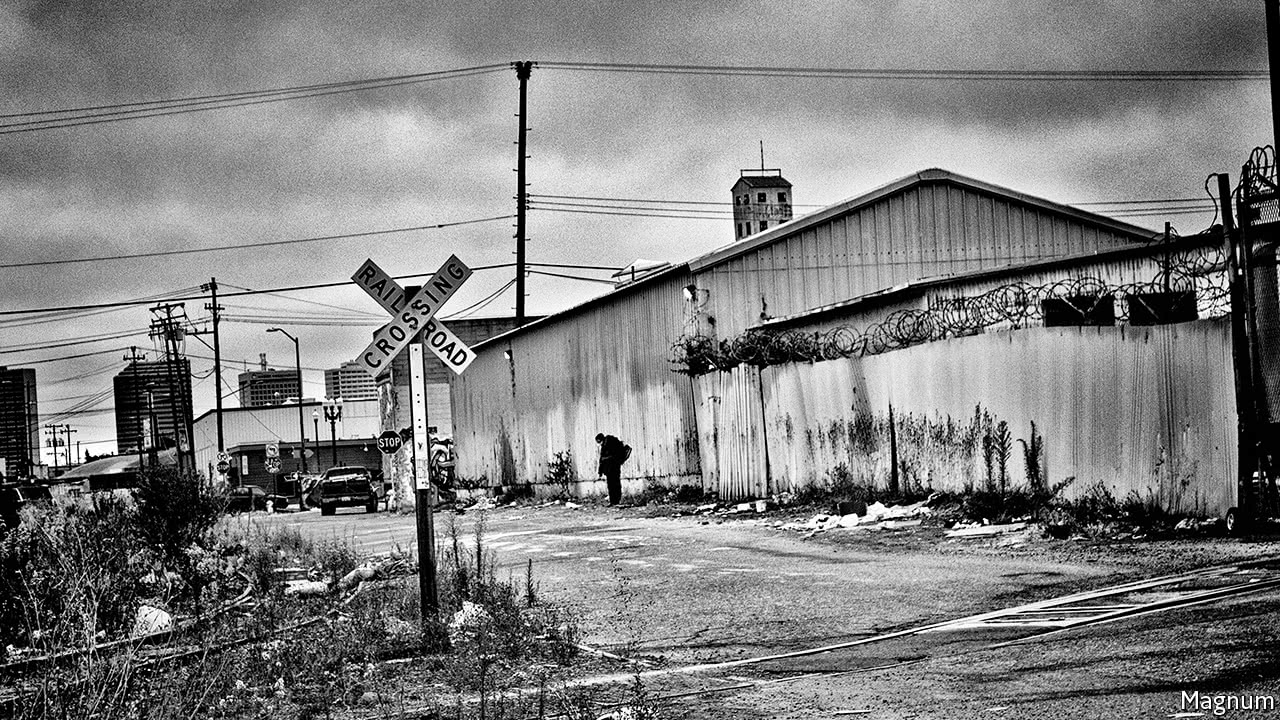
These remedies will not work. The demise of NAFTA will disproportionately hurt the blue-collar workers who back Mr Trump. Getting tough on immigrants will do nothing to improve economic conditions in eastern Germany, where 20% of voters backed the far-right Alternative for Germany. But the self-defeating nature of populist policies will not blunt their appeal. Mainstream parties must offer voters who feel left behind a better vision of the future, one that takes greater account of the geographical reality behind the politics of anger.
Economic theory suggests that regional inequalities should diminish as poorer (and cheaper) places attract investment and grow faster than richer ones. The 20th century bore that theory out: income gaps narrowed across American states and European regions. No longer. Affluent places are now pulling away from poorer ones (see article). This geographical divergence has dramatic consequences. A child born in the bottom 20% in wealthy San Francisco has twice as much chance as a similar child in Detroit of ending up in the top 20% as an adult. Boys born in London’s Chelsea can expect to live nearly nine years longer than those born in Blackpool. Opportunities are limited for those stuck in the wrong place, and the wider economy suffers. If all its citizens had lived in places of high productivity over the past 50 years, America’s economy could have grown twice as fast as it did.
Divergence is the result of big forces. In the modern economy scale is increasingly important. The companies with the biggest hoards of data can train their machines most effectively; the social network that everyone else is on is most attractive to new users; the stock exchange with the deepest pool of investors is best for raising capital. These returns to scale create fewer, superstar firms clustered in fewer, superstar places. Everywhere else is left behind.
Even as regional disparities widen, people are becoming less mobile. The percentage of Americans who move across state lines each year has fallen by half since the 1990s. The typical American is more footloose than the average European, yet lives less than 30 kilometres from his parents. Demographic shifts help explain this, including the rise in two-earner households and the need to care for ageing family members. But the bigger culprit is poor policies. Soaring housing costs in prosperous cities keep newcomers out. In Europe a scarcity of social housing leads people to hang on to cheap flats. In America the spread of state-specific occupational licensing and government benefits punishes those who move. The pension of a teacher who stays in the same state could be twice as big as that of a teacher who moves mid-career.
Perversely, policies to help the poor unintentionally exacerbate the plight of left-behind places. Unemployment and health benefits enable the least employable people to survive in struggling places when once they would have had no choice but to move. Welfare makes capitalism less brutal for individuals, but it perpetuates the problems where they live.
Welcome to the place age
What to do? One answer is to help people move. Thriving places could do more to build the housing and infrastructure to accommodate newcomers. Accelerating the reciprocal recognition of credentials across state or national borders would help people move to where they can be most productive. But greater mobility also has a perverse side-effect. By draining moribund places of talented workers, it exacerbates their troubles. The local tax-base erodes as productive workers leave, even as welfare and pension obligations mount.
To avoid these outcomes, politicians have long tried to bolster left-behind places with subsidies. But such “regional policies” have a patchy record, at best. South Carolina lured BMW to the state in 1992 and from it built a thriving automotive cluster. But the EU’s structural funds raise output and reduce unemployment only so long as funding continues. California has 42 enterprise zones. None has raised employment. Better for politicians to focus on speeding up the diffusion of technology and business practices from high-performing places. A beefed-up competition policy could reduce industrial concentration, which saps the economy of dynamism while focusing the gains from growth in fewer firms and places. Fostering clusters by encouraging the creation of private investment funds targeted on particular regions might help.
Bolder still would be to expand the mission of local colleges. In the 19th century America created lots of public technical universities. They were supposed to teach best practice to farmers and factory managers in small towns and rural areas. They could play that role again today for new technologies, much as Germany already has a network of applied-research institutions. Politicians might even learn from Amazon, whose search for a home for a second headquarters has set off a scramble among cities hoping to lure the giant etailer. Governments could award public research centres—in the mould of America’s National Institutes of Health or Europe’s CERN—to cities which prepare the best plans for policy reform and public investment. This would aid the diffusion of new ideas and create an incentive for struggling places to help themselves.
Perhaps most of all, politicians need a different mindset. For progressives, alleviating poverty has demanded welfare; for libertarians, freeing up the economy. Both have focused on people. But the complex interaction of demography, welfare and globalisation means that is insufficient. Assuaging the anger of the left-behind means realising that places matter, too.