How to interpret a shameful press conference with Vladimir Putin
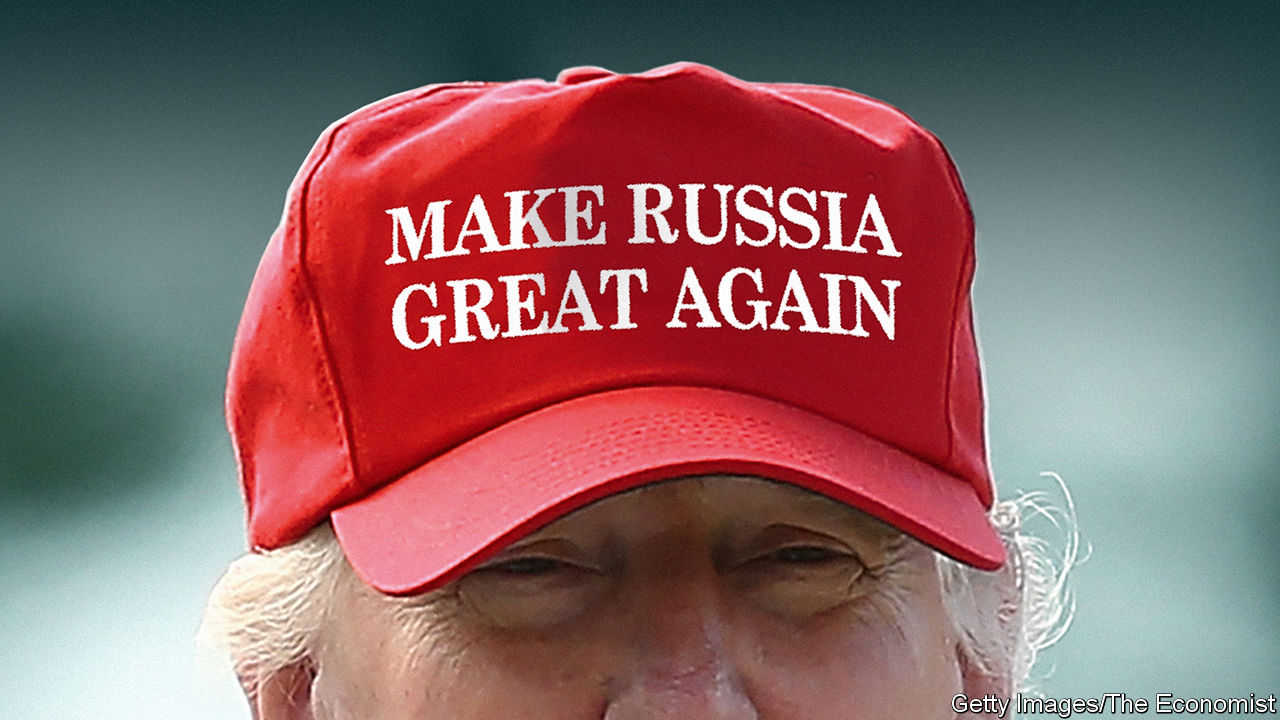
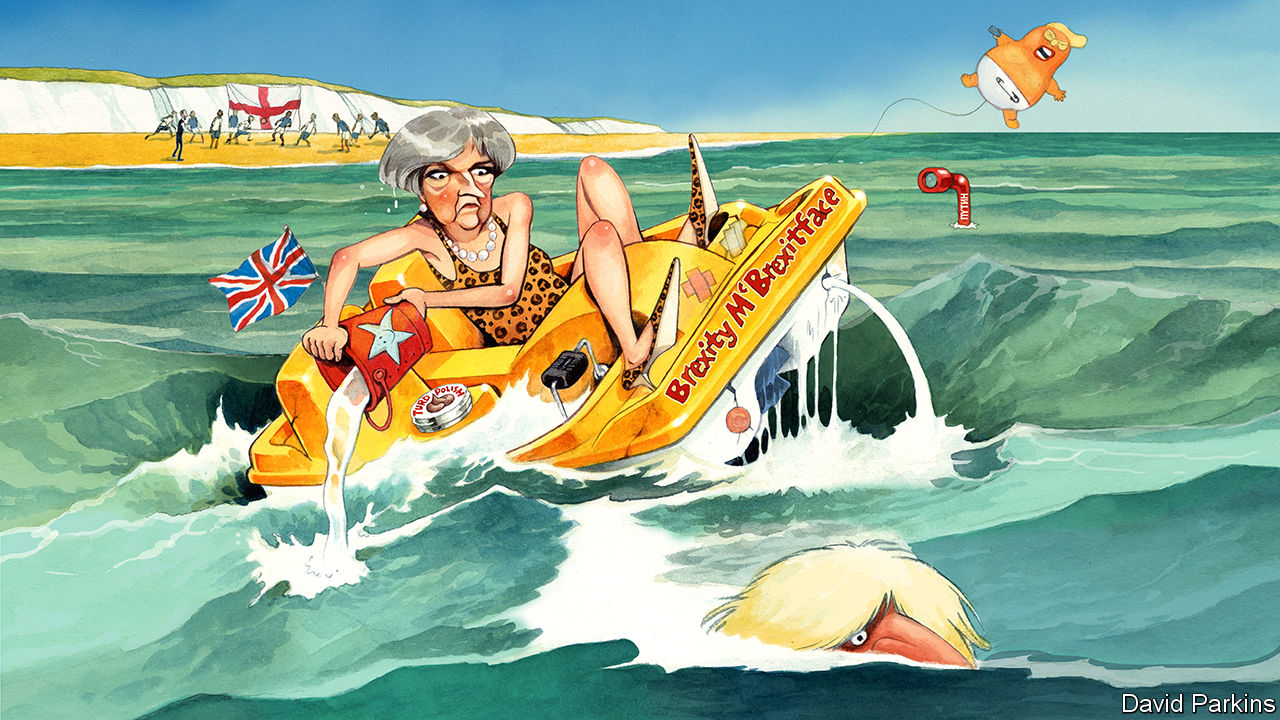
DONALD TRUMP likes to boast that he does things differently from his predecessors. That was certainly true of his trip to Europe. In Brussels he chided Germany for a gas deal that left it “totally controlled by Russia”. In England he humiliated his host, Theresa May, blasting her Brexit plan before holding her hand and hailing “the highest level of special” relationship. From his Scottish golf resort he called the European Union a “foe” on trade. And in Helsinki, asked whether Russia had attacked America’s democracy, he treated President Vladimir Putin as someone he trusts more than his own intelligence agencies. It was a rotten result for America and the world.
Americans were more than usually outraged. At the post-summit press conference in Helsinki, with the world watching and the American flag behind him, their head of state had appeared weak (see article). He was unwilling to stand up for America in the face of an assault that had been graphically described three days earlier by Robert Mueller, the special counsel probing election meddling, in his indictment of 12 Russian military-intelligence officers (see Lexington). Republicans were among Mr Trump’s fiercest critics. “No prior president has ever abased himself more abjectly before a tyrant,” wrote Senator John McCain. Even Newt Gingrich, normally a staunch defender, decried “the most serious mistake of his presidency”. The reaction forced Mr Trump into a convoluted series of climbdowns, which did little to repair the damage.
Yet, for all his hostility towards allies and cosiness with Mr Putin, the trip could have been an even bigger disaster. Fears that Mr Trump might torpedo the NATO summit, as he had the G7 one, proved overblown. He put his name to a communiqué reaffirming the allies’ commitment to mutual defence and their tough stance against Russia. Worries that with Mr Putin he might promise to roll back sanctions or recognise Russia’s annexation of Crimea proved groundless—as far as we can tell (the presidents met with only their interpreters present).
Mr Trump even did some useful things. He was right to press NATO allies to spend more on defence, even if his claim to have raised “vast amounts of money” is an exaggeration. And talking to his Russian counterpart makes sense. To be sure, Mr Trump’s hopes for a tremendous relationship with Mr Putin may end in a familiar disappointment: George W. Bush looked into Mr Putin’s eyes and detected a soul, and Russia invaded Georgia; Barack Obama pressed a “reset” button, and Russia invaded Ukraine. But America and Russia have a lot to discuss, not least on nuclear-arms control.
Mr Putin, fresh from a successful World Cup, thus emerges as the winner in Helsinki. True, he may have scored an own goal in admitting that, yes, he had wanted Mr Trump to win the election. But a self-doubting West, damaged democracy and the spectacle of America’s president deferring to him on the world stage count as a hat-trick at the other end. In Helsinki Mr Putin looked smug. Mr Trump looked, at best, a mug.
Americans were more than usually outraged. At the post-summit press conference in Helsinki, with the world watching and the American flag behind him, their head of state had appeared weak (see article). He was unwilling to stand up for America in the face of an assault that had been graphically described three days earlier by Robert Mueller, the special counsel probing election meddling, in his indictment of 12 Russian military-intelligence officers (see Lexington). Republicans were among Mr Trump’s fiercest critics. “No prior president has ever abased himself more abjectly before a tyrant,” wrote Senator John McCain. Even Newt Gingrich, normally a staunch defender, decried “the most serious mistake of his presidency”. The reaction forced Mr Trump into a convoluted series of climbdowns, which did little to repair the damage.
Latest stories
Mr Trump even did some useful things. He was right to press NATO allies to spend more on defence, even if his claim to have raised “vast amounts of money” is an exaggeration. And talking to his Russian counterpart makes sense. To be sure, Mr Trump’s hopes for a tremendous relationship with Mr Putin may end in a familiar disappointment: George W. Bush looked into Mr Putin’s eyes and detected a soul, and Russia invaded Georgia; Barack Obama pressed a “reset” button, and Russia invaded Ukraine. But America and Russia have a lot to discuss, not least on nuclear-arms control.
America worst
However, these gains come at too high a price. Mr Trump’s behaviour, a quixotic mix of poison and flattery, has further undermined Europeans’ trust in America. When asked about the Mueller probe and the decline in relations with Russia, Mr Trump said feebly that he holds “both countries responsible”. Perhaps his vanity does not allow him to treat seriously a Russian attack that he fears could tarnish his own election triumph. Perhaps, as some suspect, Mr Putin really does have material compromising Mr Trump. Either way, where America once aspired to be a beacon, relativism rules. That leaves all democracies more vulnerable.Mr Putin, fresh from a successful World Cup, thus emerges as the winner in Helsinki. True, he may have scored an own goal in admitting that, yes, he had wanted Mr Trump to win the election. But a self-doubting West, damaged democracy and the spectacle of America’s president deferring to him on the world stage count as a hat-trick at the other end. In Helsinki Mr Putin looked smug. Mr Trump looked, at best, a mug.