Carielle Doe, AFP | ¬Demonstrators hold a poster portraying Liberian President George Weah as they gather outside the Liberian Mansion in Monrovia on June 7, 2019 during an anti-government march to protest at inflation and corruption.
Thousands of Liberians took to the streets of the capital, Monrovia, on Friday to protest against the corruption and economic decline that many blame on their once hugely popular president, former football star George Weah.
ADVERTISING
In a stark contrast to the wild celebrations that greeted Weah’s election victory in 2017, throngs of chanting demonstrators bearing signs calling Weah a “traitor” gathered near the president’s official residence.
Among protesters’ main gripes: a stagnant economy in which most still live in deep poverty and a scandal in which the country last year lost $100 million in newly printed bank notes destined for the central bank.
“Weah is not governing our state the right way,” said Ishmael Hassan, who voted for Weah in 2017 but has since become disillusioned. “The economic situation in our country is going down the drain.”
Liberia’s economy was hit hard by a 2014-16 Ebola outbreak that killed thousands, low prices for its chief exports, iron ore and rubber, and declining foreign aid.
The International Monetary Fund in March revised down Liberia’s economic growth forecast for 2019 to 0.4% from 4.7%. Inflation peaked at 28.5% in December, pushing up the price of everyday items.
Corruption allegations
Many believed Weah, who grew up in a Monrovia slum before becoming a celebrated striker in some of Europe’s biggest football teams, would bring a new dawn. Instead, he faces the same criticisms of corruption that dogged his predecessor Ellen Johnson Sirleaf.
A petition delivered by the protest’s organizers to Justice Minister Frank Musa Dean on Friday accused the administration of misusing public funds, violating press freedoms, and failing to adequately fund health and education programs.
The petition accuses Weah himself of constructing “scores of luxury homes” after he declined to publicly declare his assets.
“I supported this government, but the way things are going, we want to save the state,” said protestor Bob Blue.
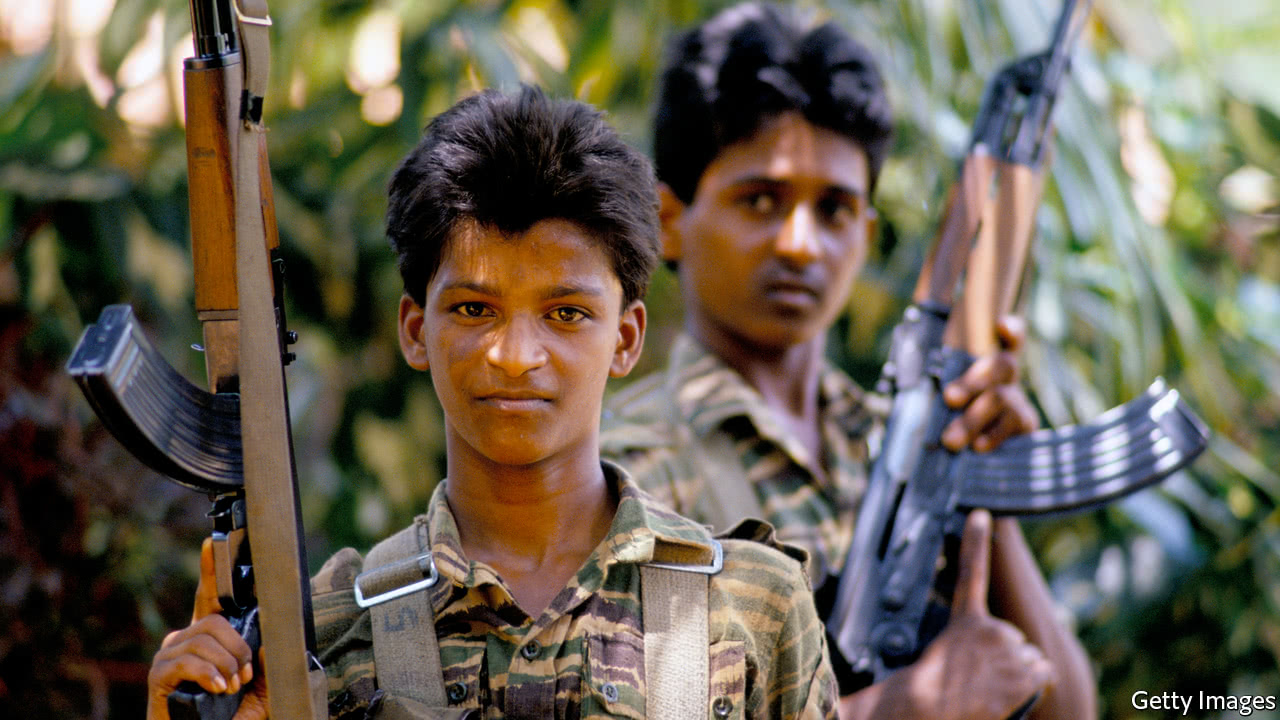
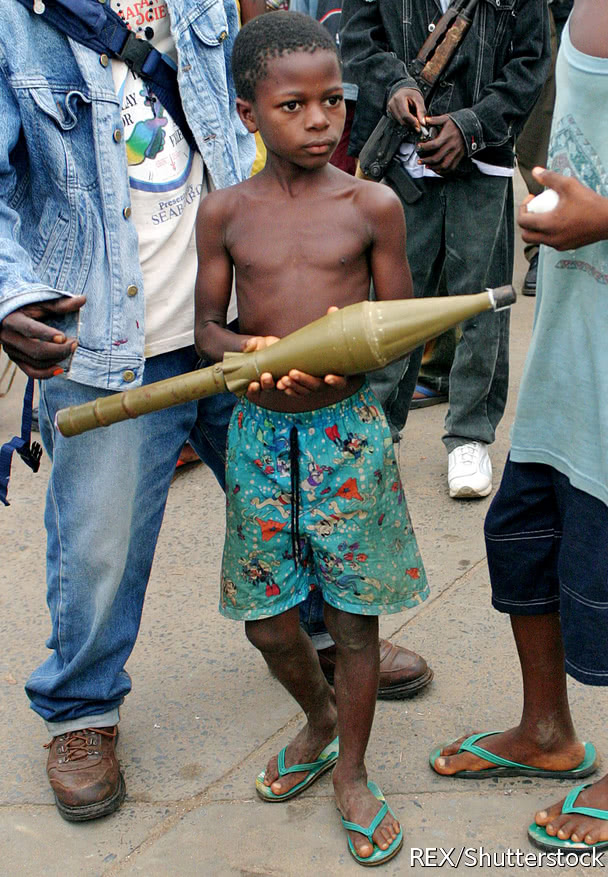
AS A child soldier in Sierra Leone in the 1990s, Eric Wolo smoked a brown powder that made him dizzy during the day, and took cocaine that kept him awake at night when he had to keep watch. When he returned to his home country, Liberia, in 1999, as a rebel fighter in its second civil war in ten years, he took up “Italian white”, a low-grade heroin. Four years later he handed in his AK-47 for $150 and training in how to grow rice and vegetables. But he never became a farmer. When asked, he starts by saying he gave all $150 to his girlfriend to start a business. Then he admits he bought drugs with the money. He now ekes out a living finding passengers for cars going from Ganta, on Liberia’s border with Guinea, to the capital, Monrovia.
Since the late 1980s there have been more than 60 “disarmament, demobilisation and reintegration” (DDR) programmes like Liberia’s, aimed at stopping civil wars reigniting, in dozens of countries. The idea is simple. Part fighters from their weapons. Discharge them from their militias. Help them into civilian life with money and training—or, in the case of children, school.
Aid donors have usually been willing to help pay for the schemes, often as part of a peace deal overseen by the UN. In 2008, the most recent year for which there are comprehensive data, 15 DDR programmes were under way. Their budgets (which covered more than one year) came to $1.6bn.
But the execution is fraught with difficulty. Combatants can be hard to identify. They may be rejected by their families and former neighbours. Their physical and psychological scars may leave them in need of long-term support. If militias are kept together, with former commanders overseeing who takes part and handing out funds, groups can more easily remobilise. But if groups are disbanded, and participation is individual, they may splinter into gangs of drug-traffickers or mercenaries.
Swords into ploughshares
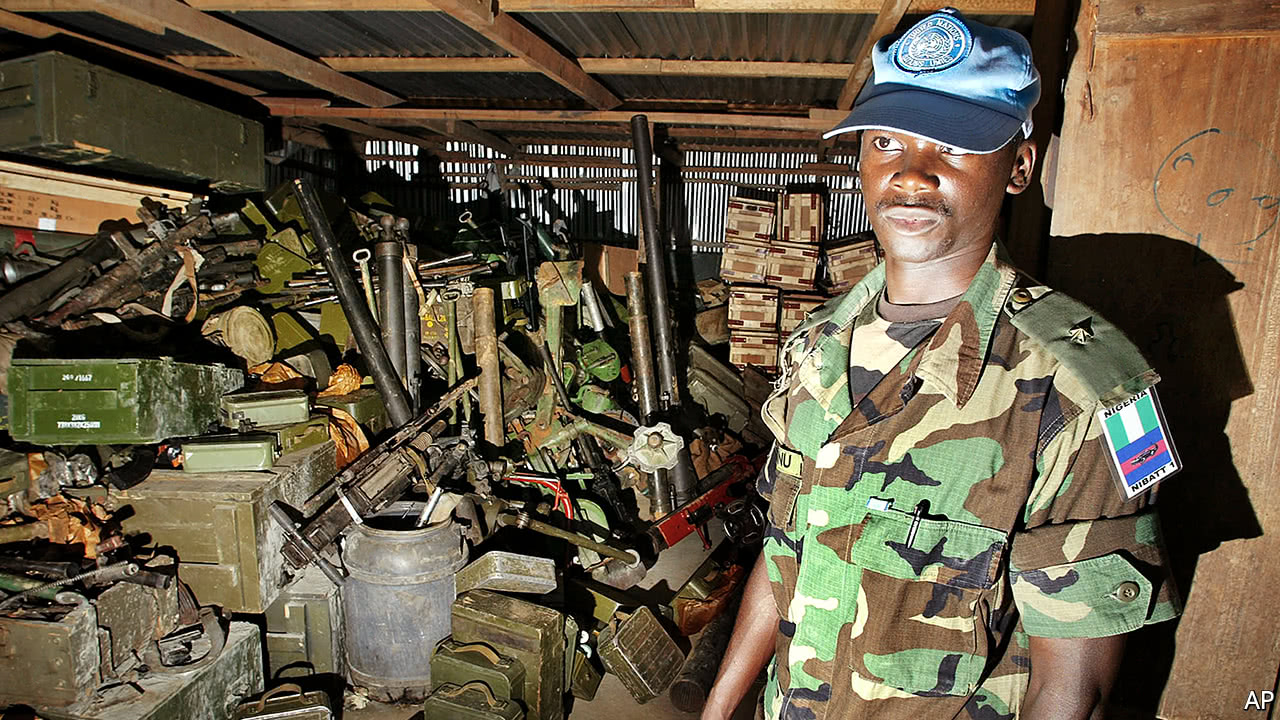
That Liberia is at peace and able to hold a credible election for president is impressive. George Weah, a former footballer, takes office on January 22nd in its first democratic transition since 1944. Almost 250,000 people were killed in its two civil wars. A DDR scheme after the first failed, but one after the second has helped keep the peace. A UN peacekeeping force with a large Nigerian contingent disarmed former combatants and put their weapons beyond use. Liberians still appreciate the role DDR played. But their gratitude is fading, as its limitations become clear.
Many ex-fighters are far from being upstanding members of society. Plenty were unwilling, or perhaps unable, to return to communities they left as children. Like Mr Wolo, many work erratically, in low-skilled jobs. Others do not work at all. Groups congregate to take drugs on the fringes of towns and Monrovia’s slums. William Teage, the chairman of Congo Community on the outskirts of Ganta, where Mr Wolo lives, says its biggest problem is drugs. He estimates that a tenth of the 2,000 residents are ex-combatants. “I have a very negative view concerning [the DDR process],” he says. “It was meant to rehabilitate people. But it did not go on that well.”
A country that has just ended a civil war has a 40% chance of falling back into conflict soon afterwards, says Paul Collier of Oxford University. The risk falls by about a percentage point for each year of peace. Finding ways to lower that risk became even more urgent with the upsurge in internal conflicts that followed the end of the cold war. When the Soviets and Americans stopped funding client states, many belligerents sought other revenue streams, for example smuggling diamonds out of west African war-zones, says Sebastian von Einsiedel of the University of the UN in Tokyo. Such groups were more likely to splinter, because subgroups could fund themselves. The rise of jihadist groups has further complicated matters. Their ideological motivations mean they are harder to negotiate with, and less likely to disarm in return for cash or in-kind benefits.
But even as DDR has got harder, no less is being asked of it. Some successes, and a lack of alternatives, meant it came to be used in circumstances where it was almost bound to fail. The UN attempted a DDR scheme in Haiti in 2004 to disarm drug-traffickers rather than fighters; almost no weapons were handed in. In 2015, 1,775 child soldiers in South Sudan were demobilised, but after it spiralled back into civil war the following year, many rearmed.
Modern DDR programmes were designed in the 1980s and early 1990s for the aftermath of independence wars in southern Africa and civil conflicts in Central America. The belligerent groups were relatively disciplined and hierarchical. More recent schemes have often had to deal with loosely structured outfits. That complicates the most basic task: deciding who should be allowed to take part.
If a weapon must be handed in, fighters who do not have their own will be excluded. Ask only for small arms or some ammunition, and chancers will try their luck. Sometimes, leaders are called upon to identify their underlings. This does not necessarily help. “Nearly every commander I’ve come across had an interest in making the number bigger,” says Paul Jackson of Birmingham University.
Only 150 rounds of small-arms ammunition were needed to take part in Liberia’s second DDR programme. The UN had expected to demobilise 38,000 fighters. In the end the number was more than 100,000—four times as many as the number of weapons handed in. Men were bussed in from Sierra Leone. Children who had not fought were signed up, with commanders taking a cut of the $300 payout. A police ammunition store in Freetown, Sierra Leone’s capital, was raided for ammunition to hand in in Liberia, says Desmond Molloy, who worked on Sierra Leone’s DDR scheme. Riots broke out when at least 12,000 people demanding payment turned up at a centre outside Monrovia. The programme had to be suspended for four months and money flown in from a UN mission in Freetown.
Though DDR is more likely to succeed if the fighting has already stopped, in Colombia it was used with some success as a military tactic. Alvaro Uribe, the president from 2002 to 2010, made a big push against the FARC, a left-wing guerrilla army that had been fighting state forces since 1964. His government encouraged deserters, realising they could provide valuable intelligence. Captured fighters could choose between prison and DDR. But the continuing fighting complicated matters. Some former guerrillas returned to the FARC after failing to find jobs at the end of their programme.
A weakened FARC negotiated a peace deal, which took effect in December 2016. Last August FARC leaders stood with the president, Juan Manuel Santos, and UN representatives, under the scorching sun of the arid north-eastern province of La Guajira, watching the last of their arsenal being carted away. Under the terms of the agreement, the FARC was allowed to organise the reintegration of its fighters collectively. That has helped it transform into a political party: it is putting forward candidates for elections this year.
Many ordinary citizens resent seeing former fighters transformed into political leaders. But the evidence suggests that, when they are, the peace is more likely to hold. Conflict breaks out again in just 21% of cases where peace deals contain provisions for participation in elections, compared with 56% where there are none, according to Aila Matanock of the University of Berkeley, California.
One reason is that politicking may enable mid-level commanders to find an influential role. Individual DDR programmes often lump them in with the rank and file. (The top brass will have ensured special treatment for themselves.) In Liberia Anders Themner of the Nordic Africa Institute, a think-tank based in Uppsala, Sweden, met two ex-commanders with similar backgrounds, both of whom had the chance to mobilise their former fighters as mercenaries in Ivory Coast in 2011. Only one did so. The other saw no need, having become a political power-broker.
The FARC has set up a co-operative to handle the 8m pesos ($2,900) available to each member as startup capital. But its leaders complain they need land to start suitable projects, for example ecotourism ventures, even as the government is confiscating land that FARC leaders held illegally. The impasse, and frustration with the slow pace of reintegration, mean many former guerrillas are leaving the transition camps. According to some estimates only half of the former combatants once living in the camps in Antioquia province remain.
Many have moved to areas with available land to farm. Others have returned to their families. They may not be a problem: research elsewhere shows that former fighters who maintain links with their communities find it easier to reintegrate. But around 1,000 have either refused to disarm or abandoned DDR to join gangs, some of which reportedly offer triple the two-year government stipend of $5,400.
Surplus to requirementsIn Sri Lanka, the biggest problem has been that the government did not really care much about reintegration. In 2009 its army defeated the Liberation Tigers of Tamil Eelam (LTTE; also known as the Tamil Tigers). It was the brutal culmination of 26 years of civil war. The Tigers were trapped in designated no-fire zones, where they were bombed with the civilians they had taken as human shields. The 11,000 surviving fighters, and another 1,000 or so who had surrendered, were forced into rehabilitation, beginning in 2010.
But the programme mainly consisted of a year of internment and indoctrination. Still constantly monitored, the former fighters are isolated from their communities and struggle to find work, since potential employers fear attracting attention from the authorities. Though the army claims it provided training and psychological help, former Tigers say that these mostly focused on attempts to end their devotion to the LTTE. “We were not treated like normal human beings,” says one, who lives in Kilinochchi, a former stronghold of the Tigers in the north of Sri Lanka. “They tried to make us regret having been with the LTTE. But they couldn’t do it.”
The training was often pointless or inappropriate. “Someone [who] used to farm ten or 11 acres, they teach to make handicrafts with coconut shells,” says Vettichelli, who spent 18 years in the Tamil Tigers. She is now studying to become a counsellor and is scathing about the gender stereotypes in the Sri Lankan army’s vocational programmes. “For a woman who has the courage and stamina to keep a gun on her shoulders and shoot enemies, they try to teach her beauty culture and make-up.”
Many ex-fighters clearly require long-term support. But DDR schemes can rarely give it. They are generally run by ex-military types, not specialists in economic development or counselling. And a long-running programme risks turning into a protection racket. In 2009 the Nigerian government offered militants sabotaging oil production in the Niger Delta a monthly stipend of 60,000 naira (about $400 at the time) to disarm. But when payments were slashed in 2016 they returned to blowing up pipelines and other infrastructure. The cut was reversed and attacks subsided.
Bribery or death
At the heart of any DDR programme is a bargain: disarm, cause no more trouble—and you will benefit. Sometimes combatants will pocket the cash and hold themselves ready to remobilise at a moment’s notice. Those who do stand down may be unfit to aid in their country’s reconstruction. Civilians may resent the fighters at whose hands they suffered being paid off. But even a very grubby deal is worth striking if it helps secure lasting peace.
George Weah emerged from Liberia’s slums to become a superstar footballer in the 1990s, and leveraged his status as a revered figure among the country’s young to be voted president.
Weah easily beat Vice President Joseph Boakai in Tuesday’s presidential run-off, the culmination of 12 years spent building political credibility to match his huge popularity.
“You know I’ve been in competitions tough ones too and I came out victorious. So I know Boakai cannot defeat me,” Weah said ahead of the vote. “I have the people on my side.”
The first African player to win both FIFA’s World Player of the Year trophy and the Ballon d’Or, Weah was largely absent from Liberia during the 1989-2003 civil war period, playing for a string of top-flight European teams including Paris Saint-Germain and AC Milan.
After running unsuccessfully for the presidency in 2005, when he was defeated by President Ellen Johnson Sirleaf, Weah says he has “gained experience” since becoming a senator in 2014.
Another fruitless run for the vice-presidency on the ticket of presidential candidate Winston Tubman in 2011 brought him to further prominence among the nation’s voters, many of whom say this time it was “Weah’s turn”.
Weah, 51, has put education, job creation and infrastructure at the centre of his platform in line with Boakai and had won an unassailable 61.5 percent of votes with more than 98 percent of votes counted as of Thursday evening.
Beloved by young and poor
Younger voters overwhelmingly favour Weah, who is idolised in his country as “Mister George”.
A member of the Kru ethnic group, Weah was raised by his grandmother on a reclaimed swamp in one of the worst slums of the capital Monrovia.
“Grassroots citizens identify with George Weah, considering that he is close to their day-to-day experience,” explained Ibrahim Al-Bakri Nyei, a Liberian political analyst at London’s School of Oriental and African Studies (SOAS).
His critics say the high school dropout, who later completed a degree, is unprepared to lead a country.
“George Weah is a good, humble and respectful person that should not be given the Liberian presidency, because he is being controlled by an evil hand,” said Benoni Urey, a losing presidential candidate who switched his allegiance to Boakai.
Urey and others say Weah is being manipulated by Sirleaf so she can continue to push an agenda when she steps down after 12 years in power.
But many voters see a poor boy from the slums who made good against the odds.
“I believe that whenever we give him a chance, he will be able to give a better Liberia to the youth and the homeless,” Andrew Janjay Johnson, a shoeshiner in a Monrovia market, told us at France24.
‘Vague’ platform
Critics also accuse Weah’s Coalition for Democratic Change (CDC) of having too vague a political platform, and have challenged his long absences from the senate since being elected in a race he won over Sirleaf’s son.
Weah has also fended off barbs over his vice-presidential pick, Jewel Howard-Taylor, the ex-wife of jailed former president and warlord Charles Taylor.
Howard-Taylor however is also a respected senator in her own right, bringing him important votes in the key county of Bong, and along with Sirleaf is one of few powerful women in Liberian public life.
Weah is married to Clar Weah, and his son, Timothy, signed a professional football contract with Paris Saint-Germain in July.




![[Gallery] Couple Adopts Triplets. A Week Later, The Doctor Reveals Something They Didn’t See Coming](https://images.outbrainimg.com/transform/v3/eyJpdSI6IjYzZGVhYmE5ZTUxMzVlZmYzYzQ1ZGVkYzBlZjg3M2Y3MDBjMjJiMzFmNDU2NGE5NjAxMjdjM2UwOWQzNjhjOTMiLCJ3IjoyMzAsImgiOjE1MCwiZCI6MS41LCJjcyI6MCwiZiI6NH0.webp "[Gallery] Couple Adopts Triplets. A Week Later, The Doctor Reveals Something They Didn’t See Coming")
![[Gallery] Things Just Aren’t The Same Between William And Kate And Now We Know Why](https://images.outbrainimg.com/transform/v3/eyJpdSI6ImZkZGRmNmU1MDAwZjk1NTQ4NzRkYWY2ZGFmYzZiZTViY2NkMWM4N2E5ZThmNzdhMTYyMjY1OTg4Y2Q0MzE1YTciLCJ3IjoyMzAsImgiOjE1MCwiZCI6MS41LCJjcyI6MCwiZiI6NH0.webp "[Gallery] Things Just Aren’t The Same Between William And Kate And Now We Know Why")