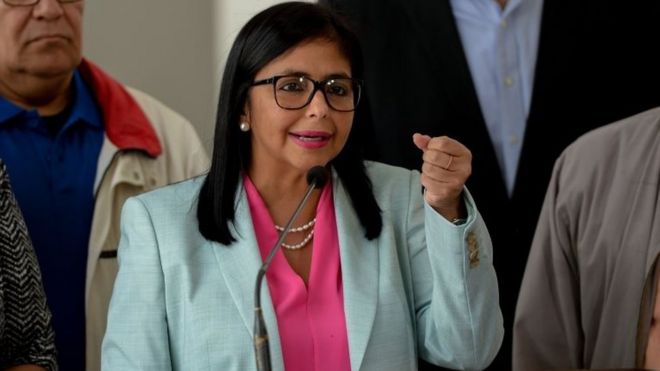
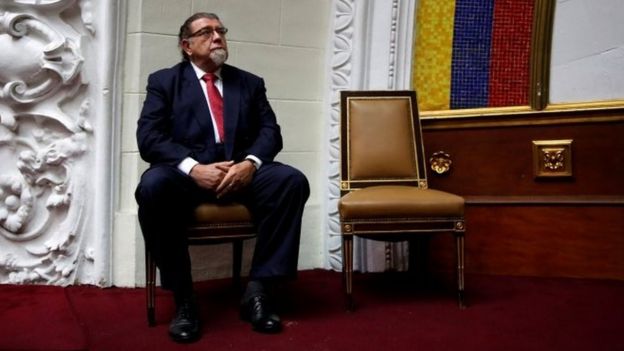
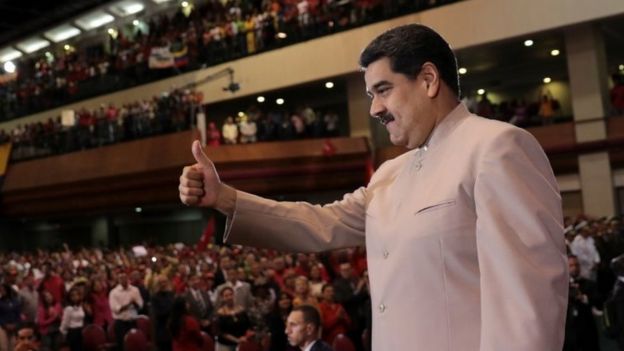
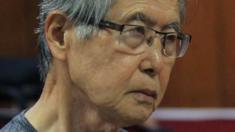
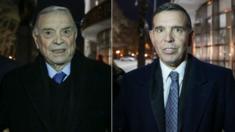
The government of President Nicolas Maduro expressed gratitude to Norway and its support for "dialogue," after Maduro said Communications Minister Jorge Rodriguez was "on a very important mission for peace" in EuropeVenezuelan Presidency/AFP
The government of President Nicolas Maduro on Friday thanked Norway for its mediation efforts to build a "dialogue" with the Venezuelan opposition after both sides sent delegations to Oslo.
"President Nicolas Maduro and the Bolivarian Revolution express their gratitude to Norway and their support for dialogue for peace and sovereignty," Venezuela's Foreign Minister Jorge Arreaza tweeted.
ADVERTISING
It was the first official confirmation from Caracas of its involvement in what Norway referred to as exploratory discussions in Oslo.
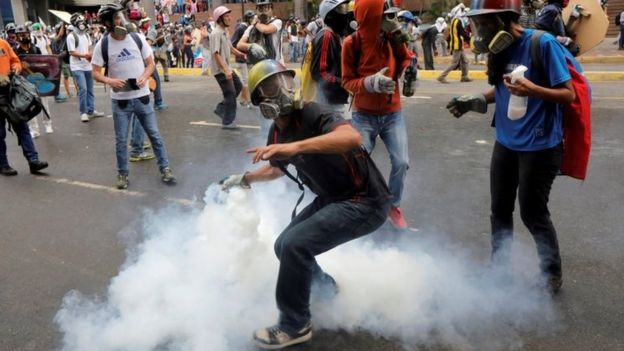
The mediation bid comes after a months-long power struggle between National Assembly leader Juan Guaido and the socialist president, with sometimes deadly street clashes.
Maduro on Thursday made no direct reference to the meetings, but said Communications Minister Jorge Rodriguez was "on a very important mission for peace in the country... in Europe".
So far details of the exact process underway in Oslo have been scant, but US-backed opposition leader Guaido -- recognized as interim president by dozens of countries -- denied on Thursday that any direct negotiations had taken place.
Norway's foreign ministry said in a statement it had had "preliminary contacts with representatives of the main political actors of Venezuela."
These were "part of an exploratory phase, with the aim of contributing to finding a solution to the situation in the country."
Rodriguez and Miranda state governor Hector Rodriguez represented the regime in the discussions, according to media reports.
The opposition said it was being represented by National Assembly vice president Stalin Gonzalez and former lawmaker Gerardo Blyde.
Maduro has been shunned by much of the international community for presiding over elections widely-dismissed as a sham and the oil-rich Latin American country's economic collapse as well as for brutally suppressing dissent.
Shortages of basic goods have forced millions to flee Venezuela.
CARACAS - At least 8 tons of gold were removed from the Venezuelan central bank’s vaults last week, an opposition legislator and three government sources told us at Reuters, in the latest sign of President Nicolas Maduro’s desperation to raise hard currency amid tightening sanctions.
FILE PHOTO: Venezuela's President Nicolas Maduro touches a gold bar as he speaks during a meeting with the ministers responsible for the economic sector at Miraflores Palace in Caracas, Venezuela March 22, 2018. REUTERS/Marco Bello/File Photo
The gold was removed in government vehicles between Wednesday and Friday last week when there were no regular security guards present at the bank, Legislator Angel Alvarado and the three government sources said.
“They plan to sell it abroad illegally,” Alvarado said in an interview.
ADVERTISEMENT
ADVERTISING
The central bank did not respond to requests for comment.
Alvarado and the government sources, who spoke on condition of anonymity, did not say where the central bank was sending the gold. They said the operation took place while central bank head Calixto Ortega was abroad on a trip.
In 2018, 23 tons of mined gold were transported from Venezuela to Istanbul by plane, according to sources and Turkish government data.
ADVERTISEMENT
The central bank bought part of this gold from primitive gold-mining camps in the south of Venezuela and exported it to Turkey and other countries to finance the purchase of basic food supplies, given widespread shortages, according to more than 30 people with knowledge of the trade.
Some 20 tons of monetary gold were also removed from the central bank’s vaults in 2018, according to the bank’s data, leaving 140 tonnes remaining, the lowest level in 75 years.
Abu Dhabi investment firm Noor Capital said on Feb. 1 that it bought 3 tons of gold on Jan. 21 from the Venezuelan central bank and would not buy more until Venezuela’s situation stabilized. Noor Capital said its purchase was in accordance with “international standards and laws in place” as of that date.
Maduro’s government has been seeking to repatriate some 31 tons of gold in the Bank of England’s vaults on fears it could be caught up in international sanctions on the country.
INSIGHT: Trump, Kim kick off second summit
Venezuelan Foreign Minister Jorge Arreaza said on Wednesday, during a United Nations meeting in Geneva, that the Bank of England had blocked the government’s assets.
Maduro’s government has resorted to selling off gold after falling oil production, the country’s wider economic collapse and mounting sanctions hit public income and made it hard for the country to access credit.
The United States, which is backing an attempt by opposition leader Juan Guaido to force Maduro to step down and call new elections, has warned bankers and traders not to deal in Venezuelan gold.
U.S. oil major Chevron Corp has evacuated executives from Venezuela after two of its workers were imprisoned over a contract dispute with state-owned oil company PDVSA, according to four sources familiar with the matter.
The logo of Chevron is seen at the company's office in Caracas, Venezuela April 25, 2018. REUTERS/Marco Bello
Chevron asked other employees to avoid the facilities of its joint venture with the OPEC nation’s oil firm, the sources said.
The arrests, in a raid by national intelligence officers, were the first at a foreign oil firm since Venezuela’s government launched a purge last fall that has resulted in detentions of more than 80 executives at PDVSA and business partners accused of corruption.
The Chevron workers may face charges of treason for refusing to sign a supply contract for furnace parts drawn up by PDVSA executives, Reuters reported earlier this week. The workers balked at the high costs of the parts and a lack of competitive bids.
Venezuela’s foreign minister, Jorge Arreaza, linked the Chevron arrests to the government anti-corruption probe for the first time on Wednesday.
“In our oil industry and in its relationships with other countries, there has been corruption,” Arreaza said at a news conference at the United Nations headquarters in New York that was broadcast on Venezuela state television. “The decisions of the prosecutor’s office are based on serious investigations to fight corruption ... These two people involved have the right to defense and due process.”
Of Chevron’s evacuation of executives, Arreaza said: “The logical decision would be to turn themselves over to authorities and demonstrate their innocence ... not to flee.”
Chevron spokeswoman Isabel Ordonez responded to the minister’s comments with a written statement that the firm “abides by a code of business ethics, under which we comply with all applicable U.S. and Venezuelan laws.”
Chevron’s move to evacuate its expatriate workforce underscores the how arduous it has become for foreign oil firms and their workers to sustain operations through Venezuela’s accelerating political and economic meltdown. The affected staff numbers about 30 people in the coastal city of Puerto la Cruz.
Chevron’s Ordonez said the company had an executive team overseeing operations in Venezuela but declined to provide details on the leadership there or the number and type of workers the company had withdrawn.
Last week, the company said it was working for the release of the detained workers, Carlos Algarra and Rene Vasquez, who are represented by Chevron lawyers.
Chevron has no plans to exit the country, according to a person familiar with the thinking of its board of directors. The oil company has not pulled out of other tough environments in the past, the person said - citing the jailing of employees in Indonesia in 2013 - and the firm believes Venezuela will eventually stabilize.
The logo of Chevron is seen at the company's office in Caracas, Venezuela April 25, 2018. REUTERS/Marco Bello
Chevron, the world’s seventh-largest publicly traded oil producer with 2017 revenue of $135 billion, operates in Venezuela mostly through minority stakes in five projects across the OPEC-member nation.
The firm has about 150 employees in its Puerto la Cruz headquarters and has two more offices in the country. Its earnings from Venezuela dropped 18 percent last year, to $329 million, according to regulatory filings.
The arrests mark an escalation of tensions between PDVSA and foreign companies over control of supply contracts and the joint ventures’ governance, sources familiar with the dispute told Reuters.
Outside firms say they are increasingly faced with impossible dilemmas. If their executives sign contracts without following their companies’ due process rules, they run the risk of violating compliance standards meant to control costs and guard against corruption. If they don’t sign, they stoke tension with their partners at PDVSA, which has a controlling interest in all joint ventures.
Companies evaluating an exit from Venezuela have limited options because few if any international firms would pay anything close to full value for assets in the country amid the ongoing turmoil, according to interviews with three executives of oil firms that have operated in Venezuela. But continuing operations often means stomaching steep losses, taking massive write-downs - and, now, the threat of having staff arrested by the embattled socialist government of President Nicolas Maduro.
PDVSA’s deteriorating infrastructure and cash flow have caused oil production to plunge 33 percent in a year, to 1.51 million barrels per day (bpd) in March, according to official data reported to OPEC. Venezuela’s oil output so far this year is at a 33-year low.
The falling production and arrests of PDVSA executives on allegations of corruption picked up speed late last year after Maduro named a military chief with no oil industry experience, Major General Manuel Quevedo, as the nation’s oil minister and president of PDVSA.
Several of Chevron’s foreign staff and some local executives and their families left Venezuela starting last week after the arrests, the four sources familiar with their departures told us at Reuters. They described the situation as temporary, and said executives may return if proposed talks between Chevron and PDVSA to resolve the dispute are successful.
Chevron executives have had high-level meetings with Venezuelan government officials this week, said two of the people familiar with the matter.
Chevron and other firms aim to avoid a repeat of what happened to Exxon Mobil Corp and ConocoPhillips in Venezuela in 2007, when the government of then-President Hugo Chavez expropriated their assets after they could not reach an agreement to convert their projects into PDVSA-controlled joint ventures.
“No company can leave because it would lose the assets,” said a former negotiator of Exxon’s 2007 exit from Venezuela. “At this point, there are just a few options.”
FEAR OF ARREST
Chevron employees remaining in Venezuela are concerned they may be vulnerable to detention following the departure of senior management, according to interviews with employees and family members.
The arrested Chevron workers oversaw operations and procurement at Petropiar, an oil production and processing project co-owned by PDVSA and Chevron.
The logo of Chevron is seen at the company's office in Caracas, Venezuela April 25, 2018. REUTERS/Marco Bello
Chevron has asked employees assigned to Petropiar to temporarily work from the firm’s Puerto la Cruz office rather than show up at its partner’s oil production and processing facilities, according to one person familiar with the situation.
The two men had refused to sign a multi-million dollar contract under an emergency decree to buy imported parts required by Petropiar, according to six sources with knowledge of the contract dispute. Such decrees, which skip competitive bidding, have been cited by Venezuelan and U.S. prosecutors as a means of extracting bribes in some recent corruption cases.
Algarra and Vasquez are now being held in a detention center in Barcelona run by Venezuela’s intelligence unit, known as Sebin. Coworkers and relatives have brought them food to supplement what they are provided, a person familiar with the matter said.
WRITE OFF ASSETS, CUTTING STAFF
Several other foreign energy companies have written down the value of their Venezuela assets by hundreds of millions of dollars or halted most operations, keeping only a skeletal staff in the country.
Spain’s Repsol took a pre-tax charge of about $1 billion on its Venezuelan assets in the prior quarter. Italy’s ENI said it was owed 500 million euros ($615 million) in delinquent payments from PDVSA last year.
Service provider Schlumberger wrote down its Venezuelan holdings in the fourth quarter by $938 million. Halliburton earlier this month said it wrote off all remaining assets in the country, adding a $312 million charge on top of $647 million in charges last year.
Other international oil firms, including France’s Total SA, have withdrawn foreign staff in recent years and reduced investment as living conditions have deteriorated.
“I can tell you it is difficult for our people because of lack of power, lack of water,” said Chief Executive Patrick Pouyanne last week at an oil summit in Paris.
The company would maintain a presence there, however, on the hope the crisis would ease.
“It is important to stay in a country even in difficult times,” Pouyanne said, “because people will remember it.”
Venezuela has expelled the Brazilian ambassador to Caracas, Ruy Pereira, and Canadian charge d'affaires Craib Kowalik.
The move was announced by the head of Venezuela's powerful Constituent Assembly, Delcy Rodriguez.
Ms Rodriguez accused Brazil of violating the rule of law and Canada of interfering in Venezuela's internal affairs.
Both countries have strongly criticised the move.
The decision to expel Ambassador Pereira may have been triggered by Brazil's recent complaint that President Nicolás Maduro was "constantly harassing the opposition".
Canada imposed sanctions on senior Venezuelan officials a few months ago.
'Rude and vulgar'
Venezuela's diplomatic relations with Brazil have deteriorated since Brazil's centre-right President, Michel Temer, replaced left-wing leader Dilma Rousseff.
Her impeachment was described by Mr Maduro as a "right-wing coup".
Image copyrightREUTERSImage captionBrazil's government said the expulsion of its ambassador showed the authoritarian nature of Maduro's administration
"Diplomatic relations with Brazil will not be restored until the government reinstates the constitutional order it has effectively broken," said Ms Rodriguez at a news conference on Saturday.
The Brazilian government said the move showed once again the authoritarian nature of President Maduro's administration.
Ms Rodriguez accused Mr Kowalik of "permanent and insistent, rude and vulgar interference in the internal affairs of Venezuela".
Relations with Canada have been difficult for months. Ottawa imposed sanctions on Venezuelan officials earlier this year for alleged human rights violations and corruption.
Foreign Minister Jorge Arreaza said in November that the sanctions were illegal and accused the Canadian government of "shameful and utter submission to Donald Trump's administration".
Canada responded to the expulsion of its charge d'affaires by saying it would not be cowed into easing pressure on the Maduro government.
Image copyrightRONALD GRANTImage captionMore than 120 people have been killed during anti-government protests this year
Canada and Brazil were among many countries critical of Mr Maduro's decision to convene a Constituent Assembly, which effectively replaced the opposition-controlled National Assembly.
The announcement prompted mass street protests, which killed more than 120 people in four months.
The opposition boycotted the poll in July and also held an unofficial referendum in which they said more than seven million Venezuelans voted against the constituent assembly.
The European Union and major Latin American nations have said they will not recognise the new body.
The US imposed sanctions on Mr Maduro and the Trump administration labelled him a "dictator".
Mr Maduro's six-year term ends in 2019. He is due to run for re-election next year.
The opposition has accused Mr Maduro and his predecessor, the late Hugo Chavez, of destroying the country's economy with their socialist policies.
Venezuela has one of the world's highest inflation rates and for years has suffered from a shortage of basic goods, including medicines.
Image copyrightREUTERSImage captionMr Maduro is expected to seek another six-year term in 2018


![[Gallery] The Leaked North Korea Photos Kim Jong Doesn't Want Us to See](https://images.outbrainimg.com/transform/v3/eyJpdSI6ImU3ZWM4OTUyNWRiYWQyZmY5ZGQ1Zjg1ZDhkMTIzNzNlNjcyZjQyOGVlMjc3MDM5ZDMwMWNmNDIwMTE3YWNjMzAiLCJ3IjoyMzAsImgiOjE1MCwiZCI6MS41LCJjcyI6MCwiZiI6NH0.webp "[Gallery] The Leaked North Korea Photos Kim Jong Doesn't Want Us to See")
![[Gallery] Ranked: World's Most Ferocious Special Forces Units](https://images.outbrainimg.com/transform/v3/eyJpdSI6IjA4ZDcyNTQ5NTM0ZDEwNDE1M2IwNWM5ODI1MTI0MGU3MjY3MDUyZDczZGMwOTY0YzhiOTBmNDFhYjU1N2QzY2YiLCJ3IjoyMzAsImgiOjE1MCwiZCI6MS41LCJjcyI6MCwiZiI6NH0.webp "[Gallery] Ranked: World's Most Ferocious Special Forces Units")