Biodun Iginla, BBC News

Biodun Iginla, BBC News
Showing posts with label Norway. Show all posts

Friday, May 17, 2019

Maduro government welcomes Norway 'dialogue' efforts


The government of President Nicolas Maduro expressed gratitude to Norway and its support for "dialogue," after Maduro said Communications Minister Jorge Rodriguez was "on a very important mission for peace" in Europe
The government of President Nicolas Maduro expressed gratitude to Norway and its support for "dialogue," after Maduro said Communications Minister Jorge Rodriguez was "on a very important mission for peace" in Europe Venezuelan Presidency/AFP
ADVERTISING
Caracas 
The government of President Nicolas Maduro on Friday thanked Norway for its mediation efforts to build a "dialogue" with the Venezuelan opposition after both sides sent delegations to Oslo.
"President Nicolas Maduro and the Bolivarian Revolution express their gratitude to Norway and their support for dialogue for peace and sovereignty," Venezuela's Foreign Minister Jorge Arreaza tweeted.
ADVERTISING
It was the first official confirmation from Caracas of its involvement in what Norway referred to as exploratory discussions in Oslo.
The mediation bid comes after a months-long power struggle between National Assembly leader Juan Guaido and the socialist president, with sometimes deadly street clashes.
Maduro on Thursday made no direct reference to the meetings, but said Communications Minister Jorge Rodriguez was "on a very important mission for peace in the country... in Europe".
So far details of the exact process underway in Oslo have been scant, but US-backed opposition leader Guaido -- recognized as interim president by dozens of countries -- denied on Thursday that any direct negotiations had taken place.
Norway's foreign ministry said in a statement it had had "preliminary contacts with representatives of the main political actors of Venezuela."
These were "part of an exploratory phase, with the aim of contributing to finding a solution to the situation in the country."
Rodriguez and Miranda state governor Hector Rodriguez represented the regime in the discussions, according to media reports.
The opposition said it was being represented by National Assembly vice president Stalin Gonzalez and former lawmaker Gerardo Blyde.
Maduro has been shunned by much of the international community for presiding over elections widely-dismissed as a sham and the oil-rich Latin American country's economic collapse as well as for brutally suppressing dissent.
Shortages of basic goods have forced millions to flee Venezuela.

Thursday, February 22, 2018

Analysis: Britain and Europe

by Emily Straton and Biodun Iginla, Political News Analysts, The Economist Intelligence Unit, London

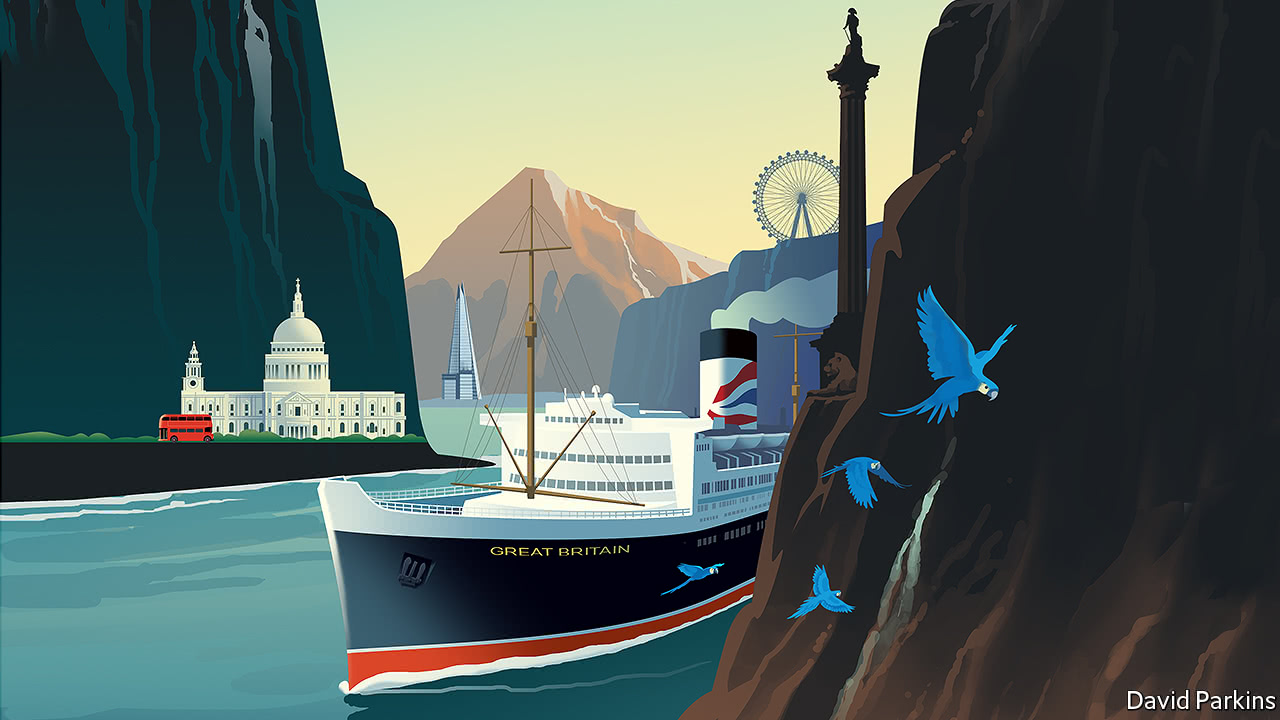
The right way to do Brexit

Britain can “take back control” from Europe without cutting all ties
AS WE went to press, the cabinet was due to enter an extended session in order to hammer out what kind of Brexit is best for Britain. Ministers are at loggerheads over the relationship the country should have with the European Union. Time is short. With just over a year until Britain leaves the EU, leaders of the 27 other member states, who will meet in March, are frustrated. Britons on both sides of the Leave/Remain divide need to plan ahead. All they get is blather and contradictions.
The government is groping towards a “hard” Brexit, leaving both the single market and customs union. The prime minister, Theresa May, seems to believe that this is the only way to honour the result of the referendum. On that view, a “soft” exit, into an arrangement closer to that of Norway, is unacceptable because it fails to secure the independence of the courts, the freedom to strike new trade deals and the ability to limit immigration. It would render Britain a “vassal state” that, to add insult to injury, would have to pay the EU a vast annual levy.

Latest stories

See more
Yet a closer look at Norway shows that this depiction of a soft Brexit is simply wrong. Mrs May is right to say that Britain will end up with its own model rather than copying anyone else’s. But instead of ignoring other countries, she should learn from them. And Norway, it turns out, is a good place to start.
Think again
In 1994 Norwegians voted against joining the EU, by the same narrow margin as Britain chose to leave it in 2016. Whereas the debate in Britain has been dominated by hardliners, Norwegians took that as a cue to compromise (see article).
Their country is outside the EU, but inside the single market, allowing it to trade freely with the continent. For Britain, by the government’s estimate, leaving the single market would mean that GDP 15 years after Brexit would be 3-6% lower than if it stayed in it. (Brexiteers counter this with rosy predictions for a hard Brexit, but their models are based on far-fetched assumptions, such as the total abolition of tariffs.) Norway set up carve-outs to keep control over areas it prized, such as farming and fishing. It agreed to follow most other EU rules, open its borders to EU migrants and make hefty annual payments.
How does that square with Leavers’ demands? Start with the money. Per person, Norway’s contributions to the EU are about three-quarters of what Britain pays now. Rather than going into the central EU budget, most of the cash is tied to particular research or educational programmes, such as the Erasmus student exchanges, or sent to poorer countries in the form of grants that are controlled by Norway, not the EU. A country with $1trn in oil wealth may shrug off such payments more easily than one grappling with a budget deficit. But Britain has already said that it will pay for access to the single market and take part in specific programmes.
Next come EU laws. Mrs May has said Britain must escape the jurisdiction of the European Court of Justice (ECJ). Norway’s trade with Europe is instead governed by the court of the European Free Trade Association (EFTA). As a matter of principle, the EFTA court’s rulings are advisory, and it lacks the power to fine member states that do not comply. Britain could expect to nominate a judge to the court, which it could not to the ECJ. As a matter of practicality, British exporters will have to follow the rules of the single market even if they are not in it.
More important, Norway is not the “vassal state” that Brexiteers claim. It is involved in drawing up EU laws and regulations, particularly in areas such as energy, where it knows the ropes. It has no seat in the European Parliament or Council, but most regulations are passed without a formal vote. Instead they are negotiated in committees where what counts is expertise and knowledge. Both Norway and Switzerland wield influence in Brussels. Britain’s clout would be greater still, especially in areas that matter to it, like finance.
It is the same with free movement of people. At least in theory, Norway might be allowed an emergency brake against a sudden upsurge in migration. In practice Britain could anyway take measures that are available under EU rules, such as restricting property purchases or expelling those who have not found a job after six months. Net migration to Britain is falling and worry about immigrants is subsiding. A majority of all voters, including a third of those who voted to leave, would accept free movement in return for free trade.
In one area, however, Britain would need a closer arrangement. Norway is not part of a customs union with the EU, so vehicles crossing at the border with Sweden and Finland are subject to checks. This would not suit Britain. Its borders are busier than Norway’s and its firms more integrated into European supply chains. Worse, customs controls in Northern Ireland would jeopardise the peace process, and hence the security of both British and Irish citizens. The government has ruled out a customs union with the EU, claiming it would preclude signing trade deals with third countries. That, too, is wrong-headed. The customs union applies only to goods; Britain would still be free to strike deals in services, which the government says is the priority in a longed-for deal with America.
A final benefit is choice. Britain is leaving just as the EU is becoming a looser union of countries moving at different speeds. Euro-zone members are heading for closer integration; others outside it hang back. In a multi-speed Europe, being in the single market and the customs union would put Britain in an outer lane, rather than forcing it off the road altogether. Later, it could move closer or farther away, as it wished. To hardliners, who want out at any cost, this flexibility is dangerous. To pragmatists who accept that the future is uncertain, it is valuable.
And think a third time
A regime akin to Norway’s, fortified by a customs agreement, does not honour every promise made in the heat of the Brexit campaign. We know of no deal that could. But it would mean doing what Britain voted for: leaving the EU. This newspaper argued against that course. Now that the country is set on it, it needs a proven, workable model for being out of Europe’s political project but in its economy. Norway would be a good place to start.
You’ve seen the news, now discover the story
Get incisive analysis on the issues that matter. Whether you read each issue cover to cover, listen to the audio edition, or scan the headlines on your phone, time with The Economist is always well spent.
Enjoy 12 weeks’ access for $12
+ receive a free notebook
Reuse this content

Thursday, December 28, 2017

Failed satellite programmed with 'wrong co-ordinates'


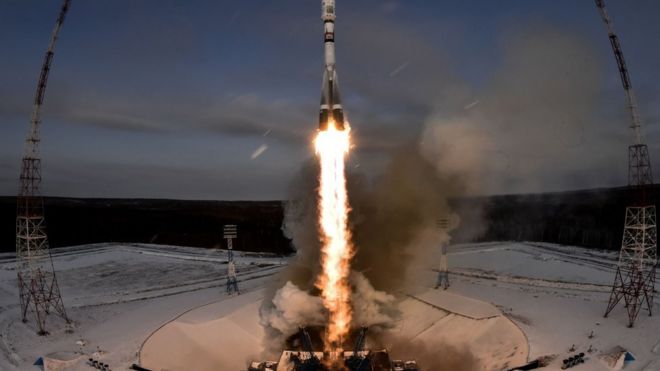
Rocket launchImage copyrightGETTY IMAGES
Image captionThe rocket carrying the satellite and other equipment launched from Vostochny cosmodrome
by Maria Ogryzlo and Biodun Iginla, BBC News Technology reporters, Moscow
The loss of a multi-million pound weather mapping satellite was due to programming errors, the Russian deputy prime minister has said.
Dmitry Rogozin said Meteor-M had been programmed for take-off from a different space station.
Speaking to Russian state TV, he blamed "human error".
"The rocket was programmed as if it was taking off from Baikonur," he told the Rossyia 24 TV channel.
In fact the rocket was actually taking off from new base Vostochny, in the east of the country.
It contained eighteen smaller satellites belonging to research and commercial companies from Russia, Norway, Sweden, the US, Canada, Germany and Japan.
Russian space agency Roscosmos said last month that it had lost contact with the weather satellite, which was worth 2.6 billion rubles ($58m, £43m).
Russia launched its first satellite from Vostochny in April last year, after delays and massive costs overruns. That launch also proved embarrassing when a technical problem forced it to be delayed by a day, in the presence of president Vladimir Putin.

Thursday, July 28, 2011

Flowers for freedom

Norway after terrorism

By Biodun Iginla, BBC News and The Economist

As Norwegians mourn their dead, they insist that they will not give up the openness of their society

“WITH the strongest weapons in the world—freedom of speech and democracy—we are staking out the course for Norway after 22 July 2011.” Jens Stoltenberg, Norway’s prime minister, echoed the sentiments of most of his compatriots when he spoke at a vigil in Oslo this week. Anders Behring Breivik, a 32-year-old Norwegian and far-right Islamophobe, had admitted killing at least 76 people in a bomb attack on government buildings in the capital and a machinegun massacre on nearby Utoya island, where young members of the Labour Party were at a holiday camp.

The public’s resolve to preserve Norway’s cherished freedom, openness and tolerance was as striking as the grief. In Oslo 150,000 people held roses in a mass symbol of remembrance. The gesture was replicated in town gatherings the length and breadth of the country, from Svalbard, halfway to the north pole, to villages on its southern shores. “I am infinitely grateful to be living in a country where, at a critical time, people take to the streets with flowers and candles,” said Mr Stoltenberg.

Mr Breivik is in police custody, in solitary confinement without access to news or the internet for the next eight weeks. Though he has confessed to the killings, he denies he committed a crime. He will probably be charged under a recent terrorism provision in the criminal code that allows a 30-year prison sentence. There are other provisions that could keep him locked up for the rest of his life. The Norwegian police have yet to answer conclusively the vital question of whether he acted alone or with accomplices.

A facet of Norwegian openness—its tolerance of diversity—was one of the things that fuelled Mr Breivik’s mass slaughter. The Labour Party, the dominant force in Norwegian politics for decades, came into his cross-hairs because of its staunch defence of both diversity and tolerance. AUF, the party youth wing that organised the camp on Utoya island, was a doubly attractive target in his twisted ideology: it is fervently anti-racist and many members come from Norway’s ethnic minorities.

“Our organisation has been struck in the heart with the murder of the new young generation of politicians. It is not just an attack on the Labour Party but on the whole of Norway and on our democracy,” said Raymond Johansen, the party secretary. Gro Harlem Brundtland, a former long-standing prime minister, delivered a keynote address to the young party members on the day of the massacre. Though she had been specifically picked by Mr Breivik (who called her the murderer rather than the mother of the nation), she had fortunately left the island before he got there. Much later she revealed that she had chatted on the day to half a dozen youngsters who told her of their plans to stand for parliament in the 2013 general election. At least two of these, she said, were among the dead.

The cold-blooded targeting of the stars of Norway’s political future shocked politicians of every hue. For the time being they are standing together in disgust, everyday differences cast aside. Though campaigning for local elections on September 12th was due to start soon, the parties agreed unanimously to postpone all pre-election debate until the second half of August.

One thing that stands out is Norway’s determination not to let Mr Breivik’s appalling deeds affect its unusual way of life. The country’s easy informality and open-access attitudes can surprise foreigners used to more strictly controlled environments. After the attack the police temporarily stepped-up their vigilance at the borders, checking the identity of some, but far from all, travellers. The Royal Palace shut briefly but four days later it was business as usual, with Norwegians and tourists milling around the forecourt.

Leading figures do have security guards but very discreet ones. Crown Princess Mette-Marit, for instance, moved freely among mourners at a gathering in the home town of her step-brother, Trond Berntsen, who was on guard at the Labour Party youth camp on Utoya island and one of the first to be killed.

Just before he went on his killing spree, Mr Breivik published a 1,500-page manifesto on the internet. In graphic detail, the murderer cast himself as a latter-day crusader who would redeem European civilisation from invasion by Muslim hordes.

But Mr Breivik’s declamation of invaders who are conquering by reproduction is at odds with reality. The country’s demographic make-up has shifted over the past 30 years; 12.2% of its 4.9m people are now immigrants and their Norwegian-born children. But this figure covers migrants from all countries, and some 40% of them are from the West. By nationality, the biggest group of immigrants are Poles, followed by Swedes and then Pakistanis.

Moreover, Mr Breivik’s prophecies of conquest by multiplying is confounded by rapidly falling immigrant birth rates. Statistics show that newcomers from countries that are culturally attuned to having lots of children quickly fall into line with Norwegian norms once residency is established.

More policemen in future?

That does not mean that Norwegian immigration policy is trouble-free: there has been friction at many levels. The failure (so far) of the Norwegian authorities to expel Mullah Krekar, a fractious Islamic cleric, has caused agitation. Mr Krekar, who came to Norway as a refugee, is wanted for murder in Iraq and was deemed “a threat to national security” by the Norwegian high court. There has also been violence between various ethnic groups, but the only serious incident in recent years was the stabbing to death of Benjamin Hermansen, a boy of mixed Norwegian-Ghanaian parentage, by a neo-Nazi gang. Unemployment is higher and poverty greater among non-Western immigrants, but most charts show things moving, rather rapidly, in a fairer direction.

Mr Stoltenberg this week announced an independent inquiry into the attacks, amid criticism of the police response. In thinking about the future, Norwegians may look to their immediate neighbours, examining their experiences of sudden bloodshed and the paths they took afterwards. In Sweden the murder in 2003 of the country’s popular foreign minister, Anna Lindh, in the middle of a euro referendum campaign caused much revulsion and soul-searching. Though Sweden did not completely roll back its Norwegian-style openness, security has certainly been ratcheted up several notches. Sightings of leading politicians on Stockholm’s streets are rarer than they once were and access to government buildings is trickier.

Things have changed in Denmark too. The shock-factor here was the 2005 publication of a series of satirical cartoons of the prophet Muhammad and the threats that ensued. Protests at perceived blasphemy erupted throughout the Muslim world. Embassies were burned and scores of people lost their lives. Since then, increasingly vociferous outbursts against the ills of immigration have become commonplace—and toxic. Denmark’s anti-immigration measures have been tightened incrementally and are now among Europe’s most restrictive. The far-right Danish People’s Party has consistently and successfully bartered its voting power for the chance to hold sway over immigration policy.

Now, after Norway’s tragedy, there may be some rethinking in Denmark. People are asking whether the often poisonous nature of public discourse on Islam and immigration did indeed nourish the ideology that underlay Mr Breivik’s crime.

It was not like that in Norway, but it is Norway that has been hit. As bodies of teenagers still lie deep in the lake around Utoya, awaiting discovery, nobody is yet making decisions about the future. “We are broken-hearted, but we are not broken,” explained the prime minister.