Biodun Iginla, BBC News

Biodun Iginla, BBC News
Showing posts with label The Economist Intelligence Unit News Analysts. Show all posts

Monday, January 13, 2020

ANALYSIS: Assessing the Democratic field

2020 vision
Assessing the Democratic field as the Iowa caucuses loom

The party enters the election year energised but deeply divided
United States


by Melissa Gruz and Biodun Iginla, The Economist Intelligence Unit News Analysts


Editor’s note (January 13th): This piece was updated after Cory Booker ended his campaign to be the Democratic nominee.
ANYONE LOOKING for a horse race in the Democratic primary contest could find one. Last spring, Beto O’Rourke surged in popularity soon after he joined the field. Kamala Harris had a long moment in midsummer, followed by Elizabeth Warren’s autumnal rise and a more modest bump for Pete Buttigieg. As Ms Warren’s star has waned, Bernie Sanders’s has waxed, and may be doing so at the perfect time. Iowans caucus on February 3rd, and the latest Des Moines Register poll shows him leading the pack in their state. He has the backing of 20% of likely caucus-goers, followed by Ms Warren (17%), Mr Buttigieg (16%), Joe Biden (15%), “not sure” (11%) and several others in single digits.
But the most striking aspect of the Democratic contest, aside from the record number of candidates, has been its stability. Mr Biden began 2019 at 29%, according to our national poll average, around eight points ahead of Mr Sanders. He begins 2020 at 27%, nine points ahead of Mr Sanders. Although many believe his support is soft, nobody—except Ms Warren, briefly, in October—has seriously threatened his national lead. But his victory is far from a foregone conclusion. Once voting starts, the race becomes dynamic; each victory or loss affects the next contest. With the last debate before Iowa’s caucuses scheduled for January 14th, and contests every week until mid-April, here is where the race stands.
Start with Mr Biden, who is somehow at once everyone’s and no one’s favourite. His downsides are clear: as in his previous two abortive presidential runs, he is an unspectacular candidate, garrulous, rambling and uninspired. He does not inspire the passion that Mr Sanders and Ms Warren do. But he is also familiar, warm and great on a rope-line—better at connecting with individual voters than anyone except perhaps Ms Warren, whose retail-politics skills remain deeply underrated.
Unlike Ms Warren and Mr Sanders, who rail against a rigged system and offer voters something like a Trumpism of the left—in which all of their problems stem from greedy corporations and a wholly corrupt system, rather than immigrants and feckless elites—Mr Biden is optimistic. He believes that Republicans will moderate and grow eager for bipartisanship once Mr Trump is defeated; that seems far-fetched, but voters like to believe it is true. After four years of a presidency centred around partisan warfare and the demonisation of domestic opponents rather than governing, Mr Biden offers a kind and steady hand on the tiller. That may not satisfy lefty Twitter, but the Democratic primary electorate seems to like it.
The Des Moines Register poll may, paradoxically, be good for Mr Biden. He leads handily in the other two early-voting states—Nevada (February 22nd) and South Carolina (February 29th)—and in the two biggest Super Tuesday states, California (slightly) and Texas. The poll dampens expectations, and will let him absorb a lacklustre showing in Iowa, should that happen.
Although Mr Sanders must be pleased with the Register’s poll, its 4% margin of error means his lead is not statistically significant. Fortunately for him, the first survey taken this year in New Hampshire, which votes on February 11th, shows the big four closely clustered: Mr Buttigieg has a slight lead on 20%, followed by Mr Biden (19%), Mr Sanders (18%) and Ms Warren on 15%—though again, a 4.9% margin of error means that the four candidates are roughly tied. Mr Sanders is running close to Mr Biden in Nevada, the third state to vote. His dogged pursuit of Hillary Clinton in 2016 makes him a known quantity in a way that the other candidates are not.
He can draw huge, enthusiastic crowds and an impressive stream of online donations: in the last quarter of 2019, he raised more than $34.5m from 1.8m supporters who gave an average of $18 each. Over the whole year an astounding 5m people gave money to his campaign. He has attracted almost $43m from donors giving less than $200, compared with just $13.2m for Mr Biden. Except for the period of Ms Warren’s ascent, he has run steadily second to Mr Biden.
But the difference between first and second is the difference between winning and losing. Mr Biden enjoys a formidable lead among black voters, whether because of his long association with Barack Obama or the belief that it will take an old white man (and not one who honeymooned in the Soviet Union) to beat an old white man. In any event, for Mr Sanders to edge out the former vice-president, he will need to hope for a repeat of 2008, when black voters broke from Mrs Clinton to overwhelmingly support Mr Obama after he won Iowa. But even if Mr Sanders wins Iowa and ekes out a victory in New Hampshire, African-American voters are unlikely to flock to him to the same degree they did to Mr Obama.
But that may not be necessary. Should he outperform expectations and win Iowa and New Hampshire by surprisingly large margins, he could cut into Mr Biden’s support elsewhere and raise his delegate totals even without victory (Democratic rules award delegates to any candidate who wins more than 15% of a state’s vote). Of all the candidates, he seems to have the most ardent supporters—as anyone who has ever dared say anything slightly negative about him online knows—and the steady uptick of support in recent weeks suggests that his ceiling may not be as low as many suspected.
Ms Warren is the only candidate who has knocked Mr Biden off the lead nationally, but that was months ago and her fortunes have since declined. Though many believe she and Mr Sanders draw from the same pool of voters that is not quite right. Ms Warren does much better than Mr Sanders among college-educated white and Hispanic voters. She has a thoughtful, technocratic appeal that the shouty Mr Sanders lacks. As her support has fallen since last autumn, Mr Sanders’s numbers have risen, but so have Mr Buttigieg’s. This hints at both her strength and her weakness.
The strength is that her victory does not depend on another candidate completely cratering, as Mr Sanders’s does. At least theoretically, she can expand her base by picking off progressive voters wary of Mr Sanders’s tendency to shout at, complex problems, technocratically inclined voters backing Mr Buttigieg, and perhaps some soft supporters of Mr Biden as well. But that will depend on her outperforming expectations in the early states.
The trouble is that this is very hard to do. Candidates who have tried to straddle multiple lanes have not done well; Ms Harris, Mr O’Rourke and Kirsten Gillibrand are all out of the race. Ms Warren won no fans on the left by supporting the updated North American trade deal negotiated by Donald Trump and congressional Democrats. She won no fans among moderates with her support of Medicare for All. Her decision to run on wonky intelligence, and Having A Plan For That distinguishes her from the field, and especially from Mr Trump, who nearly started a war last week without any apparent planning.
But the last three Democrats to win the White House (Mr Obama, Bill Clinton and Jimmy Carter) were all appealing but intentionally vague about policy, thus allowing the broadest possible swathe of voters to see what they wanted to see. Depressing as it is for policy junkies, optimistic vagueness may just be a better political strategy than releasing plan after plan, which ties a candidate to a position and gives opponents something substantive to attack.
As for Mr Buttigieg, he has already won a victory of sorts: the former mayor of South Bend has a future in national politics, and perhaps a cabinet position in the next Democratic administration, without having to win a state-wide race in Indiana (no easy feat for a gay Democrat). But a candidate stuck in the low single digits among black Democrats probably cannot win the party’s primary.
There are, of course, other candidates still in the race—12 in total. But for better or worse, it would take an extremely unlikely turn of events to make Amy Klobuchar or Michael Bloomberg the Democratic nominee. Cory Booker, the senator from New Jersey, withdrew from the race on January 13th. Looking past the individual candidates, Democrats are roughly evenly divided between supporting progressives (Mr Sanders and Ms Warren together are backed by 35%) and centrists (Messrs Biden, Buttigieg and Bloomberg combine for 38%).
The party endured a similar split in 2016, engendering ill will that lasted into the general election. For some, it has not dissipated; your correspondent has spoken with supporters of Ms Warren who still resent how Mr Sanders’s fans treated Mrs Clinton four years ago. If Democrats want to recapture the White House, they will have to figure out how to avoid such lingering rancour this year.
Reuse this contentThe Trust Project

Thursday, March 14, 2019

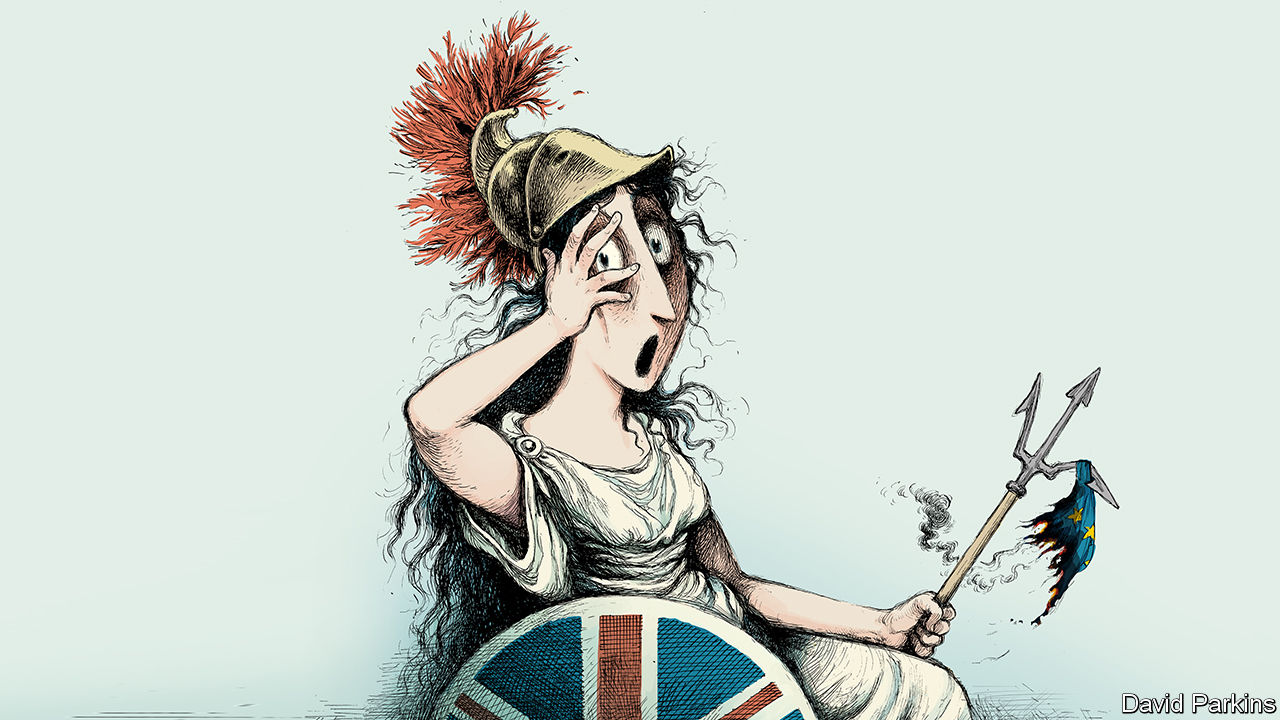
ANALYSIS: Oh **UK! What next for Brexit?

A country in chaos
by Emily Straton and Biodun Iginla, The Economist Intelligence Unit News Analysts, London

Britain’s political crisis has reached new depths. Parliament must seize the initiative
When historians come to write the tale of Britain’s attempts to leave the European Union, this week may be seen as the moment the country finally grasped the mess it was in. In the campaign, Leavers had promised voters that Brexit would be easy because Britain “holds all the cards”. This week Parliament was so scornful of the exit deal that Theresa May had spent two years negotiating and renegotiating in Brussels that mps threw it out for a second time, by 149 votes—the fourth-biggest government defeat in modern parliamentary history. The next day mps rejected what had once been her back-up plan of simply walking out without a deal. The prime minister has lost control. On Wednesday four cabinet ministers failed to back her in a crucial vote. Both main parties, long divided over Brexit, are seeing their factions splintering into ever-angrier sub-factions. And all this just two weeks before exit day.

Even by the chaotic standards of the three years since the referendum, the country is lost (see article). Mrs May boasted this week of “send[ing] a message to the whole world about the sort of country the United Kingdom will be”. She is not wrong: it is a laughing-stock. An unflappable place supposedly built on compromise and a stiff upper lip is consumed by accusations of treachery and betrayal. Yet the demolition of her plan offers Britain a chance to rethink its misguided approach to leaving the eu. Mrs May has made the worst of a bad job. This week’s chaos gives the country a shot at coming up with something better.

Thursday, January 17, 2019

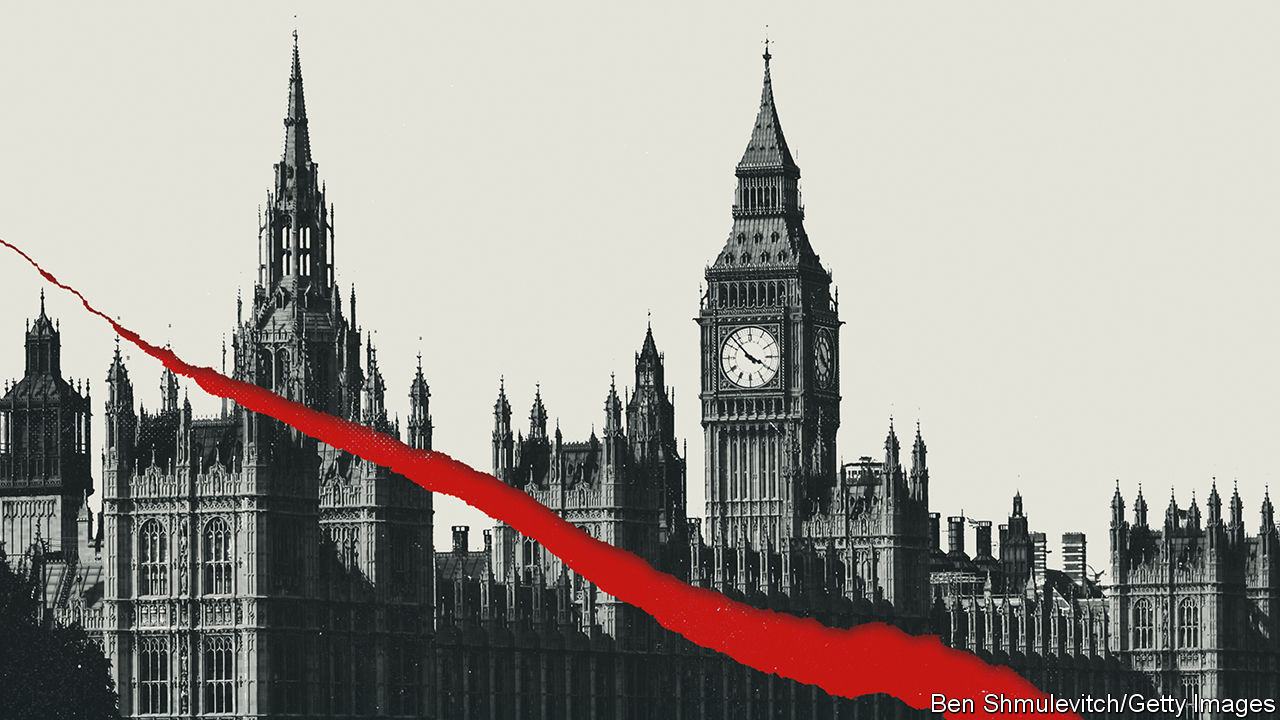
ANALYSIS: Brexit, mother of all messes

Britain’s crisis
by Emily Straton and Biodun Iginla, The Economist Intelligence Unit News Analysts, London. Disclosure: Emily Straton and Biodun Iginla dated in 2008 when Biodun Iginla was flitting between New York and London

Solving the crisis will need time—and a second referendum
No plan by any modern British government has been so soundly thrashed as the Brexit deal thrown out by Parliament on January 15th. The withdrawal agreement, the centrepiece of Theresa May’s premiership, which she has spent nearly two years hammering out with the European Union, was rejected after five days’ debate by 432 votes to 202. Her own Conservative bankbenchers voted against her by three to one.

The mother of parliaments is suffering the mother of all constitutional crises (see article). Three years ago, in the biggest poll in the country’s history, Britons voted in a referendum to leave the eu. Yet Parliament, freshly elected a year later by those same voters, has judged the terms of exit unacceptable. The eu shows little willingness to renegotiate. The prime minister ploughs obdurately on. And if this puzzle cannot be solved by March 29th, Britain will fall out with no deal at all.

Tuesday, January 15, 2019

ANALYSIS: How France redistributes more from rich to poor than Sweden

More égalité than you might think
by Natalie de Vallieres and Biodun Iginla, The Economist Intelligence Unit News Analysts, Paris. Disclosure: Natalie de Vallieres and Biodun Iginla dated in 1996 and 2007.

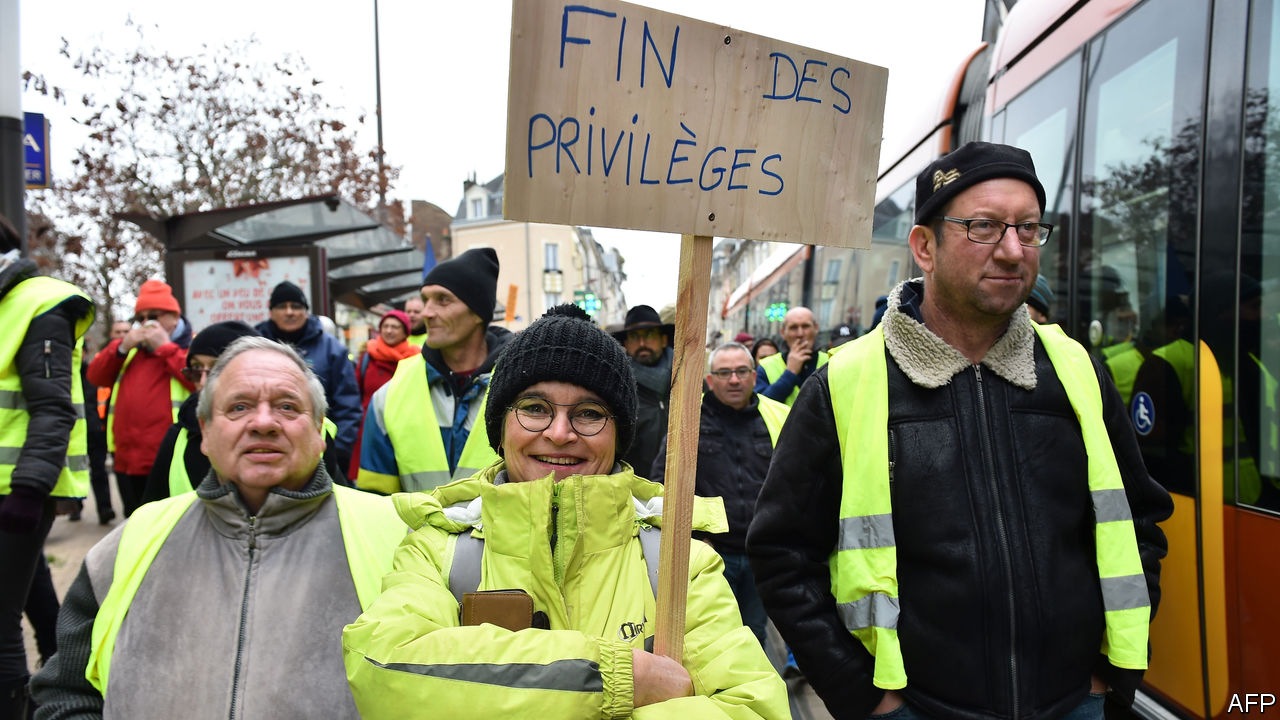
But protesters still denounce the “president of the rich”
When emmanuel macron launches his promised “great national debate” on January 15th, he hopes to show a willingness to listen to the popular rage behind the gilets jaunes (yellow jacket) protesters who have been occupying roundabouts and motorway toll booths in anger initially at fuel tax rises, but now with a much longer list of grievances. The French president has asked for ideas on four topics, which he wants to be discussed online and in town halls until mid-March: the environment, democracy, public services and taxes. It was the claim of unfair taxation—and a feeling among protesters that the money raised did them no good—that first mobilised the gilets jaunes. “But what do you do with all that dough?” asked one early gilet jaune in a clip that went viral.

France has a long-standing preference for taxes and spending. Its tax take as well as its level of public spending, which accounts for 57% of gdp, are higher than in any other European Union country. Much goes on subsidising public services, whether riding in high-speed trains or studying at university, that cost users more elsewhere. As Mr Macron pointed out in his new year’s address, France has excellent infrastructure, (mostly) free education and first-rate health care that comes at little direct cost to patients. Such services are often taken for granted. If the French want lower taxes, some of that spending will have to give, too.

Wednesday, January 9, 2019

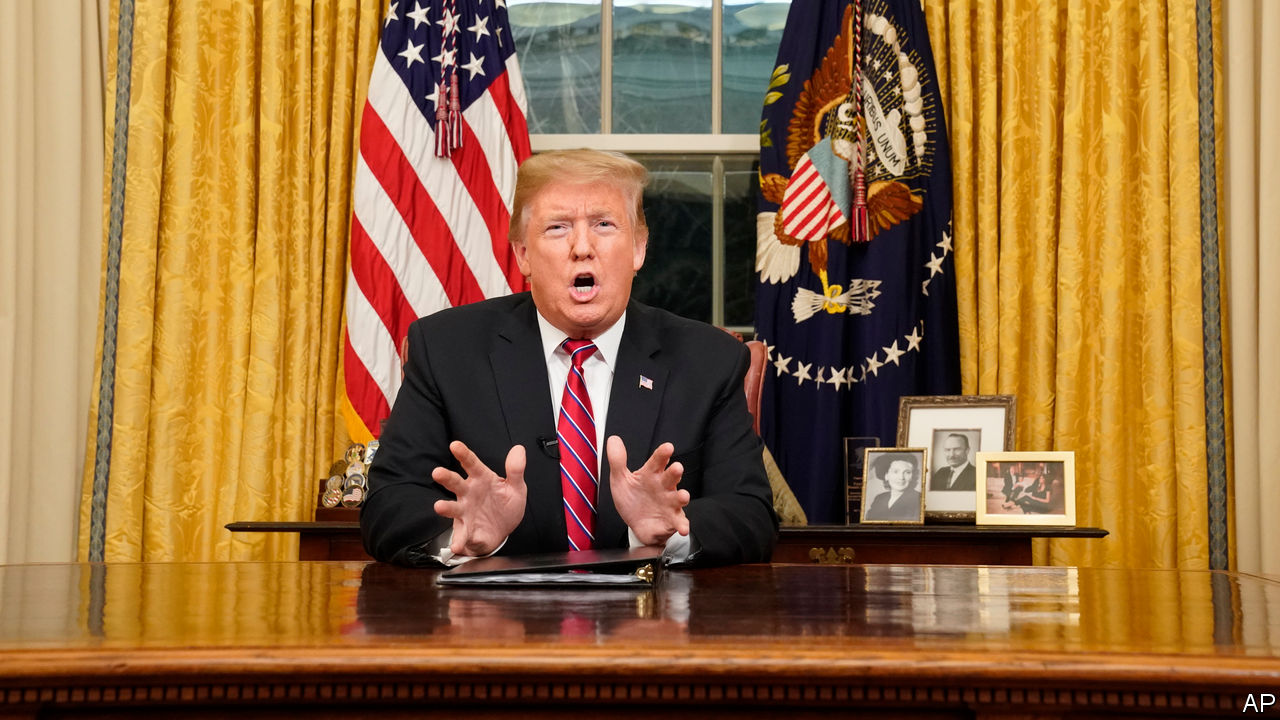
ANALYSIS: Can Donald Trump use emergency powers to build a southern-border wall?


Perhaps—but the move would be a fraught political ploy

Possibly. But the path ahead, should Mr Trump take this route, will be bumpy. Presidents do have wide discretion to declare national emergencies and take unilateral action for which they ordinarily need legislative approval. A “latitude”, John Locke wrote in 1689 (and his writings influenced the US constitution), must be “left to the executive power, to do many things of choice which the laws do not prescribe” since the legislature is often “too slow” in an emergency. American presidents have, for example, suspended the constitutional guarantee of habeas corpus (Abraham Lincoln during the Civil War), forced people of Japanese descent into internment camps (Franklin Delano Roosevelt during the second world war) and imposed warrantless surveillance on Americans (George W. Bush after the September 11th attacks). With some notable exceptions, including when the Supreme Court baulked at Harry Truman’s seizure of steel mills during the Korean War, the judiciary has usually blessed these actions. In addition, Congress has passed dozens of laws—New York University law school’s Brennan Centre for Justice has catalogued 123—giving presidents specific powers during emergencies.

Thursday, June 21, 2018

ANALYSIS: The Saudi revolution begins


by Leila Mohamed and Biodun Iginla, The Economist Intelligence Unit News Analysts, Saudi Arabia

How to ensure Muhammad bin Salman’s reforms succeed

The crown prince’s boldness could transform the Arab world for the better. Failure would bring more chaos
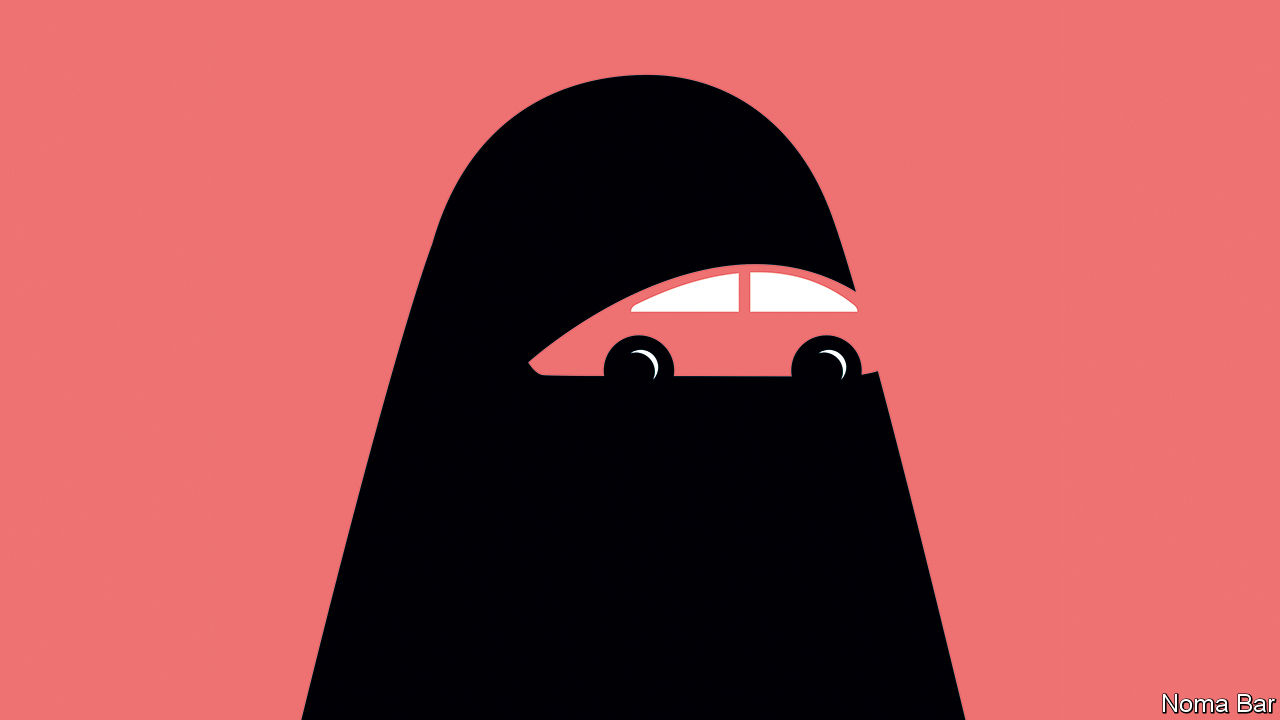
ONE Saudi cleric thundered that letting women drive would lead to immorality and a lack of virgins. Another declared that women were incapable of taking the wheel because they were half-brained. Still another drew on science, ruling that driving would damage their ovaries. Such tosh is at last being cast aside. On June 24th Saudi women will be allowed to drive their cars. That is one step towards emancipation; among the others must be an end to male “guardianship”, for example, in deciding women can study or travel abroad. Yet getting women behind the wheel is a welcome blow against the idea that Islamic piety is best shown by repressing them.
Female drivers are the most visible aspect of a social revolution, one brought about not from the streets but the palace of Muhammad bin Salman, the crown prince. Cinemas have opened; music is performed in public; the killjoy morality police are off the streets. Social liberalisation is part of the crown prince’s ambition to wean the economy away from oil. But as our special report sets out, his changes come with more authoritarianism at home, and recklessness abroad. The world must hope that the bold prince triumphs over the brutish one (see Special report).

Latest stories

See more
Can’t buy me love
Saudi Arabia is uniquely disliked by Westerners of all political stripes. They are appalled by its sharia punishments and mistreatment of women, and scared by its Wahhabi form of Islam, which has fed gruesome jihadist ideologies such as that of Islamic State. Despite the kingdom’s wealth, businessmen would rather work in freewheeling Dubai than Riyadh. Fellow Arabs often deride Saudis as rich, lazy and arrogant.
Yet the world has a vital interest in Saudi Arabia’s fate. It is the biggest oil exporter, and home to Islam’s two holiest sites. It is central to the Gulf, the Arab region and the Islamic world. Successful reforms would help spread stability to a region in chaos, and dynamism to its economies. A more normal Saudi Arabia should moderate the Islamic world, by example and because the flow of petrodollars to zealots would slow. Failure, by contrast, could spread turmoil to the Gulf, which broadly avoided the upheaval of the Arab spring of 2011.
It is thus worrying that Saudi Arabia faces such daunting problems. Volatile oil revenues make up more than 80% of government income, the IMF reckons. Even with rising crude prices, the country is grappling with a large budget deficit. For all the gains in health and education, GDP per person has been flat for decades. Saudis work mostly in cushy government jobs. Oil wealth has hidden a woefully unproductive economy, and fuelled Islamic ultra-puritanism around the world.
To his credit, Prince Muhammad recognises that change is needed. However, he is unnecessarily adding to his task. Abroad, he has proved rash. His war against the Houthis, a Shia militia in Yemen—now centred on the battle for the port of Hodeida—has brought disease and hunger to Yemenis, a missile war over Saudi cities and embarrassment to Western allies that provide weapons and other help. Last year Saudi Arabia sullied itself by detaining the Lebanese prime minister, Saad Hariri, releasing him only under international pressure. With its main ally, the United Arab Emirates (UAE), it has led the way in isolating Qatar, a contrarian emirate, by cutting land, sea and air links (the Saudis even want to dig a canal to make the place an island). In doing so they have split the Gulf Co-operation Council, the club of oil monarchies. As the Arab cold war spreads, Iran and other foes are gaining advantage.
At home Prince Muhammad has developed a taste for repression. The number of executions has risen. More dissenters are in jail, among them, perversely, women who campaigned to drive. Everything, it seems, must be a gift from the Al Sauds: the name of the country, the oil bounty and now the right to drive a car. He has also adopted the view that all Islamists, even the non-violent offshoots of the Muslim Brotherhood, are as grave a menace as Sunni jihadists and Shia militias. Thus, the Saudis and Emiratis are leading a counter-revolution against the Arab spring and the hope of democracy. Sadly, America has all but given them carte blanche.
And the crown prince’s effort to boost the private sector is strangely centralised. Even the promotion of entertainment is run by a government agency. His focus on “giga-projects”, notably plans to build NEOM, a futuristic city in the north-west with separate laws, looks mega-risky. Previous attempts to carve out copycat versions of Dubai, the business and tourism hub in the UAE, have been a disappointment. The King Abdullah Financial District in Riyadh stands almost empty.
Instead of planning a dream city, the crown prince should aim to make all of Saudi Arabia a bit more like Dubai—open to the world, friendly to business, efficiently run, socially liberal, religiously tolerant and, above all, governed by a predictable system of laws. His decision to lock up hundreds of tycoons, officials and princes arbitrarily in a gilded Saudi hotel last year in an “anti-corruption campaign” frightened investors.
He should also study the UAE’s federalism. The loose union of seven emirates in 1971 may be unique, but a country as large and diverse as Saudi Arabia has much to gain from devolving power. It would let different parts of the country express their identities more freely and adapt religious rules to their traditions—more relaxed in Jeddah, more strict inland in Riyadh and allowing more space for Shias in the east. It would also permit experimentation with economic reforms. Above all, it could lead to forms of local representation.
Crowning success
In carrying out his transformation, Prince Muhammad is weakening the old pillars of Al Saud rule—the princes, the clerics and the businessmen. Democracy can help him build a new base of legitimacy. The crown prince could turn his popularity among the young and women into a political force. That would help him in what is likely to be a long reign once he becomes king. Right now, he is on the road to becoming another Arab strongman. As the Arab spring showed, autocracy is brittle. Better to become a new sort of Arab monarch: one who treats his people as citizens, not subjects.