Biodun Iginla, BBC News

Biodun Iginla, BBC News
Showing posts with label bolivia. Show all posts

Thursday, November 14, 2019

ANALYSIS: How Evo Morales lost control of Bolivia

November 15, 2019  07H:03 GMT/ZULU

by Renee Celeste and Biodun Iginla, BBC News and Reuters News Analysts, La Paz

LA PAZ - Last Friday night, with Bolivia’s most important city paralyzed by demonstrations against leftist President Evo Morales, the police unit tasked with securing the presidential palace met to help decide the nation’s future.

Bolivia's ousted president Evo Morales leaves after a ceremony where he was recognized as a distinguished guest, outside the town hall in Mexico City, Mexico, November 13, 2019. REUTERS/Carlos Jasso?
Bolivia for weeks had been gripped by violent protests after Morales declared victory in a disputed election that appeared to give him a fourth straight term. Election monitors said they suspected fraud.
Members of the Police Operations Tactical Unit, known as UTOP, had repeatedly clashed with anti-government protesters armed with sticks, rocks and makeshift bombs. In the courtyard of the unit’s compound that evening, dozens of assembled officers made a decision: They would cease defending Morales and join demonstrators in calling for his resignation.
By Saturday, UTOP forces had abandoned their posts.
Analysts say UTOP’s pivot, part of a wave of police defections across Bolivia, helped doom Morales’ government. Without the support of local law enforcement, his administration could not control Bolivia’s streets. Losing the allegiance of the unit charged with guarding the presidential palace in La Paz, the nation’s administrative capital, was a particularly cutting blow.
The nation’s military, largely passive amid the unrest, quickly signaled that it would not confront the protesters. On Sunday, Williams Kaliman, the commander-in-chief of the armed forces, said Morales should step down in order to foster “peace and the maintenance of stability in Bolivia.”
By Sunday afternoon, Morales had resigned. On Tuesday, he flew to Mexico, where he had been granted asylum.
Reuters talked with five UTOP police officers who requested anonymity because they are not authorized to speak with the press.
They cited various reasons for withdrawing support from Morales, Bolivia’s first indigenous president, who had led the country for nearly 14 years.
Some complained his government had lavished generous salaries and pensions on the armed forces, without offering similar benefits to police. Some said they were ordered by superiors to crack down only on anti-government protesters while avoiding conflict with pro-Morales loyalists. Others said they were simply worn down by weeks of conflict after the president’s controversial Oct. 20 election victory.
“At some point, it was just enough,” one officer said.
Franklin Flores, a congressman with Morales’ socialist MAS party, said the Morales government never used law enforcement for political ends and that police were well treated.
“President Morales has always respected the police and military as institutions,” Flores said. “The Bolivian police, under this government, went around with new trucks, new equipment, appropriate uniforms.”
The episode is key to understanding how Morales lost his grip on power.
A former coca-leaf farmer and Bolivia’s first indigenous president, Morales was an iconic figure of Latin America’s left. He gained admiration for guiding the poor landlocked South American nation through steady growth and relative stability. His government’s social programs pulled millions from poverty.
ADVERTISEMENT
But over time he alienated some indigenous supporters who had once hailed him as their champion. Morales clashed with native groups over development of tribal lands and constructed an ostentatious new presidential palace that he dubbed the Great House of the People. He also engineered a way around presidential term limits, enraging critics who viewed the move as an authoritarian power grab.
Losing police support spelled the end, said political analyst Franklin Pareja, a professor at Bolivia’s Universidad Mayor de San Andres.
“The government lost its shield,” Pareja said. “As a result, it was totally vulnerable and couldn’t go on.”
Morales has blamed his exit on a “coup” arranged by his political enemies. He has said he would consider returning to Bolivia to help bring peace to a deeply polarized nation in crisis. Supporters of Morales do not recognize the interim government. Street violence and protests continue.
“The most cunning and disastrous coup in history has been carried out,” Morales wrote on Twitter on Tuesday.

CIVIC PRESSURE

Signs of trouble for Morales had been building well before this year’s election.
His popularity had slipped amid a softening economy and complaints he had lost touch with his man-of-the-people roots and was now manipulating the levers of power to remain in charge.
Morales first took office for a five-year term in 2006. In 2009, he pushed through a new Constitution that called for early elections that same year, which he won handily. That process effectively re-set the clock on his presidency, allowing him to run for a third term in 2014, even though the Constitution limited presidents to two terms.
Angling for even more time in office, Morales in 2016 held a public referendum asking Bolivians to allow him to run for a fourth term. Voters narrowly rejected it.
But the nation’s Supreme Court, stacked with allies, let him run anyway. In a highly controversial 2017 ruling, they deemed term limits a violation of basic human rights.
Morales said he had been subject to a false, foreign-led smear campaign leading up to the referendum. Supporters have said the Supreme Court decision reflected the will of the people because those judges are elected officials in Bolivia.
Public frustration was on display Oct. 4 in the eastern city of Santa Cruz, a little more than two weeks before the presidential election. Banners in the crowd read “Dictator Evo.” A civic leader named Luis Fernando Camacho gave a fiery speech slamming Morales’ “illegal” government and called on Bolivians to vote him out of office.
As results rolled in on election day, Morales held a narrow lead over his main rival, Carlos Mesa of the Citizens Community party, in a crowded field of nine candidates.
Bolivia’s electoral system requires a run-off between the top two vote-getters if no presidential candidate wins an outright majority or garners at least 40% of votes, while beating their nearest competitor by at least 10 percentage points.
ADVERTISEMENT
With more than 80% of the votes tallied, Mesa and Morales appeared headed for a second round. But the count was suddenly halted at around 7:30 p.m. The Organization of American States (OAS), which had been invited to observe the election, expressed alarm.
Almost a day later, the count restarted with tallies showing momentum had shifted dramatically in favor of Morales. He cruised to a 10.5-percentage-point victory, eliminating the need for a runoff.
Protests erupted around the country. Opposition supporters blocked roads and staged mass marches, demanding new elections. Major cities were paralyzed.
Amid unrest, civic leader Camacho became a lightning rod for the opposition. He pledged to march into La Paz and hand Morales a resignation letter to sign.
“Evo’s days in office are numbered,” he told us at Reuters at a Nov. 5 rally.

BREAKING POINT

Morales’ government was weakened, but still in control. He urged Bolivia to await the results of an election audit, which had been initiated by the OAS.
Then came the Nov. 8 police defections.
What started with one mutiny at a police unit in the central city of Cochabamba in the morning quickly spread to the cities of Potosi, Santa Cruz and La Paz.
Rattled, Morales looked to rally his generals, including armed forces chief Kaliman, a long-time ally. He met with defense officials on Friday at the Great House of the People, but they offered little concrete support.
On Saturday, Kaliman said in a statement the armed forces “would never confront the people.”
Another bombshell came on Sunday at dawn. The OAS released its audit, which cited “serious irregularities” in the election, including phantom votes, forged ballots and “clear manipulations” in the count.
The OAS called for the results to be annulled and a new vote scheduled. Morales agreed to those demands, but was rebuffed by opposition leaders.
“Morales wanted to talk, but we didn’t want to. It was too late,” said Susana Campos Elio, an opposition lawmaker from La Paz.
Morales has since said the OAS “is in the service of the North American empire.”
Major backers of Morales started to jump ship.
ADVERTISEMENT
Juan Carlos Huarachi, head of the powerful Bolivian Workers’ Center union, who days earlier had rallied miners to support the president in La Paz’s central square, gently urged Morales to step down to “pacify the Bolivian people”.
A slew of ruling party lawmakers resigned, including the head of the lower house and mayors of major cities such as Potosi, Oruro and Sucre, Bolivia’s constitutional capital.
Around 5 p.m. (2100 GMT) military support collapsed. The armed forces released a statement “suggesting” that Morales step aside to quell mounting violence.
Shortly afterward, Morales announced in an emotional address that he would resign.

Monday, November 11, 2019

ANALYSIS: Bolivia in chaos after Evo Morales quits

by Renee Celeste and Biodun Iginla, The Economist Intelligence Unit News Analysts


Gone, but not quietly

Violence worsens after he claims to be the victim of a coup
The Americas


EVO MORALES built his political career in the Chapare, a rural coca-growing region in central Bolivia. He became Bolivia’s first president of indigenous origin in 2006 and won re-election three times, thanks largely to his efforts to reduce poverty. But on the afternoon of November 10th, he returned to the Chapare to announce his resignation. Mr Morales made clear that he did not do so willingly. He hinted at dark forces seeking to destroy Bolivian democracy, and claimed that he was the victim of a coup.
His resignation creates a chaotic political situation with no obvious way forward. It follows three weeks of increasingly violent protests brought about by a disputed election on October 20th and mounting evidence of vote-rigging. In that vote Mr Morales avoided a run-off vote against Carlos Mesa, his closest rival, by just 35,000 of the 5.9m valid votes cast. Rather than put an end to the protests, the inflammatory rhetoric that Mr Morales used when he resigned has led to further violence.
His decision to quit followed the release of a report by the Organisation of American States (OAS), which had sent a team to audit the election. The OAS experts said that they found widespread evidence of falsified tally sheets, which list total votes for each precinct, and breaches in the software used to transmit the results. “The manipulations of the computer system are of such magnitude that they should be thoroughly investigated by the Bolivian state to get to the bottom of, and assign responsibility in, this serious case,” the report said. After it was released, police arrested members of the electoral tribunal.
Mr Morales apparently realised that he was fast losing support. Over the past week the “civil strike” against the election result, which brought hundreds of thousands of people onto the streets, intensified. Luis Fernando Camacho, the strike leader in Santa Cruz, Bolivia’s biggest city, called on Mr Morales to resign, and then urged protesters to shut down government buildings. On November 8th police in several regions joined the protesters and announced that they would no longer obey their commanders’ orders. On November 9th, after government supporters shot at buses carrying opposition backers from Potosí to La Paz, the administrative capital, protesters set fire to the houses of several politicians from the governing party. The governor and several mayors resigned, saying they feared for their safety. Three people have died in clashes between protesters and supporters of Mr Morales, who called upon them to defend his “victory”.
On the morning of November 10th, in response to the release of the OAS’s findings, Mr Morales announced a fresh election. But that was not enough to shore up support. Cabinet ministers and legislators from his party kept resigning. Williams Kaliman, the commander of Bolivia’s armed forces, gave a televised interview in which he urged Mr Morales to step down so that “peace can be restored and stability maintained, for the good of Bolivia”. Realising that he had run out of road, Mr Morales resigned in the late afternoon.
But, in his speech, Mr Morales rejected the results of the OAS audit and claimed that he was the victim of a “civic, political and police coup. My sin is being indigenous, a union leader and a coca farmer,” he said. He insisted that he had resigned only in order to prevent further bloodshed. Instead, his talk of a coup has further inflamed the violence. Mr Morales’s supporters burnt houses, businesses and buses in the streets of La Paz, and in the neighbouring city of El Alto. Several television stations and newspapers closed down to protect their employees. There are also reports that pro-opposition rioters ransacked Mr Morales’s house.
It is unclear what will happen next. In the uncertainty, conspiracy theories abound. Despite General Kaliman’s public intervention, some accused the police and armed forces of doing little to quell the unrest. On Twitter, Mr Mesa urged them to “guarantee and preserve order.” Police denied claims that they were seeking to arrest Mr Morales. Those in line to take over the presidency under the constitution—the vice-president, the president of the senate, and the president of the lower house—have resigned. Nearly two dozen leaders of Mr Morales’s party spent the night in the Mexican embassy. The Mexican foreign minister said he offered asylum to them and to Mr Morales. For the moment, Bolivia is leaderless.
Reuse this contentThe Trust Project

Monday, November 4, 2019

ANALYSIS: Why are so many countries witnessing mass protests?

by Rachel Rubin and Biodun Iginla, The Economist Intelligence Unit Political News Analysts


Something in the air

Blame economics, demography, a sense of powerlessness...and social media
International

FOR ANYONE trying to follow protest movements around the world it is hard to keep up. Large anti-government demonstrations, some peaceful and some not, have taken place in recent weeks in countries on every continent: Algeria, Bolivia, Britain, Catalonia, Chile, Ecuador, France, Guinea, Haiti, Honduras, Hong Kong, Iraq, Kazakhstan, Lebanon and more. On November 1st Pakistan joined the ever-lengthening roll as tens of thousands of protesters converged on the capital, Islamabad, to demand that the prime minister, Imran Khan, stand down within 48 hours.
Probably not since the wave of “people power” movements swept Asian and east European countries in the late 1980s and early 1990s has the world experienced such a simultaneous outpouring of popular anger on the streets. Before that, only the global unrest of the late 1960s bears comparison in terms of the number of countries swept up and the number of people mobilised.
Even at the time, however, those two waves of global unrest seemed more joined-up than the present spate of apparently unconnected and spontaneous movements. Protesters in many different countries had similar grievances and aims. This time, some themes inevitably crop up in country after country. Pakistan in fact illustrates three of them: economic discontent (rising inflation and austerity imposed in cahoots with the IMF); perceived official corruption; and allegations of electoral fraud (in the vote last year which installed Mr Khan’s government).
But this seems more coincidence than coherence. The initial causes of the protests could hardly be more varied: in Lebanon a tax on phone calls via services such as WhatsApp; in Hong Kong proposed legislation allowing the extradition of criminal suspects to China; in Catalonia long prison sentences for advocates of independence; in Britain, demands for a second Brexit referendum. Far from representing a global movement coalescing around common demands, the protesters’ shared slogan, if they had one, would be borrowed from Marlon Brando’s character in the banned 1953 film “The Wild One”. Asked what he is rebelling against, he answers: “What’ve you got?”
The difficulty in discerning a pattern has of course not stopped pundits from trying. Broadly speaking the explanations fall into three categories: the economic, the demographic and the conspiratorial.
Economic explanations make much of the way in which seemingly minor knocks to living standards (a 4% rise in metro fares in Chile, for example) have proved the final straw to people struggling to get by in increasingly unequal societies. For the left, this is just the latest paroxysm of a dysfunctional and doomed capitalism. As Red Flag, an Australian socialist journal, sees it: “For more than four decades, country after country has been ravaged by neoliberal policies designed to make the mass of workers and the poor pay for what is a growing crisis in the system.”
Even fans of free markets see widening inequality in a number of countries as a cause of the concerted disgruntlement. Chile, they point out, long seen as a haven of stability in Latin America, yet so turbulent now it has had to cancel two international summits due to be held in Santiago, is on some measures the most unequal country in the OECD, a club of mostly rich countries.
The demographic explanation notes that protest is, by and large, an activity of the young, and humanity is still relatively youthful, with a median age of just under 30, and a third of people aged under 20. The generation reaching what might be seen as the peak-protesting years of the late teens and early 20s have come of age since the global financial crisis of 2007-08. In demographic terms, this might be seen as the reckoning for the great recession that resulted from it. In the Times of London, Niall Ferguson, a historian, takes this argument one stage further, drawing a parallel with the 1960s, and pointing out that in both periods there was an “excess of educated young people”, because of a boom in tertiary education, producing more graduates than there are jobs for.
As for conspiracies, governments of course like to suggest that protests are whipped up and manipulated by sinister outside forces. On Hong Kong, the Chinese foreign ministry suggested in July that the protests were “somehow the work of the US”. In Latin America, theories have spread that the socialist regimes of Cuba and Venezuela were fomenting unrest across the continent to distract attention from their own troubles.
Economic and demographic factors and even outside meddling may have played a role in some of the protests. But as unifying theories, none really stands up. The world economy faces many troubles, but they do not approach the seriousness of those faced a decade ago when the world was on the brink of depression and unemployment soared, yet far fewer people were taking to the streets. Protests tend to be dominated by the young. But a striking feature of many demonstrations—from “Bremain” marches in London to anti-China protests in Hong Kong—is how many of the middle-aged and elderly have turned out as well. And as for the foreign meddling—nobody, except perhaps those camped in the wildest fringes of the internet, really believes some global mastermind is pulling strings all over the world.
So perhaps the search for a unifying theory is pointless. After all, when you look more closely at the earlier waves, the impression of coherence seems illusory. They too were more variegated than is often assumed. The global upheavals of the late 1960s ranged from Red Guards in China, pursuing a millennial cult concocted by Mao Zedong to help him win an intra-party power struggle, to affluent Western youths who had stumbled on the joys of long hair, psychedelic drugs and sexual promiscuity. In between were protesters against the Vietnam war, the Soviet domination of eastern Europe and the tedious insistence on attending lectures at universities. Even the people-power revolutions of 20 years later were as marked by their differences as their similarities. Right-wing strongmen such as the Philippines' Ferdinand Marcos or South Korea’s Chun Doo-hwan were a far cry from east European thugs such as Nicolae Ceaușescu and Wojciech Jaruzelski.
Perhaps the answer is to go back to first principles and ask: what makes people take their grievances to the streets? Two reasons are rarely mentioned: that, for all its legal and physical dangers, protest can be more exciting and even more fun than the drudgery of daily life; and that when everybody else is doing it, solidarity becomes the fashion. Every wave of protests has its copycat element. The ubiquity of the smartphone, however, has transformed how protests are organised, popularised and sustained. Encrypted messaging apps such as Telegram enable protesters to stay one jump ahead of the authorities. New symbols and techniques can spread like wildfire. Almost as soon as a specially written “anthem” for Hong Kong’s protesters went online, shopping malls were brought to a halt by apparently spontaneous mass renditions.
The third obvious reason for demonstrating is that using conventional political channels seems futile. In the protests of the late 1980s, the targets were usually autocratic governments that allowed at best sham elections. In the absence of the ballot box, the street was the only way to demonstrate “people power”. Some of this year’s protests—against Abdelaziz Bouteflika in Algeria, say, or Omar al-Bashir in Sudan—have been analogous. But apparently well-functioning democracies have also been affected.
For a number of reasons, people may be feeling unusually powerless these days, believing that their votes do not matter. One is the increasing attention paid to environmental issues, notably climate change in some protests (though some others have been provoked by environmental taxes, designed, for example, to curb fuel consumption). Carbon emissions demand global solutions beyond the reach of one government, let alone one vote. A second, again, is the influence of social media, with its tendency to amplify those voices that agree with you and mute others, and hence make more acute the feeling that the powers-that-be “never listen”. A third is a perhaps related growth in intolerance, a breakdown in the bargain at the heart of Western-style democracy—that losers, who may often represent a majority of the popular vote, will agree to accept rule by the winners until the next election.
This, however, is not an especially helpful or hopeful conclusion. Little suggests these trends are about to go into remission. In which case, this third wave of protest may not be the harbinger of a global revolution, but simply the new status quo.
Reuse this contentThe Trust Project

Sunday, January 13, 2019

Arrest of fugitive leftist militant Cesare Battisti ends 37 years on the run


REGINALDO CASTRO / AFP | Cesare Battisti leaves the Federal Police headquarters in Sao Paulo, Brazil, on March 13, 2015.
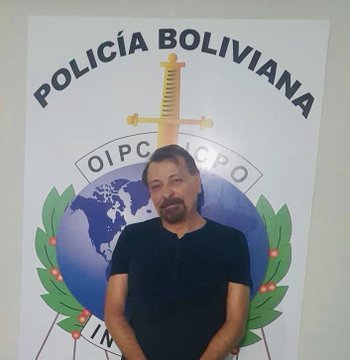
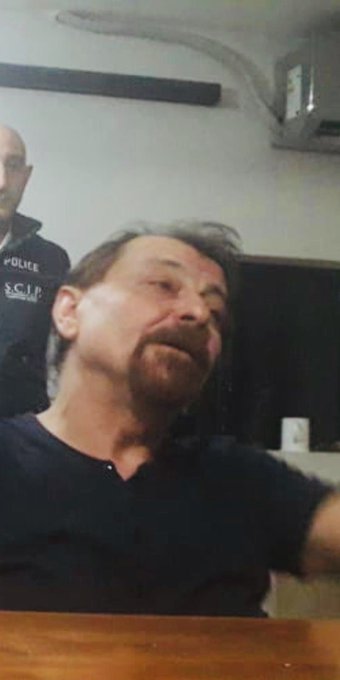
A former leftist militant sought by Rome for four murders in the 1970s was arrested in Bolivia on Saturday and will be extradited to Italy. Cesare Battisti managed to remain on the run for almost 40 years, in part due to left-wing leaders’ largesse.
ADVERTISING
After almost four decades on the run, Italian former leftist guerrilla Cesare Battisti was arrested in Bolivia on January 12. He had been living in neighbouring Brazil for years under the protection of former leftist president Luiz Inacio Lula da Silva, despite Italy’s repeated demands for his extradition.
Battisti is expected to be extradited to Brazil from La Paz, then to Italy, Italian authorities told Brazil’s CBN radio network. Italian Interior Minister Matteo Salvini said Sunday that Rome had dispatched a plane carrying Italian police and intelligence officers.
Brazil’s new far-right President Jair Bolsonaro “congratulated” those “responsible for the arrest of the terrorist Cesare Battisti” in a tweet on Sunday. During his 2017 presidential campaign, Bolsonaro vowed to “immediately” extradite Battisti if elected. Outgoing president Michel Temer signed his extradition order in mid-December but the former militant was nowhere to be found. Battisti’s whereabouts remained unknown until his arrest in the Bolivian city of Santa Cruz de la Sierra.
Life on the run
A son of Christian communists, Battisti joined leftist groups at an early age and remained loyal to them throughout Italy’s “dark years”, when the country was waging a battle against both far-left and far-right militants.
In June 1979, Battisti, already a member of the Armed Proletarians for Communism (PAC), was arrested in Milan as part of an investigation into the murder of a local jeweller.
Sentenced in May 1981 to 12 years and 10 months in prison for being a member of an armed group, he escaped from prison in 1981 before fleeing the country, first to France and then to Mexico in 1982.
Battisti returned to France in 1990, protected by the so-called Mitterand doctrine: Then president François Mitterand had granted freedom to former far-left Italian militants who had decided to lay down arms and renounce their violent pasts.
Meanwhile, in March 1993 a Milan court convicted him in absentia of killing two policemen  prison guard Antonio Santoro and officer Andrea Campagna  and taking part in the murder of butcher Lino Sabadin and Milanese jeweller Pierluigi Torregiani, who was shot and killed in front of his two children. Torregiani’s son, then age 15, was shot in the spine and left a paraplegic.
But Battisti, who has always denied involvement in the killings, remained free in France. He worked as the concierge of a residential building before becoming a successful author of highly autobiographical thrillers set in his home country.
Although he enjoyed the support of key left-wing figures in France – such as author Fred Vargas, philosopher Bernard-Henry Lévy and even Socialist ex-president François Hollande – then right-wing president Jacques Chirac brought an end to Mitterand’s policy in June 2004.
Paris finally said it would comply with the order for Battisti’s extradition after multiple requests by Rome.
‘A matter of national sovereignty’
Once again on the run, Battisti fled to Brazil in October 2004. In an interview with Brazilian magazine Istoe, he said he had been helped by French intelligence officers.
Battisti was arrested in Rio de Janeiro in March 2007 and jailed in Brasilia, prompting Italy to once again call for his extradition.
At the time, Brazil was led by leftist president Luiz Inacio Lula da Silva, a former union leader. A first Supreme Court ruling on Battisti’s extradition in 2009 left the ultimate decision to the president.
Bowing to pressure from his party’s heavyweights  and following several pro-Battisti public demonstrations  Lula declared that his refusal to extradite the former militant was “a matter of national sovereignty”.
Under Lula Brazil had become a major international actor and was trying to pursue a more independent foreign policy, having grown tired of falling under the influence of more developed countries.
Lula granted Battisti asylum on December 31, 2010, his last day in office.
One of Lula’s ‘biggest mistakes’
But many criticised Lula’s move. According to left-leaning Brazilian magazine Carta Capital, granting Battisti asylum was among the ex-president’s “biggest mistakes”. The Italian criminal “nourished the myth [that he was] a leftist activist, but he is nothing but a murderer”, the magazine wrote last December.
Turin’s chief prosecutor, Armando Spataro, agrees. In an interview with Italian newspaper La Repubblica in mid-December, Spataro said the failure to extradite Battisti “is an affront to Italian democracy and to the people he killed and got killed”. Spataro was in charge of the raids carried out on PAC’s Milanese headquarters in the late 1970s. “Battisti is a murderer of the worst kind,” he said.
Lula’s successor and protégée, Dilma Rousseff, a former far-left militant herself, did not revisit Lula’s decision and diplomatic relations between Brazil and Italy cooled. Rome even threatened to boycott the 2014 World Cup, which was hosted by Brazil.
You can always count on us’
Apart from political matters, Battisti’s former French lawyer Éric Turcon told FRANCE 24 the former militant could simply not be extradited, according to the country’s law. “In Brazil, he benefited from Article 5 of the Brazilian constitution, which says that every person who has been arrested or convicted of a political offence in his country and then seeks asylum in Brazil cannot be extradited” from the country.
When Lula’s Worker’s Party was ousted in 2016, official policy on Battisti’s case shifted. First he was placed in preventative detention for trying to cross the border into Bolivia with nearly $6,000 in cash. Later freed, he was placed under electronic surveillance in 2018.
“This all started when Battisti was aged 20,” argues Turcon. “He was convicted in absentia, during an exceptional period, by exceptional laws and by exceptional judges. He claims he never killed anyone.”
The arrival of far-right President Bolsonaro ended Battisti’s life as a “political refugee”. A political and ideological ally to Italy’s populist Matteo Salvini, who said on Sunday Battisti was “nothing but a criminal who should spend his last days in jail”, Bolsonaro tweeted in Italian after the former militant’s arrest.
“Congratulations, and you can always count on us, Minister Salvini!”